
Your condo association’s insurance and your own unit-owner policy need to be reviewed together. An HO-6 policy can cover belongings, certain interior property, personal liability, and additional living expenses after a covered loss. It does not automatically cover everything the association’s policy leaves unpaid.
Before comparing quotes, collect your declarations page, the association’s insurance information, and the documents describing unit-owner responsibilities. A certificate of insurance is a useful summary, but it does not replace the policy and endorsements.
Coverage at a Glance
Select an item in the condo, a numbered marker, or a coverage name below the picture to see how condo insurance applies.
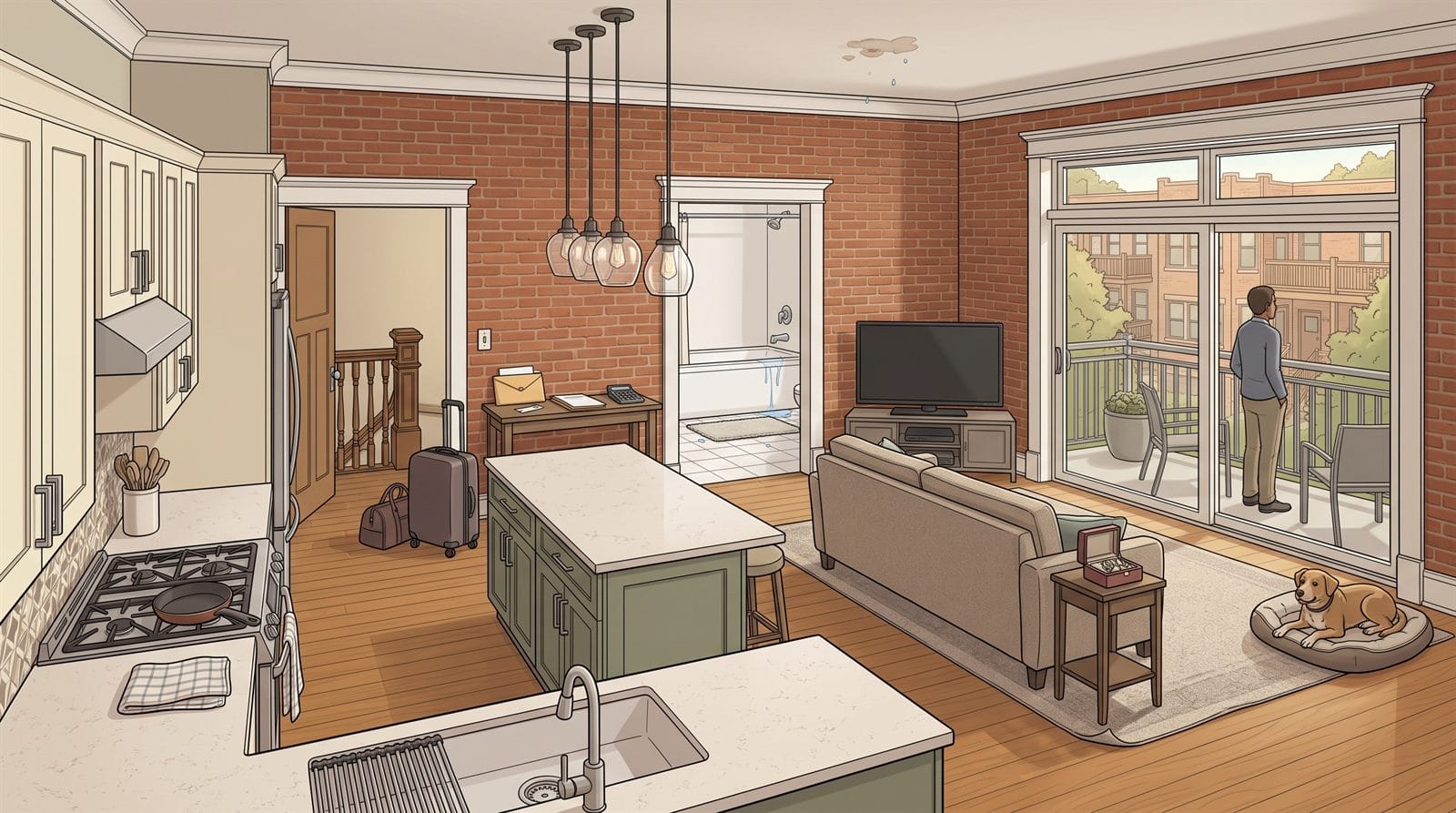
- Dwelling coverage (interior)
Who pays to rebuild your kitchen?
Custom cabinets, countertops, flooring, and other improvements can be expensive to replace. Your condo policy can help cover interior property you’re responsible for after a covered loss. We’ll read your association’s insurance and governing documents and help you set a dwelling limit that matches the interior property assigned to you.
- Master policy versus unit policy
What does the association’s insurance cover?
The association generally insures shared building property, but coverage inside individual units varies. Don’t assume everything inside your walls is your responsibility, or that the association covers it all. Your condo policy should fit the master policy and the association’s governing documents.
- Loss assessment coverage
Could a building claim become your bill?
After certain shared property or liability losses, the association may assess unit owners for costs. Loss assessment coverage may help pay your share of a qualifying assessment. Routine maintenance and planned improvements aren’t covered. Assessments involving the master policy’s deductible may have special limits or exclusions.
- Water damage you cause
Your overflowing tub can affect more than your bathroom.
A sudden, accidental overflow may damage your belongings, interior finishes, and the unit below. Different coverages can apply to each. Your liability protection may respond if you’re legally responsible for someone else’s damage; responsibility isn’t determined simply by where the water started.
- Damage from another unit
What if the upstairs neighbor has a leak?
A leak from another unit can damage your ceiling, floors, and belongings. Your own policy may help with covered damage even when the water originated elsewhere. Notify your insurer and association promptly; which policy pays depends on the cause, damaged property, and applicable responsibilities.
- Water backup endorsement
Water backup needs its own coverage check.
Water backing up through a sewer or drain is generally excluded from standard condo insurance. An optional endorsement may cover resulting damage to insured belongings and interior property. Ask about available limits and exclusions. Water backup coverage does not replace flood insurance.
- Fire and smoke damage
A small cooking fire can cause a big loss.
Fire and smoke can damage belongings and interior finishes throughout your condo. Your policy can help pay for covered damage to property it insures. The association’s policy may also be involved when the building is damaged.
- Personal property
What would it cost to replace everything you own?
Furniture, clothing, electronics, and household items are protected by personal property coverage against covered losses. Ask for replacement cost coverage so depreciation doesn’t reduce the value used to settle eligible claims. Choose a limit based on replacing all your belongings.
- Loss of use
Where would you live during repairs?
If a covered loss makes your condo unlivable, loss of use coverage can help pay additional costs for a hotel or temporary rental, meals, and other eligible expenses. It covers increases above your normal living expenses, subject to policy limits and the covered repair period.
- Personal liability
An accident could put your savings at risk.
If you accidentally knock a planter from the balcony and injure someone below, personal liability coverage can help with a covered claim and legal defense. Ask whether your liability limit is enough and whether an umbrella policy would provide useful additional protection.
- Medical payments to others
A guest trips and needs treatment.
Medical payments to others coverage can help pay a guest’s medical expenses after a qualifying accident, regardless of fault. It has a separate limit and generally doesn’t cover you or household residents. Larger claims involving your legal responsibility fall under liability coverage.
- Scheduled valuables
Some valuables need more than standard coverage.
Your policy may limit payment for stolen jewelry, watches, and other valuables. Scheduling individual items or buying separate jewelry and valuables insurance raises those limits and can add coverage for accidental loss. Let’s check your valuable items before a claim reveals a gap.
- Pet liability
Your pet can create a liability claim.
If your dog bites someone or causes an injury, your personal liability coverage may help. Animal exclusions and eligibility rules differ by insurer, so tell us about your pets. This coverage protects against qualifying liability claims; it isn’t veterinary insurance.
Send us your association’s insurance documents and we’ll help identify gaps in your condo coverage.
Coverage varies by policy and association requirements. Limits, deductibles, exclusions, and optional endorsements apply.
How the two policies fit together
The association arranges insurance for shared property and other association exposures. Your unit-owner policy addresses your own insured property and liability. The details depend on the insurance contracts, governing documents, and applicable law.
Boards and property managers will find the association side in more depth on our condo association insurance page.
For Illinois condominiums, Section 12 of the Condominium Property Act addresses association insurance and unit-owner coverage. Do not rely only on a description such as “bare walls” or “all in” when deciding what to insure. Ask the association and your agent to identify the relevant provisions.
| Item | What to check |
|---|---|
| Building and common areas | Which property the association insures, the covered causes of loss, and the deductible. |
| Cabinets, flooring, fixtures, and renovations | Which interior property is your responsibility and whether improvements made by you or a prior owner are included. |
| Furniture and other belongings | Your personal property limit, settlement terms, and special limits for items such as jewelry. |
| Temporary housing | When additional living expense coverage applies and its dollar or time limits. |
| Injury or damage involving another person | The liability provisions, exclusions, and limits that apply to the circumstances. |
| Association assessments | Which assessments qualify under your policy and whether a separate deductible-assessment limit applies. |
Select a part of the building, a numbered marker, or a coverage name below the picture to see where each coverage applies.
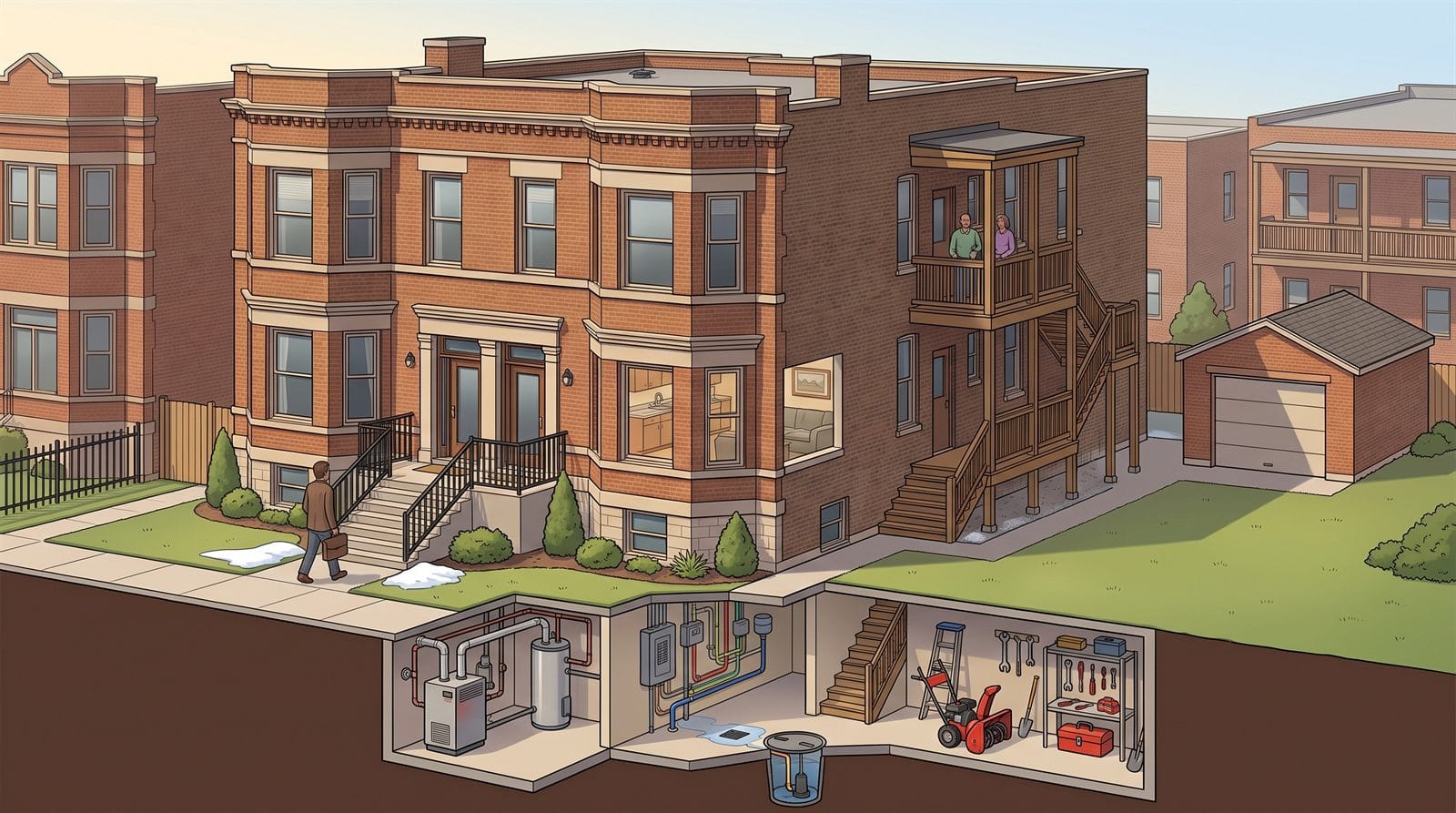
- Building property coverage
Could your association afford to rebuild?
Building property coverage helps repair or replace insured property after a covered loss, such as fire. The insurance amount should reflect reconstruction costs, not the building’s sale price or owners’ combined equity. Ask how your policy handles replacement cost, coverage limits, and underinsurance.
- Roof coverage and deductibles
A roof claim can come with a large deductible.
Wind or hail damage may be covered, but roof coverage can have separate deductibles, payment limitations, or exclusions. Aging roofing and routine maintenance generally aren’t insured losses. We’ll check the roof settlement terms before a storm reveals an expensive gap.
- Ordinance or law coverage
Repairs may have to meet today’s building codes.
After a covered loss, required code upgrades can increase rebuilding costs. Ordinance or law coverage can help with qualifying upgrades, demolition, and loss to undamaged portions of the building. It isn’t a fund for correcting existing code violations or routine modernization.
- Equipment breakdown
What happens when the building’s heat fails?
Equipment breakdown coverage can help with covered sudden mechanical or electrical breakdowns of insured building equipment. Ask about repair costs and related extra expenses. Ordinary wear, corrosion, and routine maintenance are generally excluded; an old boiler needing replacement isn’t automatically a covered claim.
- Water damage from building plumbing
One broken pipe can affect several units.
Sudden, accidental water damage from building plumbing may be covered. The damaged property, cause of loss, and association responsibilities determine how the master policy and unit-owner policies respond. Ask about water-damage deductibles and restrictions on repeated leakage or seepage.
- Sewer backup and sump overflow
Water coming up is a different coverage question.
Sewer backup and sump overflow can damage shared equipment and building interiors. Don’t assume they’re included in ordinary water-damage coverage. Ask for specific protection and adequate limits. Also review flood coverage separately. Surface flooding and drain backup can trigger different policy terms.
- General liability
A visitor slips on the shared entrance.
General liability coverage can help defend the association and pay covered damages when it is legally responsible for someone’s injury or property damage. Shared stairs, walkways, and entrances deserve particular attention. Insurance works alongside regular inspections, repairs, and snow removal.
- Commercial umbrella
Could a serious injury exceed your liability limit?
A major accident involving shared stairs or a porch could produce a substantial liability claim. Commercial umbrella or excess liability coverage can add protection above specified underlying policies. Check which policies it follows; coverage for board-related claims isn’t automatically included.
- Directors & officers, crime, and social engineering
The board’s decisions and the association’s money
Volunteer board members can still be sued. Disputes over assessments, rule enforcement, or board decisions can lead to claims against the association and its directors. Directors and officers liability insurance can help with covered allegations of wrongful acts. Ask about defense costs, nonmonetary claims, and coverage for the property manager.
Protect the association’s operating and reserve funds. Crime or fidelity coverage can help protect association funds against covered theft or dishonesty. Make sure the policy addresses the people who handle your money, including board members and any management company. Review the limit against the funds the association holds.
What if a contractor’s payment instructions are fake? A convincing email can trick a board member into transferring association funds to a criminal. Ask specifically about social engineering and fraudulent payment coverage; ordinary crime or cyber insurance may leave gaps. Independently verify changes to payment instructions before sending money.
- Business personal property
The association owns more than the building.
Shared maintenance equipment, tools, and other association-owned belongings also need protection. Business personal property coverage can help after a covered loss. Include their replacement value when reviewing insurance, and distinguish association property from residents’ belongings kept in the basement.
- Other structures
Are all association structures included?
A detached garage or other shared structure can be overlooked when coverage is arranged. Confirm that the policy includes every structure the association is responsible for, with appropriate values. Building coverage does not automatically insure residents’ cars or everything they store inside.
- Master policy versus unit-owner policies
Where does the association’s coverage end?
The master policy and each owner’s condo policy should work together. Interior building components, owner improvements, personal belongings, and liability can fall under different coverages. We’ll review the governing documents and insurance terms to help clarify responsibilities and identify gaps.
Send Longmeadow your master policy and condo declaration for an association coverage review.
Illustrative coverage examples. Coverage depends on policy terms, endorsements, deductibles, exclusions, and applicable association responsibilities.
Interior repairs and improvements
Make a room-by-room list of finishes and improvements. Include work completed before you bought the unit: a renovated kitchen, new flooring, built-in cabinetry, or a remodeled bathroom may affect the amount you need to insure.
Ask which policy would address damage to each item. Then compare your dwelling coverage limit (the building-property figure on your HO-6) with the cost of repairing the items assigned to you. That comparison tells you how much dwelling coverage your condo needs. The unit’s purchase price is not a substitute for that estimate.
For a vintage Chicago or North Shore unit, describe plaster, millwork, and other finishes accurately. Keep renovation invoices and photographs with your inventory. If you are planning work, discuss the project before construction begins.
Loss assessments and deductibles
An association may charge owners for costs following a loss. Loss assessment coverage can help with certain qualifying assessments, but it does not pay every special assessment. Maintenance projects, reserve contributions, and losses excluded by the policy need separate consideration.
Read the assessment coverage wording as well as the headline limit. Ask whether it covers an assessment arising from the association’s deductible, whether that protection has a smaller sublimit, and which date determines coverage.
Do not assume your exposure is the master-policy deductible divided by the number of units. Obtain the association’s allocation provisions and ask how they apply to a loss involving your unit. Ownership percentages and the circumstances of the damage may matter.
For example, a $50,000 loss assessment limit does not establish that a $20,000 charge to you will be paid. The reason for the assessment, covered cause of loss, policy conditions, and any deductible sublimit still need to be checked. Ask the agent to show you the relevant endorsement.
Water damage and liability
Describe how water entered the unit before deciding which coverage might apply. A leaking supply line, a sewer backup, and surface flooding raise different questions. Photographs and the plumber’s findings can help document the source.
- Water from another unit: report damage to your insurer and the association promptly. Coverage and responsibility depend on the facts and the policy documents; the upstairs owner’s insurer does not automatically owe your deductible.
- Water leaving your unit: give your insurer the details of any demand from a neighbor or the association. The location of the leak alone does not establish liability or coverage.
- Sewer or drain backup: check whether the applicable endorsement is included and read its limits, deductible, and exclusions. See our sewer backup guide.
- Surface flooding: review flood coverage separately. FEMA’s flood policy guidance explains that sewer backup is covered by the NFIP only when it directly results from flooding. Basement coverage has additional limitations.
For liability, compare the limits on your condo and auto policies before considering an umbrella policy. Confirm the umbrella’s underlying coverage requirements and that the people and properties you want covered qualify.
A renewal checklist
- Obtain your HO-6 declarations and endorsements, the association’s insurance summary, and its current deductible information.
- Ask for the provisions describing insurance responsibilities and assessment allocation. Request the relevant master-policy wording when the summary is unclear.
- List interior improvements and update photographs of your belongings. Review special limits for valuables.
- Compare building property, personal property, additional living expense, liability, and loss assessment limits individually.
- Review water backup and flood options, especially for a garden unit or property stored below grade.
- Disclose rental use, extended vacancy, renovations, or changes in occupancy before renewing.
Two more questions for the board or property manager: is the master policy written as walls-in, bare-walls, or single-entity coverage, and has the association made any loss assessments recently? Both answers change how much dwelling and loss assessment coverage your own policy should carry.
When requesting proposals, use the same limits and deductibles where possible. Ask for a written explanation of material differences so a lower price does not obscure a change in protection.
What condo insurance costs in Chicago
A comprehensive HO-6 policy on a modest Chicago unit currently runs about $500 to $700 a year. Expensive finishes push the price up, because the policy needs a larger dwelling coverage limit to pay for repairing them.
Your own choices move the price as well: the deductible, the personal property and liability limits, and whether you add loss assessment and water backup coverage. So does the master policy. When the association insures little of the unit’s interior, your policy has to cover more of it, and it costs more.
Common questions
Does an HO-6 cover everything inside my condo?
No. Covered property, causes of loss, exclusions, and limits are defined in the policy. Review interior property responsibilities alongside the association documents instead of assuming everything inside the front door is covered.
Is a certificate of insurance enough to choose my coverage?
No. It provides a summary. You may also need the master policy, endorsements, and governing documents to understand interior property responsibilities and deductible assessments.
Will loss assessment coverage pay an association deductible?
It depends on the policy and the assessment. Check the covered cause of loss, deductible-assessment provisions, sublimits, and other conditions before relying on the stated loss assessment limit.
How much does condo insurance cost in Chicago?
A comprehensive HO-6 policy on a modest Chicago unit currently runs about $500 to $700 a year. Expensive finishes, higher limits, and added coverage such as water backup push the price up.
Where can I request a condo insurance review?
Call Longmeadow at 847.242.1040 or request a quote. Have your current policy and association insurance documents ready. See our condo insurance service page for coverage options.