Category: Home Insurance

Homeowners coverage guidance for Chicago and the North Shore.

  • What Every Homebuyer Needs to Know About Insurance Before Closing Day

    Buying a home is one of the most exciting things you’ll ever do, and one of the most logistically complicated. Between the inspections, the appraisal, the title work, and the mountains of paperwork, it can be easy to think of homeowners insurance as just another item to check off a list. But insurance timing and decisions made during the buying process can have real consequences, both at closing and for years afterward. Here is a closer look at what actually matters, when it matters, and what your bank is going to want to see before you get your keys.

    When Does Insurance Enter the Picture?

    Most buyers start thinking about homeowners insurance in the final stretch before closing, often when their lender sends a checklist. That is actually a little late. Ideally, you want to start shopping for coverage as soon as you have a signed purchase agreement, and definitely no later than two to three weeks before your closing date.

    Here is why the timing matters: your lender will need a binder (a temporary insurance document confirming coverage is in place) before they will fund the loan. If you wait until the week of closing to shop, you may run into underwriting delays, especially if the property has characteristics that require extra review. Some homes take longer to insure than others, and a last-minute scramble is the last thing you want when your closing date is locked in.

    Get quotes early, compare them thoroughly, and have your chosen policy bound and confirmed at least a week before closing. Your closing attorney or title company will typically need the binder and the declaration page to finalize the loan documents.

    What the Bank Actually Requires


    Lenders have specific minimum requirements for the homeowners policy you carry, and they will not fund your mortgage without confirmation that those requirements are met. Understanding what they are looking for ahead of time helps you avoid surprises.
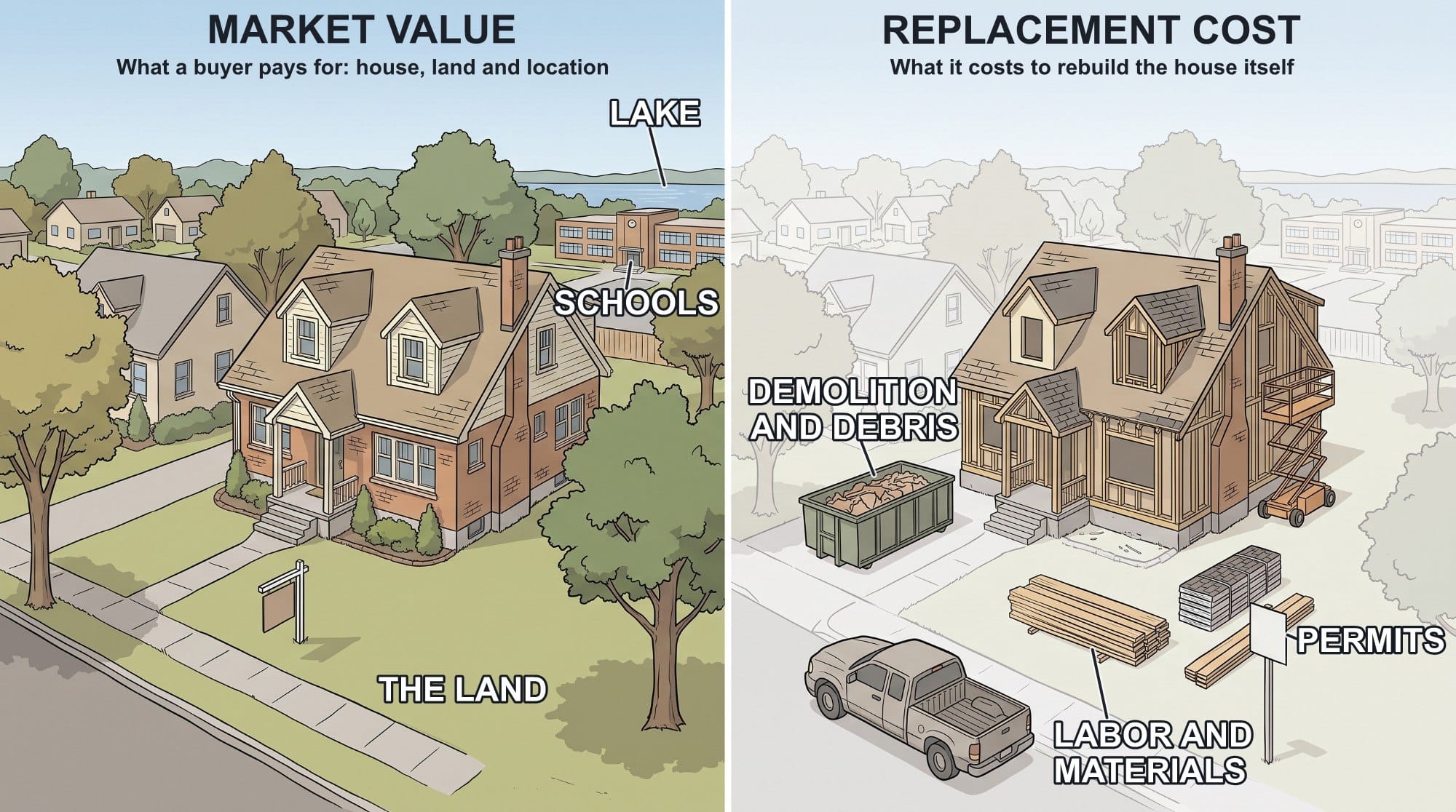
    The most fundamental requirement is that the dwelling coverage on your policy must be high enough to cover the cost of rebuilding the home from the ground up. This is called replacement cost coverage, and it is different from the home’s market value or the purchase price. A $400,000 home in a desirable neighborhood might only cost $250,000 to rebuild, or it might cost $500,000 depending on construction type, square footage, and local labor costs. Your insurer will use a replacement cost estimator to determine the right number, and your lender will want to see that the coverage amount meets or exceeds their threshold, typically at least 100% of the estimated replacement cost.
    Lenders also require that they be listed on the policy as a mortgagee, meaning the bank is formally recognized as a party with a financial interest in the property. This means that in the event of a major loss, the insurance proceeds are handled appropriately to protect both you and the lender. If you forget to add your lender as a mortgagee, expect a phone call from your closing attorney or loan officer before the ink dries.

    Most lenders also require continuous coverage with no lapses for the life of the loan. If your policy cancels or is non-renewed for any reason and the lender finds out, they have the right to purchase coverage on your behalf (called force-placed insurance) and charge you for it. Force-placed insurance is expensive and provides minimal protection for you as the homeowner, so keeping your policy active and in good standing is worth prioritizing.

    What to Look for Beyond the Basics


    Meeting the lender’s minimum requirements is the floor, not the ceiling. Here are the things worth paying close attention to when comparing policies.

    Replacement cost vs. actual cash value. A replacement cost policy pays to rebuild or repair using materials of similar quality. An actual cash value policy pays out the depreciated value of what was lost, which can leave a significant gap if you have a major claim. Replacement cost coverage costs more upfront, but it is almost always worth it.

    Extended or guaranteed replacement cost endorsements. Standard replacement cost coverage is based on an estimate, but construction costs can spike quickly, as anyone who tried to build or remodel during the last few years knows. Extended replacement cost coverage adds a buffer, typically 25% to 50% above the stated dwelling limit, to account for cost increases at the time of a claim. Guaranteed replacement cost, where available, removes the ceiling entirely. If you can get it, it is worth strong consideration.

    Flood and water coverage. Standard homeowners policies do not cover flooding from outside the home. If the property is in a designated flood zone, your lender will require a separate flood insurance policy, usually through the National Flood Insurance Program. But even outside flood zones, water damage from surface runoff, sump pump failure, or sewer backup is worth covering. Ask about water backup endorsements specifically, since many homeowners are surprised to learn their standard policy excludes it.

    Liability limits. Most standard policies come with $100,000 in personal liability coverage. That number has not kept pace with the realities of today’s legal and medical costs. Bumping your liability limit to $300,000 or $500,000 is usually quite affordable, and for broader protection, a personal umbrella policy is worth discussing.

    Service line coverage. This is a relatively new endorsement that covers the cost of repairing or replacing underground utility lines (electric, water, sewer, gas) that run from the street to your home. Most people do not know these are their responsibility until something breaks, and repair costs can run into the thousands.

    A Few Practical Tips for Buyers


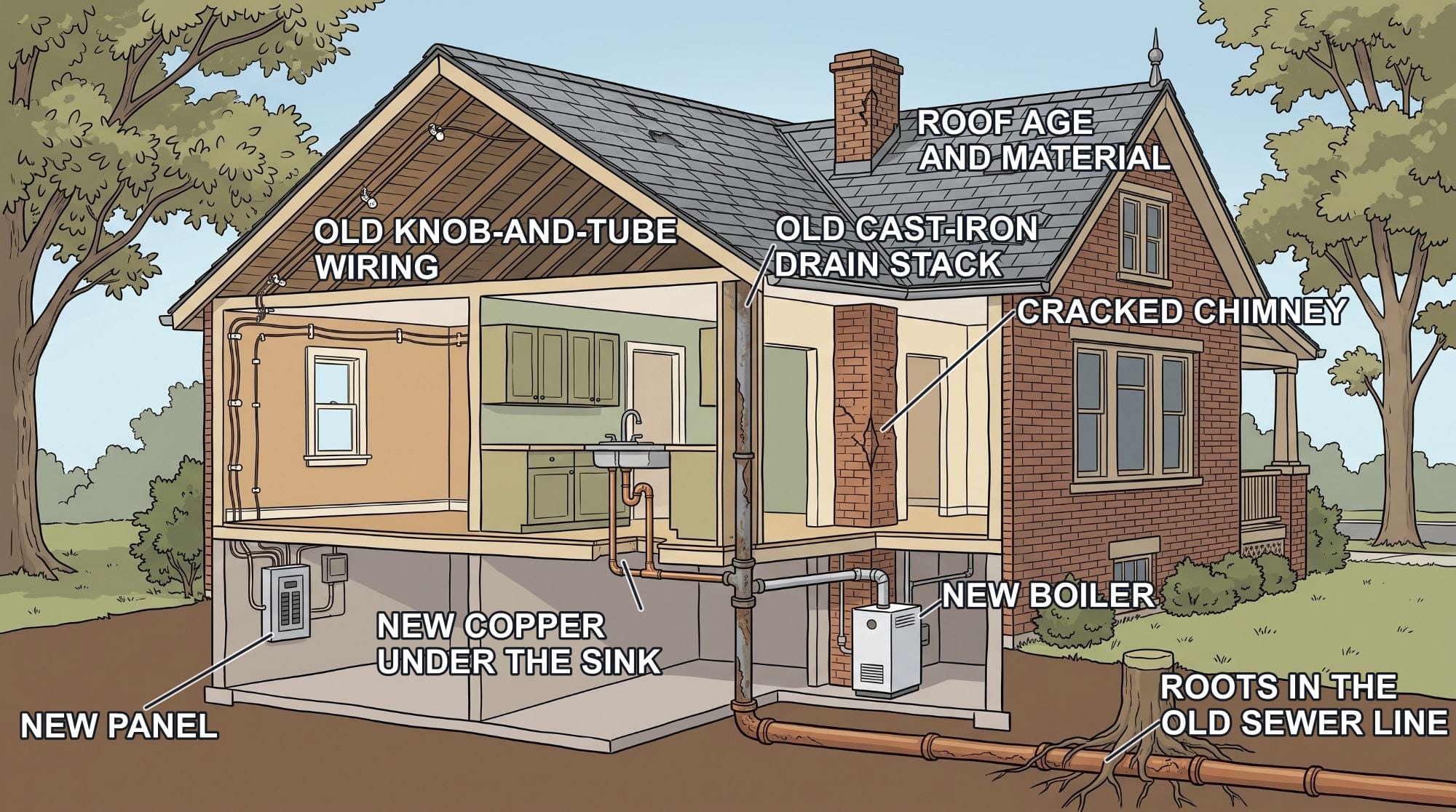
    If you are purchasing a home in an older neighborhood, ask specifically about the age of the roof and major systems. Insurers increasingly restrict coverage on older roofs or adjust how claims are paid on them, so knowing what you are walking into helps you make an informed comparison between carriers.

    If the home you are buying has had prior claims, that history will show up in a CLUE (Comprehensive Loss Underwriting Exchange) report. You can request a CLUE report for a property before you close. A history of water claims in particular can affect insurability or pricing, so it is good information to have during your due diligence period.

    Finally, bundle when it makes sense. If you are also insuring vehicles, combining your auto and home policies with the same carrier almost always results in a meaningful discount on both. The savings can add up to several hundred dollars a year.

    Getting the Right Coverage From the Start

    Homeowners insurance is not glamorous, but it is the foundation of your financial protection as a homeowner, and the decisions you make during the buying process set the tone for years to come. Working with an independent agent means you get access to multiple carriers and someone whose job is to find the right fit for your specific home and situation, not just sell you a policy.

    If you are buying a home on the North Shore or anywhere in the greater Chicago area, Longmeadow Insurance would be glad to help. We work with a range of carriers and can typically turn around a quote quickly enough to keep your closing timeline on track. Reach out anytime and we will take it from there.

    Coverage We Write

    Longmeadow Insurance is an independent agency in Wilmette with offices across Chicago and the suburbs. If any of this applies to your situation, we can review your current policy and tell you what it actually covers.

    Call 847.242.1040 or request a quote online.
  • Historic Home Insurance in Oak Park, Evanston, and the North Shore

    Historic Home Insurance in Oak Park, Evanston, and the North Shore

    Historic homes are not ordinary insurance risks. A vintage Oak Park home, an Evanston historic district property, a Kenilworth estate, or a North Shore lakefront home may include materials and craftsmanship that cannot be priced accurately with a basic replacement cost calculator.

    Insurance problems usually appear when the dwelling limit is based on square footage and a generic construction class rather than the actual cost to rebuild the home properly. Plaster walls, slate roofs, custom millwork, masonry, stained glass, tile, period hardware, and architectural details can make repairs slower and more expensive.

    For historic homes, the objective is not merely to satisfy the mortgage company. The objective is to preserve the financial ability to repair or rebuild the home in a way that respects its character and complies with current requirements.

    Replacement Cost Must Be Treated Seriously

    Market value and replacement cost are not the same thing. A historic home may sell for one amount but cost something very different to rebuild. Land value, location, school district, and market demand influence the sale price. Labor, materials, code requirements, debris removal, design professionals, and specialized trades influence the replacement cost.

    A standard estimate may not capture plaster restoration, custom wood windows, slate or tile roofing, ornamental masonry, built-in cabinetry, or period trim. If those features are insured as ordinary modern construction, the policy can be inadequate from the beginning.

    Owners should review dwelling limits regularly and consider carriers or policy forms that offer extended or guaranteed replacement cost when available.

    Ordinance or Law Coverage Can Be Critical

    Older homes may not comply with current building codes. After a covered loss, repairs may trigger code upgrades involving electrical systems, plumbing, stairs, fire safety, energy standards, or structural components. Standard property coverage may not pay for the increased cost of bringing damaged portions of the home up to current code unless ordinance or law coverage is included.

    This coverage is especially important for older homes in communities with strict permitting, inspection, or preservation requirements. Even a partial loss can become more expensive when code upgrades are required as part of the repair.

    Preservation Rules Can Complicate Claims

    Some properties are subject to historic district rules, architectural review, local preservation guidelines, or practical neighborhood expectations. These rules may affect materials, exterior appearance, windows, roofing, additions, and demolition decisions.

    If a claim requires specialized approval or period-appropriate work, repairs may take longer and cost more. The insurance program should account for that reality through adequate dwelling limits, loss of use coverage, ordinance or law coverage, and carriers with experience handling high-value or historic property claims.

    Renovation Creates a Different Insurance Problem

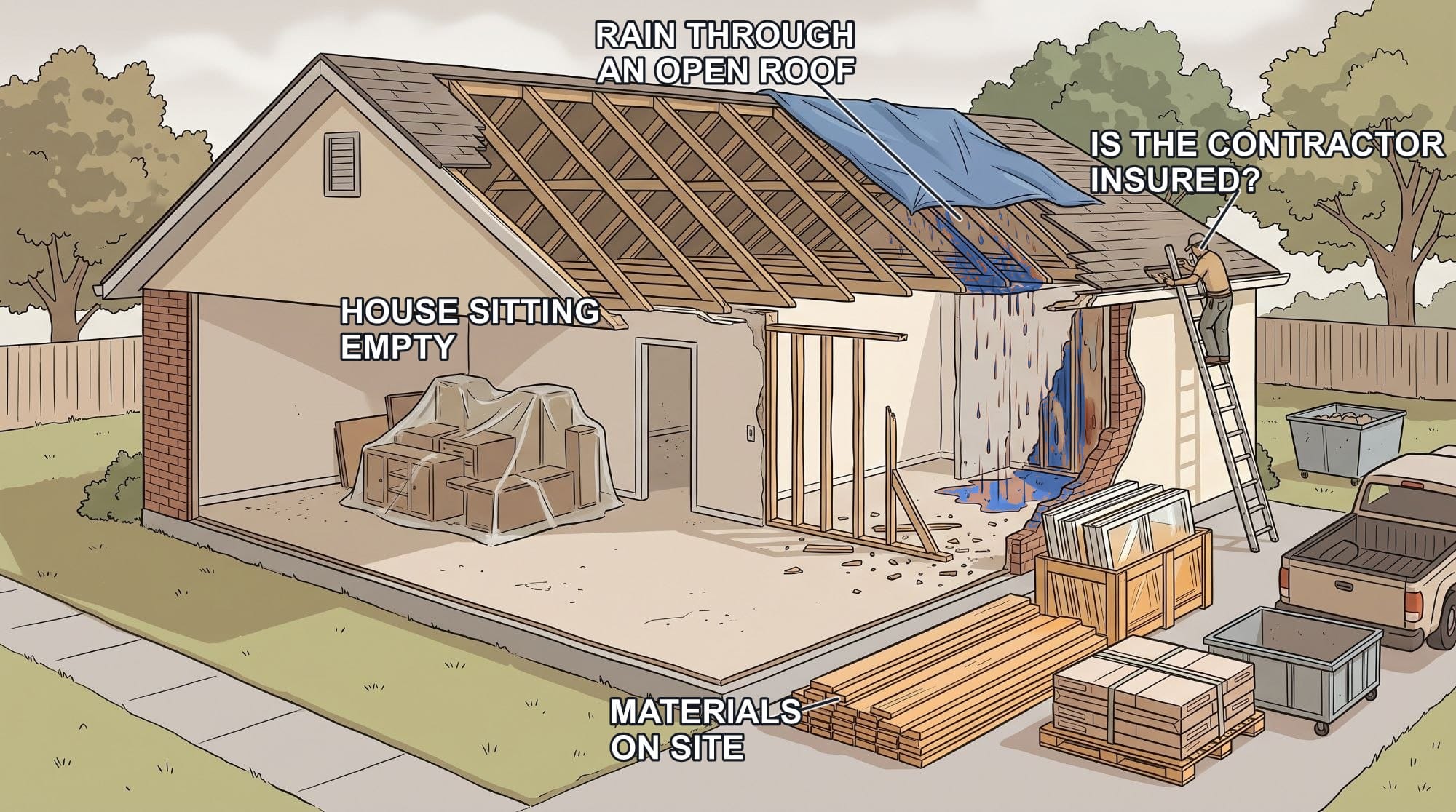
    Historic homes are often renovated in stages. A kitchen project, dormer addition, coach house update, roof replacement, or whole-home restoration can change the risk profile. Construction can create fire risk, theft exposure, vacant areas, open walls, temporary utilities, and contractor liability issues.

    Before work begins, the homeowner should notify the insurance agent, confirm whether the existing homeowners policy allows the project, verify contractor insurance, and consider builder’s risk or renovation coverage if the scope is significant. Waiting until after a loss creates unnecessary risk.

    Personal Property and Collections Deserve Attention

    Historic homes often contain valuables that need separate review: art, antiques, rugs, jewelry, silver, wine, musical instruments, books, collectibles, and custom furnishings. Standard homeowners policies include special limits and exclusions that may not fit these items.

    Scheduling valuables or using a dedicated valuable articles policy can provide broader coverage, agreed value, lower deductibles, and better claim handling than relying only on the base policy.

    Common Historic Home Insurance Mistakes

    The most common mistake is treating a historic home like a standard home with a higher price tag. The issue is not only value. The issue is the type of materials, the craftsmanship required, and the time needed to repair damage properly.

    Another mistake is failing to disclose renovations, additions, or preservation requirements. A carrier that understands the home at underwriting is better positioned than one learning the details during a claim.

    Owners also sometimes insure valuable contents under the base policy even when separate valuable articles coverage would provide broader and cleaner protection.

    What Documentation to Keep

    Keep appraisals, architectural plans, renovation invoices, photographs, roof records, permits, historic designation paperwork, and records of custom work. These documents help support replacement cost discussions and may be useful during a claim.

    For collections, maintain schedules, appraisals, photos, purchase records, and storage details. The more unique the item, the more documentation matters.

    How to Choose Coverage

    Prioritize policy quality over the cheapest premium. Historic homes need strong dwelling valuation, ordinance or law coverage, loss of use limits that allow for longer repairs, and carriers comfortable with high-value or unusual construction.

    A Practical Historic Home Example

    Consider a homeowner who updates coverage based only on the mortgage balance. After a kitchen fire, the repair requires plaster work, custom cabinetry, matching trim, electrical upgrades, and permit-driven code improvements. The claim is no longer a simple kitchen replacement. It is a specialized restoration project. If the policy was written like a standard newer home, the owner may face delays, disputes, and uncovered costs. A better policy review anticipates those issues before the loss.

    When comparing quotes, ask whether the policy solves this real-world problem or only produces a lower premium. Strong insurance planning begins with the claim scenario, then works backward to the coverage, deductible, limit, and endorsement choices that would matter when money is actually at stake.

    Coverage Review Checklist

    • Obtain a serious replacement cost review

    • Evaluate extended or guaranteed replacement cost

    • Increase ordinance or law coverage where appropriate

    • Tell your agent before renovation begins

    • Verify contractor insurance before work starts

    • Schedule jewelry, art, antiques, and collections

    • Review loss of use limits for longer repair timelines

    Bottom Line

    Longmeadow Insurance can review historic and high-value homes throughout Oak Park, Evanston, Chicago, and the North Shore with attention to the details standard policies often miss.

    How Longmeadow Insurance Can Help

    Longmeadow Insurance is an independent agency based in Wilmette, Illinois. We help homeowners, condo owners, landlords, families, and businesses compare coverage options and understand the tradeoffs before a claim occurs.

    If you would like a coverage review, call 847.242.1040 or request a consultation through Longmeadow Insurance.

    This article is for general educational purposes and is not legal, tax, or coverage advice. Actual coverage depends on the specific policy language, endorsements, underwriting, and facts of a claim.

    Coverage We Write

    Longmeadow Insurance is an independent agency in Wilmette with offices across Chicago and the suburbs. If any of this applies to your situation, we can review your current policy and tell you what it actually covers.

    Call 847.242.1040 or request a quote online.
  • What New Construction Homeowners in Elmhurst and the North Shore Should Check

    What New Construction Homeowners in Elmhurst and the North Shore Should Check

    New construction does not automatically mean low insurance risk. A newly built home in Elmhurst, Wilmette, Winnetka, Northbrook, Glenview, Oak Brook, or the North Shore may have modern systems and materials, but it can also have a high replacement cost, custom finishes, complex mechanicals, finished basements, and expensive liability exposure.

    Many homeowners focus on closing, mortgage requirements, and premium. The better approach is to treat the first policy as the foundation for protecting a major asset. If the coverage is built incorrectly at closing, the problem may remain hidden until the first claim.

    Here is what new construction homeowners should review before accepting a policy.

    Replacement Cost Should Not Be Based Only on Purchase Price

    The purchase price includes land, location, market demand, builder profit, and timing. Insurance replacement cost focuses on what it would cost to rebuild the structure after a covered loss. Those numbers can be very different.

    New homes often include custom kitchens, high-end flooring, finished basements, built-ins, upgraded windows, specialty roofing, smart home systems, outdoor living areas, and detached structures. The dwelling limit should reflect those details.

    A careful replacement cost estimate is especially important when construction costs are rising or when the home is larger and more customized than the average property in the area.

    Builder Warranties Are Not a Substitute for Insurance

    A builder warranty may address certain defects or workmanship issues. It is not the same as homeowners insurance. Insurance generally responds to covered sudden and accidental losses such as fire, wind, theft, liability, and certain water damage. Warranties and insurance serve different purposes.

    Homeowners should understand what the builder warranty covers, when it expires, and what maintenance obligations remain with the owner. They should also keep records of inspections, manuals, warranties, and subcontractor information.

    Water Coverage Still Matters

    New homes can still have water problems. Finished basements, sump pumps, ejector pumps, drain tile, grading, downspouts, window wells, and municipal storm systems all matter. A new home in an area with stormwater history can still experience sewer backup or surface water issues.

    Homeowners should review sewer backup, sump pump failure, service line, and flood options. The fact that a home is new does not eliminate the need to understand water exclusions.

    Roof Coverage and Exterior Materials Should Be Clear

    Roof and exterior coverage varies by insurer and policy form. Some policies treat wind and hail losses differently as roofs age. Some use actual cash value for certain roof claims. Others offer replacement cost subject to conditions.

    New construction homeowners should confirm how the roof, siding, windows, and exterior finishes are covered. They should also document the materials used, installation dates, warranties, and any impact-resistant features that may affect pricing or coverage.

    Umbrella Insurance Is Often Appropriate

    New construction buyers often have significant assets, income, or debt tied to the property. They may also have pools, trampolines, dogs, teen drivers, household employees, or frequent guests. Liability limits on a homeowners policy can be exhausted by a serious claim.

    Umbrella insurance adds a layer of liability protection over home and auto policies. For many households, it is one of the most cost-effective ways to protect against a catastrophic lawsuit.

    Common New Construction Insurance Mistakes

    New construction buyers often assume the builder’s cost is the same as insurance replacement cost. It may not be. Rebuilding after a loss can involve demolition, debris removal, code upgrades, temporary measures, and market pricing that differs from the original project.

    Another mistake is ignoring endorsements because everything is new. Sewer backup, service line, equipment breakdown, and water-related coverage can still matter in a new home.

    A third mistake is forgetting to update the policy after post-closing improvements such as finished basements, landscaping, outdoor kitchens, pools, or custom built-ins.

    Closing Checklist for Buyers

    Before closing, confirm dwelling replacement cost, deductible options, roof and exterior coverage, water backup, service line, personal property, loss of use, and liability limits. Ask whether the policy includes extended replacement cost and what conditions apply.

    If the home is part of an association, review any association insurance requirements as well. Townhome and planned community documents can create obligations that affect personal coverage.

    After Move-In

    Save manuals, warranties, plans, surveys, closing documents, inspection reports, and contractor information. Photograph the home and major finishes. Update the insurance file after significant improvements.

    A Practical New Construction Example

    Consider a newly built home with a finished basement, custom kitchen, upgraded mechanical systems, and extensive landscaping. The home is new, but the cost to rebuild it after a fire may be higher than the original construction contract because debris removal, current labor costs, permits, and code compliance all affect the claim. The policy should be built for the rebuild scenario, not just the closing table.

    When comparing quotes, ask whether the policy solves this real-world problem or only produces a lower premium. Strong insurance planning begins with the claim scenario, then works backward to the coverage, deductible, limit, and endorsement choices that would matter when money is actually at stake.

    Coverage Review Checklist

    • Review dwelling replacement cost in detail

    • Confirm extended or guaranteed replacement cost availability

    • Add sewer backup and service line coverage where appropriate

    • Evaluate flood exposure even if no lender requirement exists

    • Document roof, exterior materials, and major systems

    • Compare liability limits with household assets

    • Consider umbrella coverage before teen drivers or pools increase risk

    Bottom Line

    Longmeadow Insurance can review new construction policies for Elmhurst, North Shore, and Chicagoland homeowners before or after closing.

    How Longmeadow Insurance Can Help

    Longmeadow Insurance is an independent agency based in Wilmette, Illinois. We help homeowners, condo owners, landlords, families, and businesses compare coverage options and understand the tradeoffs before a claim occurs.

    If you would like a coverage review, call 847.242.1040 or request a consultation through Longmeadow Insurance.

    This article is for general educational purposes and is not legal, tax, or coverage advice. Actual coverage depends on the specific policy language, endorsements, underwriting, and facts of a claim.

    Coverage We Write

    Longmeadow Insurance is an independent agency in Wilmette with offices across Chicago and the suburbs. If any of this applies to your situation, we can review your current policy and tell you what it actually covers.

    Call 847.242.1040 or request a quote online.
  • Why Home Insurance Is Getting So Expensive in Illinois

    If your Illinois home insurance renewal is higher than last year, you are not alone. Many homeowners in Chicago, the North Shore, Lake County, DuPage County, and nearby suburbs are seeing premium increases even when they have not filed a claim. That can feel confusing because most people naturally connect insurance pricing to their own personal claim history.

    Your claim history matters, but it is only one part of the pricing picture. Home insurance is also affected by regional storm losses, rebuilding costs, roof claim trends, inflation, labor shortages, material costs, litigation, reinsurance costs, and a carrier’s overall appetite for a particular type of home. In other words, your bill can go up because the cost of insuring homes like yours has changed, not necessarily because you did anything wrong.

    The goal is not to panic or strip out coverage just to make the premium smaller. The goal is to understand what changed, where the biggest cost drivers are, and which coverage adjustments are safe versus risky.

    Quick summary

    • Premium increases are not always caused by your own claims
    • Storm losses and roof costs are a major driver in Illinois
    • Rebuilding costs are higher than market value conversations suggest
    • Water losses are becoming more expensive
    • Underwriting has become less forgiving

    Premium increases are not always caused by your own claims

    A claim-free homeowner can still receive a higher renewal because insurance companies price policies based on expected future losses across many homes. If a carrier has paid more storm, fire, water, liability, or roof claims in a state or region, that experience can affect policyholders who never filed a claim themselves.

    This is frustrating, but it is how pooled insurance works. The company must collect enough premium across the group to pay expected claims, claim handling costs, operating expenses, and future catastrophe risk. When those assumptions change, premiums move.

    That does not mean every increase is justified or that you should automatically accept it. It does mean the review should start with the coverage details and market context, not only with the question, “Why did my price go up if I had no claims?”

    Storm losses and roof costs are a major driver in Illinois

    Wind, hail, heavy rain, freezing temperatures, and severe convective storms have become a bigger pricing issue throughout the Midwest. One hailstorm can damage thousands of roofs in a relatively small area. Even if your street was spared, nearby losses can affect the carrier’s view of regional risk.

    Roof claims are especially important because roof replacement is expensive and common. Insurers are paying close attention to roof age, roof material, roof condition, prior storm activity, tree exposure, and whether the policy settles roof claims on a replacement cost or actual cash value basis.

    For homeowners, this means roof coverage should be reviewed carefully. A lower premium may come with a roof settlement provision that creates a much larger out-of-pocket cost after a hail or wind claim.

    Rebuilding costs are higher than market value conversations suggest

    Homeowners often compare insurance limits to the market value of the home. That is understandable, but it is not the right comparison. Home insurance dwelling coverage is intended to reflect the cost to rebuild the home after a covered loss, not the price someone would pay for the house and land.

    Rebuilding can include demolition, debris removal, architectural work, permits, code upgrades, labor, materials, contractor overhead, temporary demand surges after storms, and specialized finishes. Older North Shore homes, Chicago two-flats, vintage condos, masonry homes, and custom properties can be particularly expensive to restore.

    If the dwelling limit rises, it may be because the insurer’s replacement cost estimate increased. That should be reviewed, but it should not automatically be reduced without understanding the potential claim consequences.

    Water losses are becoming more expensive

    Many Illinois homes have basements, sump pumps, sewer connections, older plumbing, or finished lower levels. Water losses can involve sewer backup, sump failure, burst pipes, appliance leaks, roof leaks, ice dams, or surface water. Each type of water loss can be treated differently by the policy.

    Water cleanup, mitigation, drywall, flooring, mold prevention, personal property, and temporary housing can add up quickly. A small water backup limit may look fine on paper until a finished basement is damaged after a major storm.

    When reviewing a renewal, look at the water backup limit, deductible, flood exclusion, sump pump language, and whether basement improvements and contents are adequately reflected.

    Underwriting has become less forgiving

    In a softer market, a carrier may accept homes with older roofs, older systems, heavy tree exposure, prior claims, or incomplete updates. In a tighter market, the same home may receive more scrutiny. Some carriers may require photos, inspections, roof documentation, updated replacement cost information, or proof of repairs.

    This does not mean the home is uninsurable. It means the information needs to be accurate and the policy needs to match the risk. If your home has had updates, gather documentation: roof invoices, plumbing work, electrical updates, HVAC replacement, renovation permits, and photos.

    An independent agency can help present the home accurately and compare which carriers are still a good fit.

    What homeowners should review before accepting the renewal

    Start with the declarations page. Review the dwelling limit, other structures limit, personal property, loss of use, liability, medical payments, deductible, wind/hail deductible, roof settlement terms, water backup, service line, equipment breakdown, ordinance or law, and scheduled property.

    Then compare the renewal premium to last year and identify whether the increase came from rate changes, coverage changes, replacement cost inflation, discounts, endorsements, or deductible changes. Sometimes the solution is shopping. Sometimes it is adjusting deductibles or endorsements. Sometimes the best move is staying put because the current coverage is stronger than cheaper alternatives.

    Avoid making a quick decision based only on monthly payment. The wrong cut can save a few dollars now and create a much larger problem after a claim.

    How to use this article

    Use this as a review guide rather than a substitute for reading the policy. Insurance policies depend on definitions, exclusions, endorsements, limits, deductibles, underwriting rules, and state-specific forms. The same general topic can produce a different answer depending on the carrier and the exact policy language.

    A good review should end with a clear decision: keep the current policy, adjust limits or endorsements, compare other carriers, gather more documentation, or ask a more specific underwriting question. If the answer is vague, the review is not finished.

    Coverage details that deserve a second look

    • Replacement cost versus actual cash value.
    • Whether roof damage is settled differently because of age or material.
    • Whether water backup, flood, seepage, and sump overflow are separate issues.
    • Whether liability limits match household assets and income.
    • Whether special property, jewelry, collections, bicycles, business property, or equipment need separate treatment.
    • Whether policy language changes at renewal created new restrictions.

    Why working with a local agency can help

    Local insurance work is partly about knowing which questions to ask. A national quote form may produce a price, but it may not pause to ask about a vintage Chicago condo association deductible, an older Evanston home with plaster and custom millwork, a finished basement in the suburbs, a teen driver, a two-flat, or a property that changed from owner-occupied to rented.

    A local independent agency can compare multiple carriers, explain the tradeoffs, and help keep the policy aligned with the real risk. That does not mean the most expensive option is always best. It means the choice should be made with the coverage consequences clearly understood.

    A practical example

    Consider a household that focuses only on lowering the annual premium. The new quote may look attractive at first because the payment is smaller, but the difference often comes from somewhere: a higher deductible, a lower limit, a narrower endorsement, a different roof settlement method, or a missing coverage option. That tradeoff may be reasonable, but it should be intentional rather than accidental.

    The better approach is to compare the real claim scenarios. What happens after a wind or hail loss? What happens after water enters the basement? What happens if someone is injured and the claim exceeds the basic liability limit? What happens if repairs require code upgrades? Those questions usually reveal more than the premium alone.

    Common mistakes to avoid

    • Comparing only the annual premium instead of the coverage details.
    • Assuming every quote uses the same deductible, roof terms, water limits, and liability limits.
    • Reducing important coverage without estimating the possible out-of-pocket cost after a claim.
    • Waiting until the renewal date, closing date, or claim deadline to ask coverage questions.
    • Forgetting to update the policy after renovations, household changes, new drivers, rental exposure, or property-use changes.

    Local Chicago-area considerations

    Insurance decisions in Chicago, the North Shore, and the surrounding suburbs often involve local details that generic national advice can miss. Older homes, vintage condo buildings, two-flats, finished basements, sewer systems, lake-effect weather, mature trees, hail exposure, dense parking, and high reconstruction costs can all affect the right policy structure.

    Location also matters because the same coverage issue can look different in different communities. A Wilmette or Evanston older home, a Lakeview condo, an Elmhurst newer construction home, an Elk Grove Village business property, and a Chicago landlord exposure may all need different questions answered before the policy is truly comparable.

    Documents and details worth gathering

    • Current declarations page and renewal offer.
    • Roof age, roof material, and any recent roof invoices or inspection notes.
    • Recent renovation permits, contractor invoices, or photos of major updates.
    • Mortgagee information, closing documents, or association documents when relevant.
    • Photos or inventory notes for finished basements, valuables, or special property.
    • Prior claim information and any repair documentation.

    Questions to ask before you make a change

    • What changed since last year?
    • What coverage would I lose if I choose a cheaper option?
    • Are the deductible, water, roof, and liability terms still appropriate?
    • Does this policy match the way the property or household is actually used?
    • Would this policy still look good after a large claim, not just before one?

    Frequently asked questions

    Should I lower my dwelling limit to reduce premium?

    Only if the limit is clearly overstated after a proper replacement cost review. Reducing it just to save premium can create underinsurance after a major loss.

    Is a higher deductible a good idea?

    It can be, if you can comfortably absorb the out-of-pocket cost. Compare the savings to the extra risk before changing it.

    Should I shop every renewal?

    You do not need to shop constantly, but a large increase is a reasonable time to compare options and coverage quality.

    Talk with a local independent insurance agency

    Longmeadow Insurance can help Illinois homeowners review renewal increases, compare coverage options, and understand which changes are safe versus risky. If you want help reviewing your options, you can start with Longmeadow’s get a quote form.

    Coverage We Write

    Longmeadow Insurance is an independent agency in Wilmette with offices across Chicago and the suburbs. If any of this applies to your situation, we can review your current policy and tell you what it actually covers.

    Call 847.242.1040 or request a quote online.
  • What to Do If Your Insurance Company Raises Your Home Insurance Rate

    A home insurance rate increase can be irritating, especially when it arrives with little explanation. The natural reaction is to shop immediately or ask for the cheapest possible alternative. Shopping may be the right move, but it should be done carefully.

    Home insurance policies can differ in ways that are not obvious from the premium. One policy may be cheaper because it has a higher deductible, lower dwelling limit, weaker roof coverage, less water backup protection, lower liability limits, or fewer endorsements. If you switch without comparing those details, you may solve the bill problem and create a claim problem.

    Here is a practical step-by-step way to respond when your home insurance rate goes up.

    Quick summary

    • Step 1: Find out what actually changed
    • Step 2: Do not cancel before the replacement policy is active
    • Step 3: Compare roof coverage very carefully
    • Step 4: Review water backup and basement exposure
    • Step 5: Look at liability and umbrella needs

    Step 1: Find out what actually changed

    Compare this year’s declarations page to last year’s. Look at the premium, dwelling limit, other structures, personal property, loss of use, liability, deductible, roof coverage, water backup, and endorsements. A premium increase may be driven by rate changes, but it may also be tied to higher replacement cost, a discount change, a coverage change, or an underwriting update.

    If the dwelling limit increased, ask whether the replacement cost estimate changed. If a discount disappeared, ask why. If a deductible changed, make sure you understand the new out-of-pocket exposure.

    Do not rely only on the payment amount. The declarations page usually tells the better story.

    Step 2: Do not cancel before the replacement policy is active

    Never cancel a home insurance policy until the replacement coverage is approved, bound, and effective. A gap in coverage can create lender problems and leave you exposed if a claim happens between policies.

    If you have a mortgage, your lender may require proof of insurance. The new policy needs the correct mortgagee clause, loan number if required, effective date, and billing setup.

    If you are switching near renewal, coordinate the timing so there is no lapse and no duplicate payment confusion.

    Step 3: Compare roof coverage very carefully

    Roof coverage is one of the biggest differences between home insurance policies today. Some policies provide replacement cost for eligible roof damage. Others may use actual cash value, roof schedules, cosmetic damage exclusions, higher wind/hail deductibles, or other limitations.

    A cheaper quote with weaker roof coverage can be a bad tradeoff for homeowners in Illinois because hail and wind claims are common. The premium savings should be weighed against the possibility of a much larger out-of-pocket cost after a storm.

    Ask directly: how would the roof be settled after covered wind or hail damage, and does roof age change that settlement?

    Step 4: Review water backup and basement exposure

    Water backup is often optional or limited. If your home has a basement, sump pump, floor drain, older sewer line, or finished lower level, this coverage deserves attention.

    A low limit may not cover mitigation, flooring, drywall, furniture, mechanical systems, and cleanup after a serious backup. Flood insurance is a separate issue and should not be confused with sewer or drain backup.

    When comparing quotes, make sure each policy uses the same water backup limit. Otherwise the cheaper quote may simply be offering less coverage.

    Step 5: Look at liability and umbrella needs

    Home insurance is not only property coverage. Liability matters too. Injuries on your property, dog incidents, accidents involving children, rental exposure, and other claims can create serious financial risk.

    If your household has savings, home equity, higher income, teen drivers, rental property, or other exposures, review the liability limit and consider umbrella insurance. Cutting liability to reduce premium is usually not a wise first move.

    A good review looks at the household’s overall risk, not just the home premium.

    Step 6: Compare options through an independent agency

    An independent agency can compare multiple carriers and explain the differences. The goal should be to determine whether your current renewal is still competitive, whether another carrier is a better fit, and what coverage tradeoffs come with each option.

    Sometimes the current company is still the best choice. Sometimes another option offers similar or better coverage at a better price. Sometimes the cheapest option is not appropriate once you compare the policy details.

    The useful question is not “What is the cheapest?” The useful question is “What is the best value for the coverage I need?”

    How to use this article

    Use this as a review guide rather than a substitute for reading the policy. Insurance policies depend on definitions, exclusions, endorsements, limits, deductibles, underwriting rules, and state-specific forms. The same general topic can produce a different answer depending on the carrier and the exact policy language.

    A good review should end with a clear decision: keep the current policy, adjust limits or endorsements, compare other carriers, gather more documentation, or ask a more specific underwriting question. If the answer is vague, the review is not finished.

    Coverage details that deserve a second look

    • Replacement cost versus actual cash value.
    • Whether roof damage is settled differently because of age or material.
    • Whether water backup, flood, seepage, and sump overflow are separate issues.
    • Whether liability limits match household assets and income.
    • Whether special property, jewelry, collections, bicycles, business property, or equipment need separate treatment.
    • Whether policy language changes at renewal created new restrictions.

    Why working with a local agency can help

    Local insurance work is partly about knowing which questions to ask. A national quote form may produce a price, but it may not pause to ask about a vintage Chicago condo association deductible, an older Evanston home with plaster and custom millwork, a finished basement in the suburbs, a teen driver, a two-flat, or a property that changed from owner-occupied to rented.

    A local independent agency can compare multiple carriers, explain the tradeoffs, and help keep the policy aligned with the real risk. That does not mean the most expensive option is always best. It means the choice should be made with the coverage consequences clearly understood.

    A practical example

    Consider a household that focuses only on lowering the annual premium. The new quote may look attractive at first because the payment is smaller, but the difference often comes from somewhere: a higher deductible, a lower limit, a narrower endorsement, a different roof settlement method, or a missing coverage option. That tradeoff may be reasonable, but it should be intentional rather than accidental.

    The better approach is to compare the real claim scenarios. What happens after a wind or hail loss? What happens after water enters the basement? What happens if someone is injured and the claim exceeds the basic liability limit? What happens if repairs require code upgrades? Those questions usually reveal more than the premium alone.

    Common mistakes to avoid

    • Comparing only the annual premium instead of the coverage details.
    • Assuming every quote uses the same deductible, roof terms, water limits, and liability limits.
    • Reducing important coverage without estimating the possible out-of-pocket cost after a claim.
    • Waiting until the renewal date, closing date, or claim deadline to ask coverage questions.
    • Forgetting to update the policy after renovations, household changes, new drivers, rental exposure, or property-use changes.

    Local Chicago-area considerations

    Insurance decisions in Chicago, the North Shore, and the surrounding suburbs often involve local details that generic national advice can miss. Older homes, vintage condo buildings, two-flats, finished basements, sewer systems, lake-effect weather, mature trees, hail exposure, dense parking, and high reconstruction costs can all affect the right policy structure.

    Location also matters because the same coverage issue can look different in different communities. A Wilmette or Evanston older home, a Lakeview condo, an Elmhurst newer construction home, an Elk Grove Village business property, and a Chicago landlord exposure may all need different questions answered before the policy is truly comparable.

    Documents and details worth gathering

    • Current declarations page and renewal offer.
    • Roof age, roof material, and any recent roof invoices or inspection notes.
    • Recent renovation permits, contractor invoices, or photos of major updates.
    • Mortgagee information, closing documents, or association documents when relevant.
    • Photos or inventory notes for finished basements, valuables, or special property.
    • Prior claim information and any repair documentation.

    Questions to ask before you make a change

    • What changed since last year?
    • What coverage would I lose if I choose a cheaper option?
    • Are the deductible, water, roof, and liability terms still appropriate?
    • Does this policy match the way the property or household is actually used?
    • Would this policy still look good after a large claim, not just before one?

    Frequently asked questions

    Does a higher premium mean I should switch?

    Not automatically. It means you should review coverage and compare options. Switching only makes sense if the replacement policy is a better fit.

    Can I reduce coverage to lower the bill?

    Sometimes, but do it carefully. Deductibles may be adjustable, but cutting dwelling, liability, water backup, or roof coverage can be risky.

    How early should I shop before renewal?

    Start several weeks before renewal if possible. That gives time to gather information, answer underwriting questions, and avoid a lapse.

    Talk with a local independent insurance agency

    Longmeadow Insurance can review your home insurance renewal, compare options from multiple carriers, and help you decide whether staying, adjusting coverage, or switching makes sense. If you want help reviewing your options, you can start with Longmeadow’s get a quote form.

    Coverage We Write

    Longmeadow Insurance is an independent agency in Wilmette with offices across Chicago and the suburbs. If any of this applies to your situation, we can review your current policy and tell you what it actually covers.

    Call 847.242.1040 or request a quote online.
  • Insurance Checklist Before Buying a Home in the Chicago Suburbs

    Buying a home in the Chicago suburbs is already full of deadlines: inspection, attorney review, mortgage approval, appraisal, closing disclosures, movers, utilities, and repairs. Insurance often gets pushed to the end. That can be a mistake.

    Home insurance can reveal issues that matter before closing, including roof age, prior claims, water exposure, flood concerns, replacement cost, occupancy, and lender requirements. Starting early gives you time to solve problems rather than scramble.

    Quick summary

    • Start the insurance review during the contract period
    • Roof age and condition can affect eligibility
    • Water history matters
    • Replacement cost is different from purchase price
    • Coordinate the policy with lender and closing requirements

    Start the insurance review during the contract period

    Do not wait until the week of closing. Once you have a signed contract, begin gathering information for insurance quotes: address, purchase price, closing date, lender information, roof age, updates, square footage, and inspection details.

    If underwriting questions come up, you want time to answer them before the lender needs proof of insurance.

    Roof age and condition can affect eligibility

    Roof age is one of the most common underwriting questions. Older roofs, visible wear, prior storm damage, or missing documentation can affect pricing or eligibility.

    Ask the seller for roof age, permits, invoices, warranties, and any claim history. If the inspection raises roof concerns, discuss them before closing.

    Water history matters

    Basement seepage, sewer backup, sump pump failure, prior flood, grading issues, and window well problems should all be reviewed. Insurance coverage depends on how water enters the home, so one endorsement does not solve every water issue.

    Consider water backup coverage and evaluate flood insurance separately, even when the lender does not require flood coverage.

    Replacement cost is different from purchase price

    A home may sell for more or less than it costs to rebuild. Land value, school district, lot size, and market competition affect purchase price. Insurance should focus on rebuilding the structure.

    Custom finishes, older construction, additions, detached garages, finished basements, and local code requirements can all influence the replacement cost estimate.

    Coordinate the policy with lender and closing requirements

    The lender will need evidence of insurance with the correct mortgagee clause and effective date. If escrow is involved, billing details must also be correct.

    For condos, request the master policy and bylaws early. The unit-owner policy should coordinate with the association’s responsibilities and deductible structure.

    How to use this article

    Use this as a review guide rather than a substitute for reading the policy. Insurance policies depend on definitions, exclusions, endorsements, limits, deductibles, underwriting rules, and state-specific forms. The same general topic can produce a different answer depending on the carrier and the exact policy language.

    A good review should end with a clear decision: keep the current policy, adjust limits or endorsements, compare other carriers, gather more documentation, or ask a more specific underwriting question. If the answer is vague, the review is not finished.

    Coverage details that deserve a second look

    • Replacement cost versus actual cash value.
    • Whether roof damage is settled differently because of age or material.
    • Whether water backup, flood, seepage, and sump overflow are separate issues.
    • Whether liability limits match household assets and income.
    • Whether special property, jewelry, collections, bicycles, business property, or equipment need separate treatment.
    • Whether policy language changes at renewal created new restrictions.

    Why working with a local agency can help

    Local insurance work is partly about knowing which questions to ask. A national quote form may produce a price, but it may not pause to ask about a vintage Chicago condo association deductible, an older Evanston home with plaster and custom millwork, a finished basement in the suburbs, a teen driver, a two-flat, or a property that changed from owner-occupied to rented.

    A local independent agency can compare multiple carriers, explain the tradeoffs, and help keep the policy aligned with the real risk. That does not mean the most expensive option is always best. It means the choice should be made with the coverage consequences clearly understood.

    A practical example

    Consider a household that focuses only on lowering the annual premium. The new quote may look attractive at first because the payment is smaller, but the difference often comes from somewhere: a higher deductible, a lower limit, a narrower endorsement, a different roof settlement method, or a missing coverage option. That tradeoff may be reasonable, but it should be intentional rather than accidental.

    The better approach is to compare the real claim scenarios. What happens after a wind or hail loss? What happens after water enters the basement? What happens if someone is injured and the claim exceeds the basic liability limit? What happens if repairs require code upgrades? Those questions usually reveal more than the premium alone.

    Common mistakes to avoid

    • Comparing only the annual premium instead of the coverage details.
    • Assuming every quote uses the same deductible, roof terms, water limits, and liability limits.
    • Reducing important coverage without estimating the possible out-of-pocket cost after a claim.
    • Waiting until the renewal date, closing date, or claim deadline to ask coverage questions.
    • Forgetting to update the policy after renovations, household changes, new drivers, rental exposure, or property-use changes.

    Local Chicago-area considerations

    Insurance decisions in Chicago, the North Shore, and the surrounding suburbs often involve local details that generic national advice can miss. Older homes, vintage condo buildings, two-flats, finished basements, sewer systems, lake-effect weather, mature trees, hail exposure, dense parking, and high reconstruction costs can all affect the right policy structure.

    Location also matters because the same coverage issue can look different in different communities. A Wilmette or Evanston older home, a Lakeview condo, an Elmhurst newer construction home, an Elk Grove Village business property, and a Chicago landlord exposure may all need different questions answered before the policy is truly comparable.

    Documents and details worth gathering

    • Current declarations page and renewal offer.
    • Roof age, roof material, and any recent roof invoices or inspection notes.
    • Recent renovation permits, contractor invoices, or photos of major updates.
    • Mortgagee information, closing documents, or association documents when relevant.
    • Photos or inventory notes for finished basements, valuables, or special property.
    • Prior claim information and any repair documentation.

    Questions to ask before you make a change

    • What changed since last year?
    • What coverage would I lose if I choose a cheaper option?
    • Are the deductible, water, roof, and liability terms still appropriate?
    • Does this policy match the way the property or household is actually used?
    • Would this policy still look good after a large claim, not just before one?

    Frequently asked questions

    When should I start shopping home insurance during a purchase?

    As soon as the contract is moving forward. Waiting until the final week can create avoidable closing stress.

    Do I need flood insurance if the lender does not require it?

    Maybe. Lender requirements are not the same as actual water risk.

    What if the roof is old?

    An older roof may still be insurable, but underwriting may ask questions or offer different terms.

    Talk with a local independent insurance agency

    Longmeadow Insurance can help Chicago suburban homebuyers review insurance options before closing so coverage is ready, accurate, and matched to the property. If you want help reviewing your options, you can start with Longmeadow’s get a quote form.

    Coverage We Write

    Longmeadow Insurance is an independent agency in Wilmette with offices across Chicago and the suburbs. If any of this applies to your situation, we can review your current policy and tell you what it actually covers.

    Call 847.242.1040 or request a quote online.
  • Home Insurance for Older Homes in Evanston, Wilmette, and the North Shore

    Older homes in Evanston, Wilmette, Winnetka, Kenilworth, Glencoe, Northfield, and nearby communities often have character that newer construction cannot duplicate. Plaster walls, hardwood floors, custom trim, masonry, slate roofs, additions, finished basements, and mature neighborhoods can all make a home more distinctive. They can also make the insurance review more important.

    A policy for an older home should not be built from a rough online estimate alone. It should consider rebuilding cost, updates, roof age, ordinance requirements, water exposure, and the real cost to repair unique features after a covered loss.

    Coverage highlights

    • Replacement cost is not the purchase price
    • Document updates before underwriting asks
    • Roof age and roof material deserve attention
    • Basements and sewer backup are a major North Shore issue
    • Ordinance or law coverage can be critical

    Replacement cost is not the purchase price

    The dwelling limit should reflect the cost to rebuild, not what the home would sell for. Older homes may include materials and craftsmanship that are expensive to reproduce. Even if the market value seems lower than the insurance limit, the rebuilding cost can still be appropriate.

    Review extended replacement cost, inflation protection, debris removal, and ordinance or law coverage. These details matter after a major fire, storm, or water loss.

    Document updates before underwriting asks

    Carriers often ask about roofs, wiring, plumbing, heating, and renovations. If the home has been updated, keep invoices, permits, inspection reports, and photos. Documentation can help show that an older home has been maintained and modernized.

    Without documentation, underwriting may assume the worst or ask for additional inspection information.

    Roof age and roof material deserve attention

    Roof questions are common for older homes. Asphalt, slate, tile, flat, and specialty roofs can all be treated differently. A beautiful roof may still create underwriting questions if age, condition, or repair history is unclear.

    Ask how the policy would settle a covered roof claim and whether age affects replacement cost eligibility.

    Basements and sewer backup are a major North Shore issue

    Many older homes have basements that are used as living space, offices, playrooms, gyms, or storage. Sewer backup, sump failure, seepage, and flood are not the same coverage issue.

    Review water backup limits and flood options before heavy rain exposes a gap. A finished basement can exceed a small endorsement limit quickly.

    Ordinance or law coverage can be critical

    If a covered loss requires reconstruction, current building codes may require upgrades that were not part of the original home. Ordinance or law coverage can help with some of those increased costs depending on the policy.

    This can matter for electrical, plumbing, structural, energy, and safety requirements.

    How to use this article

    Use this as a review guide rather than a substitute for reading the policy. Insurance policies depend on definitions, exclusions, endorsements, limits, deductibles, underwriting rules, and state-specific forms. The same general topic can produce a different answer depending on the carrier and the exact policy language.

    A good review should end with a clear decision: keep the current policy, adjust limits or endorsements, compare other carriers, gather more documentation, or ask a more specific underwriting question. If the answer is vague, the review is not finished.

    Coverage details that deserve a second look

    • Replacement cost versus actual cash value.
    • Whether roof damage is settled differently because of age or material.
    • Whether water backup, flood, seepage, and sump overflow are separate issues.
    • Whether liability limits match household assets and income.
    • Whether special property, jewelry, collections, bicycles, business property, or equipment need separate treatment.
    • Whether policy language changes at renewal created new restrictions.

    Why working with a local agency can help

    Local insurance work is partly about knowing which questions to ask. A national quote form may produce a price, but it may not pause to ask about a vintage Chicago condo association deductible, an older Evanston home with plaster and custom millwork, a finished basement in the suburbs, a teen driver, a two-flat, or a property that changed from owner-occupied to rented.

    A local independent agency can compare multiple carriers, explain the tradeoffs, and help keep the policy aligned with the real risk. That does not mean the most expensive option is always best. It means the choice should be made with the coverage consequences clearly understood.

    A practical example

    Consider a household that focuses only on lowering the annual premium. The new quote may look attractive at first because the payment is smaller, but the difference often comes from somewhere: a higher deductible, a lower limit, a narrower endorsement, a different roof settlement method, or a missing coverage option. That tradeoff may be reasonable, but it should be intentional rather than accidental.

    The better approach is to compare the real claim scenarios. What happens after a wind or hail loss? What happens after water enters the basement? What happens if someone is injured and the claim exceeds the basic liability limit? What happens if repairs require code upgrades? Those questions usually reveal more than the premium alone.

    Common mistakes to avoid

    • Comparing only the annual premium instead of the coverage details.
    • Assuming every quote uses the same deductible, roof terms, water limits, and liability limits.
    • Reducing important coverage without estimating the possible out-of-pocket cost after a claim.
    • Waiting until the renewal date, closing date, or claim deadline to ask coverage questions.
    • Forgetting to update the policy after renovations, household changes, new drivers, rental exposure, or property-use changes.

    Local Chicago-area considerations

    Insurance decisions in Chicago, the North Shore, and the surrounding suburbs often involve local details that generic national advice can miss. Older homes, vintage condo buildings, two-flats, finished basements, sewer systems, lake-effect weather, mature trees, hail exposure, dense parking, and high reconstruction costs can all affect the right policy structure.

    Location also matters because the same coverage issue can look different in different communities. A Wilmette or Evanston older home, a Lakeview condo, an Elmhurst newer construction home, an Elk Grove Village business property, and a Chicago landlord exposure may all need different questions answered before the policy is truly comparable.

    Documents and details worth gathering

    • Current declarations page and renewal offer.
    • Roof age, roof material, and any recent roof invoices or inspection notes.
    • Recent renovation permits, contractor invoices, or photos of major updates.
    • Mortgagee information, closing documents, or association documents when relevant.
    • Photos or inventory notes for finished basements, valuables, or special property.
    • Prior claim information and any repair documentation.

    Questions to ask before you make a change

    • What changed since last year?
    • What coverage would I lose if I choose a cheaper option?
    • Are the deductible, water, roof, and liability terms still appropriate?
    • Does this policy match the way the property or household is actually used?
    • Would this policy still look good after a large claim, not just before one?

    Frequently asked questions

    Is an older home harder to insure?

    Not always, but carriers may ask more questions. Updates, maintenance, and documentation help.

    Should I insure my home for market value?

    No. Home insurance should focus on rebuilding cost, not land value or purchase price.

    Do older homes need water backup coverage?

    Many do, especially if there is a basement, sump pump, floor drain, or older sewer connection.

    Talk with a local independent insurance agency

    Longmeadow Insurance can help Evanston, Wilmette, and North Shore homeowners review coverage for older homes, renovations, roof terms, water backup, and replacement cost concerns. If you want help reviewing your options, you can start with Longmeadow’s get a quote form.

    Coverage We Write

    Longmeadow Insurance is an independent agency in Wilmette with offices across Chicago and the suburbs. If any of this applies to your situation, we can review your current policy and tell you what it actually covers.

    Call 847.242.1040 or request a quote online.
  • Home Insurance for Landlords With One Rental Property in Chicago

    Many Chicago landlords own only one rental property: a condo they kept after moving, a two-flat, a single-family rental, or a small building inherited or purchased as an investment. Because it feels small, it is easy to underestimate the insurance exposure.

    A rental property is not insured the same way as an owner-occupied home. The policy should reflect rental use, building coverage, liability, loss of rents, tenant exposure, and the specific property type.

    Coverage highlights

    • Owner-occupied coverage may not be appropriate
    • Building coverage should reflect the structure
    • Loss of rents can protect cash flow
    • Liability exposure is real even with one tenant
    • Short-term rentals require special attention

    Owner-occupied coverage may not be appropriate

    If you move out and rent the home, the old homeowners policy may no longer fit. Occupancy is a major underwriting factor. A policy written for the wrong use can create serious claim problems.

    Tell the insurance provider how the property is actually used: long-term rental, short-term rental, owner-occupied multi-unit, vacant during renovation, or mixed use.

    Building coverage should reflect the structure

    Chicago rental properties vary widely. A condo, bungalow, greystone, two-flat, three-flat, coach house, and mixed-use building can all require different coverage approaches.

    The building limit should reflect rebuilding cost, not purchase price or loan balance. Detached garages, porches, finished basements, masonry, and code requirements may affect the estimate.

    Loss of rents can protect cash flow

    If a covered loss makes the property uninhabitable, repairs can take weeks or months. Loss of rents coverage can help replace rental income during the covered repair period, subject to policy terms.

    This matters if rent helps pay the mortgage, taxes, insurance, utilities, or maintenance.

    Liability exposure is real even with one tenant

    Tenant injuries, visitor injuries, stairs, railings, sidewalks, snow and ice, dogs, maintenance disputes, and habitability issues can all create liability claims.

    Review liability limits and consider whether umbrella coverage is appropriate, especially if you have personal assets or other properties.

    Short-term rentals require special attention

    Short-term rental, mid-term rental, Airbnb-style use, vacant periods, and renovation periods can all change eligibility. Some landlord policies are not designed for short-term rental activity.

    Be accurate. A cheaper policy that does not match the use can fail when you need it most.

    How to use this article

    Use this as a review guide rather than a substitute for reading the policy. Insurance policies depend on definitions, exclusions, endorsements, limits, deductibles, underwriting rules, and state-specific forms. The same general topic can produce a different answer depending on the carrier and the exact policy language.

    A good review should end with a clear decision: keep the current policy, adjust limits or endorsements, compare other carriers, gather more documentation, or ask a more specific underwriting question. If the answer is vague, the review is not finished.

    Coverage details that deserve a second look

    • Replacement cost versus actual cash value.
    • Whether roof damage is settled differently because of age or material.
    • Whether water backup, flood, seepage, and sump overflow are separate issues.
    • Whether liability limits match household assets and income.
    • Whether special property, jewelry, collections, bicycles, business property, or equipment need separate treatment.
    • Whether policy language changes at renewal created new restrictions.

    Why working with a local agency can help

    Local insurance work is partly about knowing which questions to ask. A national quote form may produce a price, but it may not pause to ask about a vintage Chicago condo association deductible, an older Evanston home with plaster and custom millwork, a finished basement in the suburbs, a teen driver, a two-flat, or a property that changed from owner-occupied to rented.

    A local independent agency can compare multiple carriers, explain the tradeoffs, and help keep the policy aligned with the real risk. That does not mean the most expensive option is always best. It means the choice should be made with the coverage consequences clearly understood.

    A practical example

    Consider a household that focuses only on lowering the annual premium. The new quote may look attractive at first because the payment is smaller, but the difference often comes from somewhere: a higher deductible, a lower limit, a narrower endorsement, a different roof settlement method, or a missing coverage option. That tradeoff may be reasonable, but it should be intentional rather than accidental.

    The better approach is to compare the real claim scenarios. What happens after a wind or hail loss? What happens after water enters the basement? What happens if someone is injured and the claim exceeds the basic liability limit? What happens if repairs require code upgrades? Those questions usually reveal more than the premium alone.

    Common mistakes to avoid

    • Comparing only the annual premium instead of the coverage details.
    • Assuming every quote uses the same deductible, roof terms, water limits, and liability limits.
    • Reducing important coverage without estimating the possible out-of-pocket cost after a claim.
    • Waiting until the renewal date, closing date, or claim deadline to ask coverage questions.
    • Forgetting to update the policy after renovations, household changes, new drivers, rental exposure, or property-use changes.

    Local Chicago-area considerations

    Insurance decisions in Chicago, the North Shore, and the surrounding suburbs often involve local details that generic national advice can miss. Older homes, vintage condo buildings, two-flats, finished basements, sewer systems, lake-effect weather, mature trees, hail exposure, dense parking, and high reconstruction costs can all affect the right policy structure.

    Location also matters because the same coverage issue can look different in different communities. A Wilmette or Evanston older home, a Lakeview condo, an Elmhurst newer construction home, an Elk Grove Village business property, and a Chicago landlord exposure may all need different questions answered before the policy is truly comparable.

    Documents and details worth gathering

    • Current declarations page and renewal offer.
    • Roof age, roof material, and any recent roof invoices or inspection notes.
    • Recent renovation permits, contractor invoices, or photos of major updates.
    • Mortgagee information, closing documents, or association documents when relevant.
    • Photos or inventory notes for finished basements, valuables, or special property.
    • Prior claim information and any repair documentation.

    Questions to ask before you make a change

    • What changed since last year?
    • What coverage would I lose if I choose a cheaper option?
    • Are the deductible, water, roof, and liability terms still appropriate?
    • Does this policy match the way the property or household is actually used?
    • Would this policy still look good after a large claim, not just before one?

    Frequently asked questions

    Can I keep my homeowners policy if I rent the house?

    Usually you should review and likely change coverage. Rental use changes the exposure.

    Does landlord insurance cover tenant belongings?

    Generally no. Tenants usually need renters insurance for their own belongings and liability.

    Do small landlords need umbrella insurance?

    Many should consider it because rental property creates liability exposure.

    Talk with a local independent insurance agency

    Longmeadow Insurance can help Chicago landlords review coverage for rental homes, condos, two-flats, three-flats, liability, loss of rents, and umbrella insurance. If you want help reviewing your options, you can start with Longmeadow’s get a quote form.

    Related insurance guides

    These related resources go deeper on connected coverage questions.

    Coverage We Write

    Longmeadow Insurance is an independent agency in Wilmette with offices across Chicago and the suburbs. If any of this applies to your situation, we can review your current policy and tell you what it actually covers.

    Call 847.242.1040 or request a quote online.
  • Insurance for Two-Flats and Three-Flats in Chicago

    Insurance for Two-Flats and Three-Flats in Chicago

    Two-flats and three-flats are a core part of Chicago housing. They are also one of the easiest property types to insure incorrectly. The same building can be a primary residence, partial rental, full rental, family arrangement, short-term vacancy, renovation project, or mixed-use investment depending on how it is occupied.

    That occupancy detail drives the insurance. A policy written as a standard owner-occupied home may not properly cover a building with tenants. A landlord policy may not cover the owner’s personal property in the same way. A vacant or renovation exposure may require additional underwriting.

    Before buying or renewing coverage, owners should make sure the policy matches the actual use of the building.

    Owner-Occupied Is Different From Fully Rented

    An owner living in one unit and renting the other unit has a different insurance profile than an investor renting all units. The policy needs to reflect rental exposure, liability from tenants and guests, loss of rental income, and coverage for owner property used to maintain the building.

    If the owner moves out and rents the former primary unit, the insurance company needs to know. A policy that was appropriate when the owner lived there may become inappropriate once the building is fully tenant-occupied.

    Misstated occupancy can create problems during a claim. It is better to address the change before the loss than explain it afterward.

    Building Coverage Must Reflect Chicago Construction Costs

    Many two-flats and three-flats are older masonry or frame buildings with features that are expensive to repair. Replacement cost should account for current labor, materials, demolition, code upgrades, porches, garages, finished basements, and building systems.

    A low dwelling limit can create a coinsurance or underinsurance problem. It may also leave the owner short after a major fire, wind, or water loss. Investors sometimes focus on cash flow and premium, but the building limit is the foundation of the policy.

    Water Backup Is Often a Major Exposure

    Chicago multi-unit buildings frequently have basements, garden units, shared laundry, mechanical rooms, or storage areas below grade. Sewer backup and drain backup coverage should be reviewed carefully, especially if tenants occupy lower-level space.

    A small endorsement limit may not be enough if water damages common areas, tenant property, mechanical equipment, flooring, drywall, or owner-owned appliances. Owners should understand what is covered, what limit applies, and whether tenant belongings are excluded.

    Landlord Liability Needs Adequate Limits

    Premises liability is a major concern for rental buildings. Claims can involve falls on stairs, icy sidewalks, porch injuries, loose railings, poor lighting, dog incidents, or allegations of negligent maintenance. Chicago property owners should take liability limits seriously.

    An umbrella policy may be appropriate, particularly for owners with multiple properties, meaningful personal assets, or higher tenant traffic. The umbrella should be coordinated with the underlying landlord and auto policies so there are no limit mismatches.

    Short-Term Rentals and Vacancy Need Special Attention

    Short-term rental activity can change the insurance exposure significantly. Some policies exclude or restrict business use, transient occupancy, or platform-based rentals unless specifically endorsed. Owners should not assume a normal landlord policy covers short-term rental activity.

    Vacancy also matters. If a building is empty for renovation, between tenants, or awaiting sale, theft, vandalism, water, and coverage restrictions may change. The owner should notify the agent before the vacancy becomes a claim issue.

    Common Two-Flat Insurance Mistakes

    The first mistake is using the wrong policy form for the occupancy. An owner-occupied two-flat, a fully rented three-flat, and a vacant building under renovation are different risks. The insurance should reflect the current use.

    The second mistake is failing to include loss of rents. If a covered claim makes units uninhabitable, the owner may lose rental income while still owing the mortgage, taxes, utilities, and repairs.

    The third mistake is ignoring tenant requirements. Tenants should carry renters insurance because the landlord policy generally does not cover tenant belongings.

    Lease and Risk Management Considerations

    A good lease should clearly address insurance responsibilities, maintenance, pets, smoking, grills, snow and ice, and tenant obligations. Insurance works best when paired with good property management.

    Owners should document move-in condition, maintain common areas, respond to repair requests, and keep records. Liability claims often turn on whether the owner acted reasonably before the injury or loss.

    When to Call Your Agent

    Call before renting a new unit, changing occupancy, starting renovation, accepting short-term rental guests, buying another building, or leaving the property vacant. These changes can affect coverage immediately.

    A Practical Two-Flat Example

    Consider an owner who lives in the first-floor unit and rents the second-floor unit. A pipe bursts while the tenant is away, damaging both units and forcing the tenant to relocate. The owner needs building coverage, possibly loss of rents, liability protection, and clarity about tenant belongings. If the building was insured as a single-family home or if rental exposure was not disclosed, the claim can become complicated quickly.

    When comparing quotes, ask whether the policy solves this real-world problem or only produces a lower premium. Strong insurance planning begins with the claim scenario, then works backward to the coverage, deductible, limit, and endorsement choices that would matter when money is actually at stake.

    Coverage Review Checklist

    • Confirm whether the building is owner-occupied, partially rented, or fully rented

    • Review replacement cost and ordinance coverage

    • Add or increase sewer backup coverage

    • Include loss of rental income where appropriate

    • Verify liability limits and umbrella options

    • Disclose short-term rental activity

    • Notify your agent before major renovation or vacancy

    Bottom Line

    Longmeadow Insurance can review Chicago two-flat and three-flat insurance for owner-occupants, landlords, and investors.

    How Longmeadow Insurance Can Help

    Longmeadow Insurance is an independent agency based in Wilmette, Illinois. We help homeowners, condo owners, landlords, families, and businesses compare coverage options and understand the tradeoffs before a claim occurs.

    If you would like a coverage review, call 847.242.1040 or request a consultation through Longmeadow Insurance.

    Two-flats and three-flats are not standard homeowners risks

    Chicago two-flats and three-flats often sit between personal insurance and commercial property insurance. The right structure depends on owner occupancy, number of rental units, lease terms, building ownership, short-term rental exposure, renovations, liability limits, and whether the property is held personally, in an LLC, or another entity.

    A building with tenants needs landlord coverage, rental income protection, premises liability, property coverage, water backup review, ordinance or law coverage, and careful attention to who is named insured. Owner-occupied two-flats may have different options than fully tenant-occupied buildings.

    Ordinance, water, and liability deserve special attention

    Older Chicago buildings can have expensive code, electrical, plumbing, masonry, porch, roof, and water issues. Ordinance or law coverage can matter after a covered loss when repairs must meet current building code. Water backup coverage is also important because basement units, shared utilities, sump systems, and older sewer lines can create costly claims.

    Liability limits should be reviewed with the building’s occupancy and ownership structure. Stairs, porches, sidewalks, snow and ice, pets, tenants, guests, and contractors can all create liability exposure.

    Questions to answer before quoting coverage

    A strong quote starts with accurate details: number of units, owner occupancy, lease terms, short-term rental use, roof age, updates, building systems, loss history, rents, square footage, detached structures, and whether any business or contractor storage occurs on site. Longmeadow Insurance can help organize those details before comparing carriers.

    Related insurance guides

    Coverage We Write

    Longmeadow Insurance is an independent agency in Wilmette with offices across Chicago and the suburbs. If any of this applies to your situation, we can review your current policy and tell you what it actually covers.

    Call 847.242.1040 or request a quote online.
  • Why Your Home Insurance Premium Went Up Even Without a Claim

    Why Your Home Insurance Premium Went Up Even Without a Claim

    Many homeowners open a renewal and ask the same question: why did my premium go up if I did not file a claim? It is a fair question. Insurance pricing feels personal because the bill arrives at your house, but the forces behind the increase are often broader than one household’s claim history.

    Home insurance pricing has been affected by rising construction costs, severe weather, labor shortages, roof losses, reinsurance costs, inflation, litigation, and carrier profitability concerns. Even careful homeowners can see increases when the market changes.

    That does not mean you should accept every increase without review. It means the review should focus on the right levers.

    Replacement Cost Has Increased

    The cost to rebuild a home has risen significantly in many markets. Materials, labor, demolition, permits, roofing, mechanical systems, and contractor availability all affect replacement cost. If the dwelling limit increases to keep pace with rebuilding costs, the premium often increases too.

    This can be frustrating because the homeowner may think in terms of market value or mortgage balance. Insurance is primarily concerned with the cost to repair or rebuild after a covered loss. If that cost rises, the policy limit and premium may follow.

    Weather Losses Affect the Entire Market

    Home insurance is pooled risk. Severe storms, hail, wind, wildfire, freezing events, and water losses across a region affect pricing even for homeowners who did not file a claim. Illinois and the broader Midwest have seen meaningful weather-related losses, especially involving roofs and water damage.

    Carriers respond by raising rates, changing deductibles, tightening underwriting, reducing roof coverage, or limiting appetite for certain homes. A claim-free history helps, but it does not fully shield a policyholder from market-wide changes.

    Roof Age Matters More Than It Used To

    Roof claims have become a major pricing issue. Many insurers now look closely at roof age, material, condition, and claim history. Some policies may shift older roofs toward actual cash value settlement for wind or hail. Others may require higher deductibles or inspections.

    Homeowners should understand exactly how the roof is covered. A lower premium is not helpful if the policy quietly reduces roof protection in a way that creates a large out-of-pocket problem after a storm.

    Reinsurance and Carrier Profitability Influence Rates

    Insurance companies buy insurance for themselves, called reinsurance. When reinsurance becomes more expensive, those costs can flow into homeowners premiums. Carriers also adjust rates when loss ratios are poor or when they need to rebalance exposure in certain states or zip codes.

    This is one reason a renewal can change even when the home, owner, and claim history did not.

    Shopping Helps, But Coverage Quality Still Matters

    An independent agency can compare options across multiple markets. That can help identify whether the renewal is still competitive. But the cheapest quote is not always the right answer.

    Homeowners should compare dwelling limits, water backup, roof settlement, deductibles, service line, equipment breakdown, ordinance or law, loss of use, liability, and umbrella options. Saving money by removing important coverage can be expensive later.

    Common Renewal Review Mistakes

    The biggest mistake is reacting only to premium. A renewal can go up because coverage increased, deductibles changed, roof settlement changed, discounts changed, or the broader market shifted. The reason matters.

    Another mistake is reducing dwelling limits to lower premium. If the replacement cost is accurate, reducing it can create a larger problem after a major claim.

    A third mistake is moving to a cheaper policy without comparing water, roof, ordinance, service line, equipment breakdown, and liability terms.

    What an Independent Agency Reviews

    An independent agency can compare the renewal against other available markets, but also checks whether the current coverage still makes sense. Sometimes the answer is to move carriers. Sometimes the answer is to adjust deductibles or endorsements. Sometimes the best move is to stay put because the current policy is stronger than cheaper alternatives.

    How Homeowners Can Improve the Outcome

    Keep roof, plumbing, electrical, and heating systems maintained. Document updates. Consider higher deductibles if financially comfortable. Bundle where it makes sense. Avoid small claims when paying out of pocket is reasonable. Review coverage annually rather than waiting for a major increase.

    A Practical Renewal Example

    Consider a homeowner whose premium rises 28 percent at renewal. One response is to reduce coverage immediately. A better response is to identify what changed: dwelling limit, roof settlement, deductible, claims in the area, discounts, endorsements, or carrier rate action. Once the reason is clear, the homeowner can compare options intelligently instead of trading away important coverage without realizing it.

    When comparing quotes, ask whether the policy solves this real-world problem or only produces a lower premium. Strong insurance planning begins with the claim scenario, then works backward to the coverage, deductible, limit, and endorsement choices that would matter when money is actually at stake.

    It is also worth reviewing coverage before the renewal deadline rather than after the invoice arrives. A thoughtful review gives enough time to compare markets, correct rating details, gather documentation, adjust deductibles, and decide which coverage improvements are worth the cost. Rushed insurance decisions tend to focus only on premium, while better decisions compare premium, coverage quality, claim scenarios, and the financial consequences of being wrong.

    Coverage Review Checklist

    • Compare renewal premium and dwelling limit changes

    • Review roof coverage and deductibles

    • Check water backup and service line endorsements

    • Ask whether higher deductibles make sense

    • Bundle home, auto, and umbrella where appropriate

    • Avoid reducing coverage blindly to chase premium

    • Shop through an independent agency when increases are significant

    Bottom Line

    Longmeadow Insurance can review your renewal, compare options, and explain whether the increase is market-driven, coverage-driven, or something that can be improved.

    How Longmeadow Insurance Can Help

    Longmeadow Insurance is an independent agency based in Wilmette, Illinois. We help homeowners, condo owners, landlords, families, and businesses compare coverage options and understand the tradeoffs before a claim occurs.

    If you would like a coverage review, call 847.242.1040 or request a consultation through Longmeadow Insurance.

    Related insurance guides

    These related resources go deeper on connected coverage questions.

    Coverage We Write

    Longmeadow Insurance is an independent agency in Wilmette with offices across Chicago and the suburbs. If any of this applies to your situation, we can review your current policy and tell you what it actually covers.

    Call 847.242.1040 or request a quote online.