
A home insurance premium can change even when you have no new claims. Review the renewal for changes in insured value, rates, deductibles, and discounts so you can separate a pricing change from a coverage change.
Your claim history matters, but it is only one part of the pricing picture. Home insurance is also affected by regional storm losses, rebuilding costs, roof claim trends, inflation, labor shortages, material costs, litigation, reinsurance costs, and a carrier’s overall appetite for a particular type of home. In other words, your bill can go up because the cost of insuring homes like yours has changed, not necessarily because you did anything wrong.
The goal is not to panic or strip out coverage just to make the premium smaller. The goal is to understand what changed, where the biggest cost drivers are, and which coverage adjustments are safe versus risky.
On this page
- Premium increases are not always caused by your own claims
- Storm losses and roof costs are a major driver in Illinois
- Rebuilding costs are higher than market value conversations suggest
- Water losses are becoming more expensive
- Underwriting has become less forgiving
Premium increases are not always caused by your own claims
A claim-free homeowner can still receive a higher renewal because insurance companies price policies based on expected future losses across many homes. If a carrier has paid more storm, fire, water, liability, or roof claims in a state or region, that experience can affect policyholders who never filed a claim themselves.
This is frustrating, but it is how pooled insurance works. The company must collect enough premium across the group to pay expected claims, claim handling costs, operating expenses, and future catastrophe risk. When those assumptions change, premiums move.
That does not mean every increase is justified or that you should automatically accept it. It does mean the review should start with the coverage details and market context, not only with the question, “Why did my price go up if I had no claims?”
Storm losses and roof costs are a major driver in Illinois
Wind, hail, heavy rain, freezing temperatures, and severe convective storms have become a bigger pricing issue throughout the Midwest. One hailstorm can damage thousands of roofs in a relatively small area. Even if your street was spared, nearby losses can affect the carrier’s view of regional risk.
Roof claims are especially important because roof replacement is expensive and common. Insurers are paying close attention to roof age, roof material, roof condition, prior storm activity, tree exposure, and whether the policy settles roof claims on a replacement cost or actual cash value basis.
For homeowners, this means roof coverage should be reviewed carefully. A lower premium may come with a roof settlement provision that creates a much larger out-of-pocket cost after a hail or wind claim.
Rebuilding costs are higher than market value conversations suggest
Homeowners often compare insurance limits to the market value of the home. That is understandable, but it is not the right comparison. Home insurance dwelling coverage is intended to reflect the cost to rebuild the home after a covered loss, not the price someone would pay for the house and land.
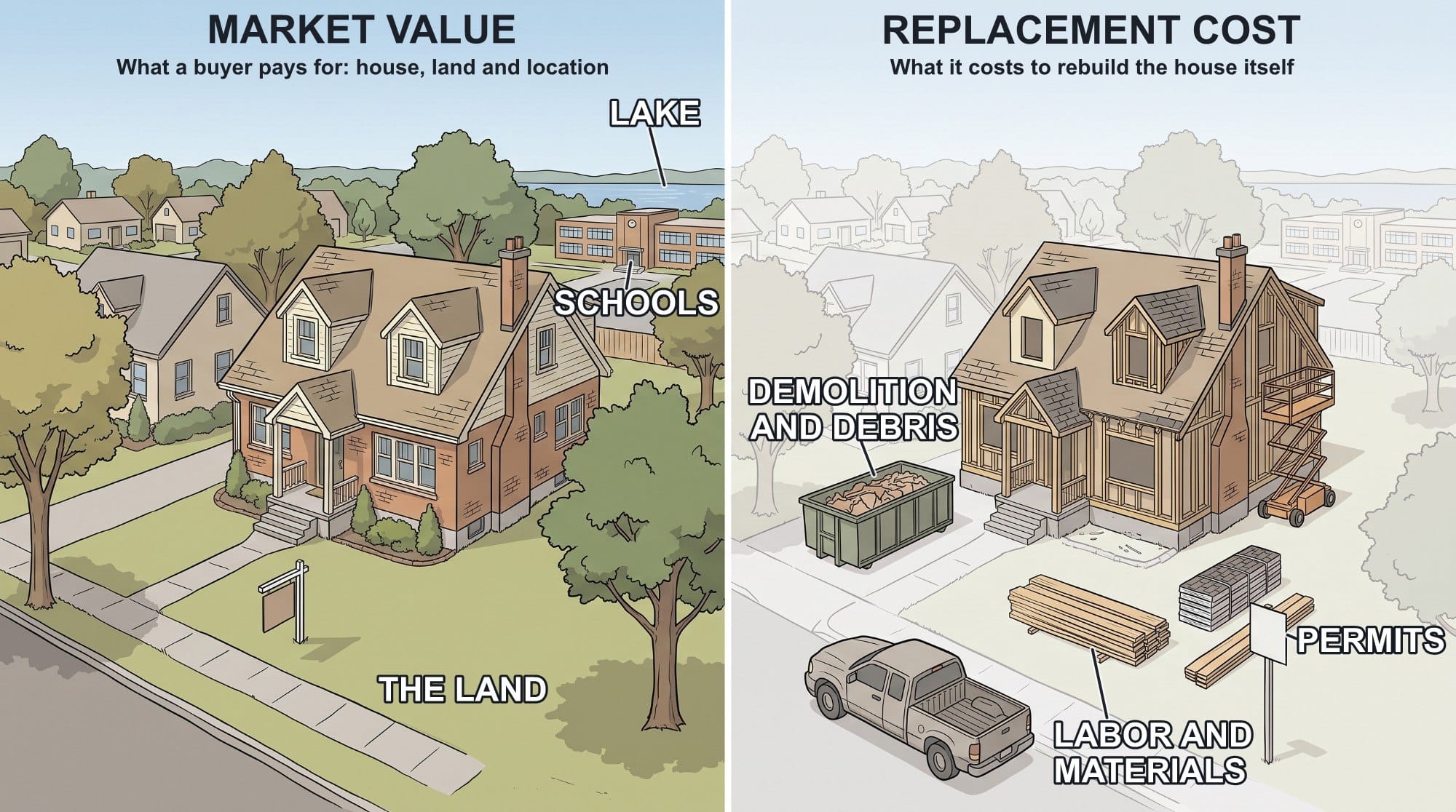
Rebuilding can include demolition, debris removal, architectural work, permits, code upgrades, labor, materials, contractor overhead, temporary demand surges after storms, and specialized finishes. Older North Shore homes, Chicago two-flats, vintage condos, masonry homes, and custom properties can be particularly expensive to restore.
If the dwelling limit rises, it may be because the insurer’s replacement cost estimate increased. That should be reviewed, but it should not automatically be reduced without understanding the potential claim consequences.
Water losses are becoming more expensive
Many Illinois homes have basements, sump pumps, sewer connections, older plumbing, or finished lower levels. Water losses can involve sewer backup, sump failure, burst pipes, appliance leaks, roof leaks, ice dams, or surface water. Each type of water loss can be treated differently by the policy.
Water cleanup, mitigation, drywall, flooring, mold prevention, personal property, and temporary housing can add up quickly. A small water backup limit may look fine on paper until a finished basement is damaged after a major storm.
When reviewing a renewal, look at the water backup limit, deductible, flood exclusion, sump pump language, and whether basement improvements and contents are adequately reflected.
Underwriting has become less forgiving
In a softer market, a carrier may accept homes with older roofs, older systems, heavy tree exposure, prior claims, or incomplete updates. In a tighter market, the same home may receive more scrutiny. Some carriers may require photos, inspections, roof documentation, updated replacement cost information, or proof of repairs.
This does not mean the home is uninsurable. It means the information needs to be accurate and the policy needs to match the risk. If your home has had updates, gather documentation: roof invoices, plumbing work, electrical updates, HVAC replacement, renovation permits, and photos.
An independent agency can help present the home accurately and compare which carriers are still a good fit.
What homeowners should review before accepting the renewal
Start with the declarations page. Review the dwelling limit, other structures limit, personal property, loss of use, liability, medical payments, deductible, wind/hail deductible, roof settlement terms, water backup, service line, equipment breakdown, ordinance or law, and scheduled property.
Then compare the renewal premium to last year and identify whether the increase came from rate changes, coverage changes, replacement cost inflation, discounts, endorsements, or deductible changes. Sometimes the solution is shopping. Sometimes it is adjusting deductibles or endorsements. Sometimes the best move is staying put because the current coverage is stronger than cheaper alternatives.
Avoid making a quick decision based only on monthly payment. The wrong cut can save a few dollars now and create a much larger problem after a claim.
Frequently asked questions
Should I lower my dwelling limit to reduce premium?
Only if the limit is clearly overstated after a proper replacement cost review. Reducing it just to save premium can create underinsurance after a major loss.
Is a higher deductible a good idea?
It can be, if you can comfortably absorb the out-of-pocket cost. Compare the savings to the extra risk before changing it.
Should I shop every renewal?
You do not need to shop constantly, but a large increase is a reasonable time to compare options and coverage quality.
Talk with a local independent insurance agency
Longmeadow Insurance can help Illinois homeowners review renewal increases, compare coverage options, and understand which changes are safe versus risky. To start a review, use our get a quote form or call 847.242.1040.
Coverage We Write
- Home insurance on the North Shore
- Flood and water backup coverage
- Umbrella insurance
- Personal insurance overview
Call 847.242.1040 or request a quote online.