
Short answer: Tell your agent before a major renovation. The project can change the dwelling limit, occupancy, and coverage needed during construction. Moving out temporarily does not automatically make the house vacant. Review your contractor’s insurance and required endorsements as well; a certificate summarizes coverage but does not create it.
Older homes in Wilmette, Winnetka, and the rest of the North Shore get renovated all the time. The day contractors start work, your insurance exposure changes, whether or not your policy does. The project cost, structural work, contractor arrangements, and whether you will live in the home during construction can all affect your home insurance during the renovation.
Does Homeowners Insurance Cover a Home Renovation?
Most standard homeowners insurance policies are written to cover your home as it currently exists. When you start a renovation, several things change that can put your coverage at risk.
Your coverage limits may no longer be adequate
If your renovation significantly increases the value of your home, say with a kitchen addition or a finished basement, your existing dwelling coverage may fall short of the cost to rebuild. A $100,000 kitchen renovation that isn’t reflected in your dwelling limit can leave you up to $100,000 underinsured. Update your policy limits before or immediately after completing major work.
Vacant or partially occupied homes face coverage restrictions
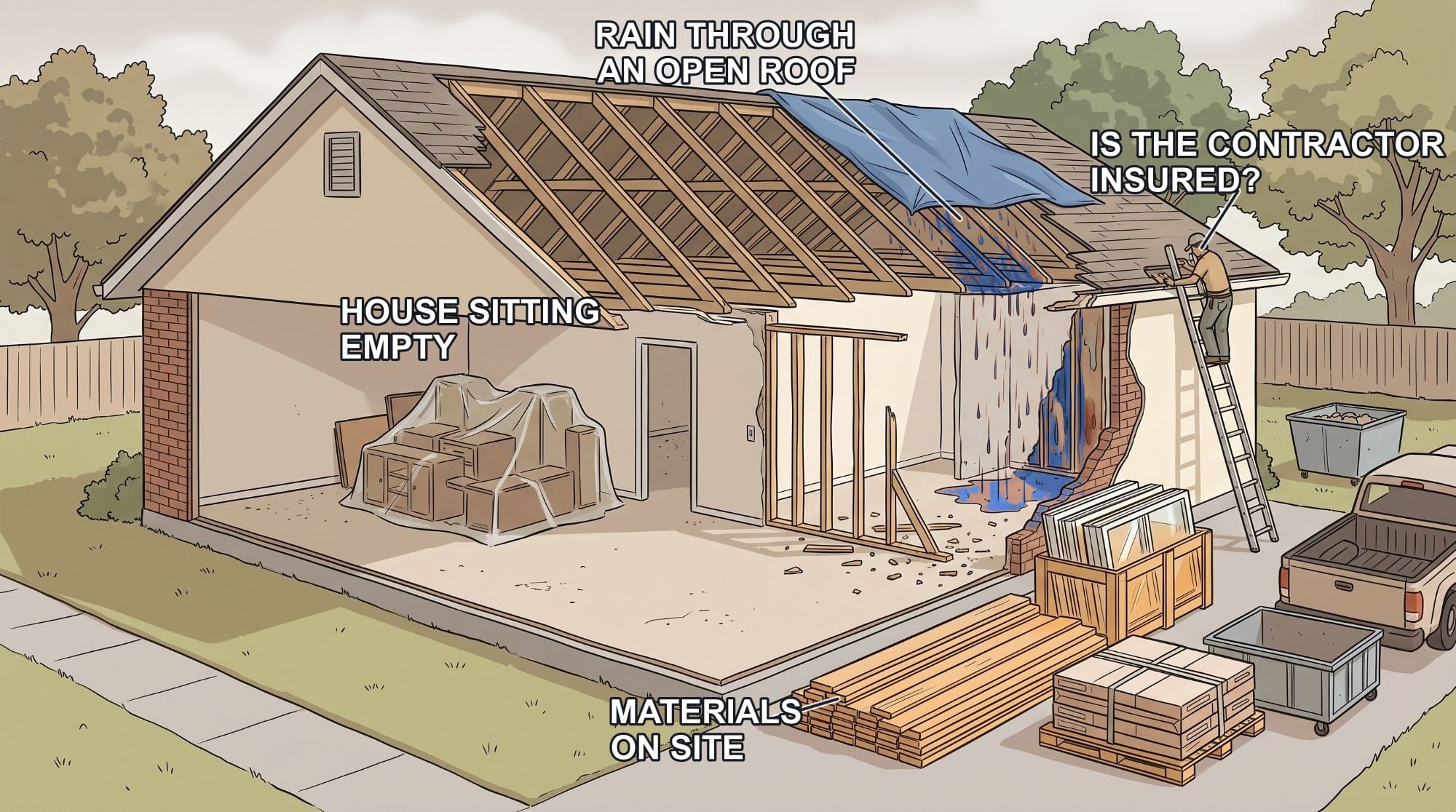
If you will live elsewhere during a renovation, explain the schedule, furnishings, and scope of work to your agent before construction starts. An unoccupied home is not necessarily vacant, and the insurer may need to adjust the coverage for the project.
Construction-related damage may not be covered
Standard homeowners policies typically exclude damage that occurs as a direct result of construction activity. If a wall collapses during demolition or materials are damaged by rain through an open roof, you may be left holding the bill.
Personal property on-site is at risk
Materials and equipment stored at your home during a renovation may not be covered under your existing policy, especially if they’re stolen or damaged. Ask about additional coverage for building materials and fixtures stored at the property.
When You Need a Builder’s Risk Policy
For major renovations, gut rehabs, additions, or projects where the home will be empty for a stretch, you may need a builder’s risk policy (also called a dwelling under construction policy). It covers the structure and materials during construction against fire, wind, theft, and vandalism, which fills the gap a homeowners policy leaves on a house under major construction. Confirm in writing whether you or your general contractor carries it, and on what limit.
The Permit Question
If your renovation requires a building permit (and in most North Shore communities, anything beyond cosmetic changes does), make sure it’s pulled before work begins. Insurance claims can be denied if the damage is related to unpermitted work.
Also ask about ordinance or law coverage, sometimes called code upgrade coverage. After a covered loss, it helps pay the extra cost of rebuilding to current building codes. It does not pay for code work that your renovation itself requires.
The Risk of Hiring an Uninsured Contractor
This is where many homeowners make a costly mistake: hiring a contractor without verifying their insurance. If a worker is injured on your property or a subcontractor causes damage to a neighbor’s home, you could be held liable if the contractor doesn’t have proper coverage. If a contractor doesn’t carry insurance or can’t prove it, don’t hire them.
What Contractor Insurance Should Include
Before signing any contract, always request a Certificate of Insurance from your contractor and verify that it includes the following:
General Liability Insurance
This is the baseline requirement. General liability covers property damage and bodily injury caused by the contractor’s work. At minimum, look for $1 million per occurrence and $2 million aggregate coverage. For larger projects, higher limits are appropriate.
Workers’ Compensation Insurance
If a contractor or their employee is injured while working on your property, workers’ comp covers their medical bills and lost wages. Without it, an injured worker may be able to sue you directly. Illinois requires workers’ comp for nearly every contractor with employees.
Commercial Auto Insurance
If the contractor or their crew is driving vehicles to and from your property for work purposes, personal auto insurance won’t cover accidents that occur in the course of that work. Make sure their vehicles are covered under a commercial policy.
Umbrella or Excess Liability
For larger renovation projects, it’s worth asking whether your contractor carries an umbrella policy that extends their general liability limits. This provides an extra layer of protection if a claim exceeds their base coverage.
Additional Insured by Endorsement
Ask the contractor to add you as an additional insured on their general liability policy by endorsement. The certificate only shows that the policy exists; the endorsement is what lets their policy respond on your behalf if a covered claim arises from their work on your property. Our contractors insurance page explains what those documents should show.
Update Your Coverage During and After the Renovation
During construction
- Make sure the dwelling limit reflects the work in progress and the materials on site.
- Ask about theft coverage for materials and fixtures stored at the property.
- Review your liability limits: more people on your property means more risk.
After completion
- Update your dwelling coverage to reflect the home’s new replacement cost.
- Update your personal property coverage for new furniture and electronics; built-in fixtures and systems count toward the dwelling limit.
- Document the renovation with photos for your home inventory.
Don’t Overlook the Cleanup
Large renovation projects generate a lot of debris (old drywall, lumber, fixtures, roofing materials), and managing that waste is part of the job. Many homeowners and contractors rely on a dumpster rental service to handle the heavy lifting of debris removal. Beyond convenience, having a designated dumpster keeps your worksite organized, which reduces trip-and-fall hazards that could lead to injury claims. A cluttered jobsite is a liability claim waiting to happen.
Common Renovation Insurance Mistakes
- Not telling your agent about the project: you can end up underinsured, or in a dispute over any claim tied to the work.
- Not verifying contractor insurance: one injury can become your claim.
- Not updating coverage after completion: you’re underinsured on day one.
- Assuming your contractor’s policy covers everything: it responds when the contractor is legally responsible for damage, and it won’t pay to redo their own faulty work.
Before You Renovate: A Quick Insurance Checklist
Before starting any significant renovation project:
- Call your insurance agent and give them the scope and timeline of the project.
- Review your dwelling coverage limit so it reflects the home’s value after the work.
- Ask about a Builder’s Risk policy if your project involves significant structural changes.
- Confirm the building permit is pulled before work begins.
- Verify contractor insurance: request a Certificate of Insurance and confirm it includes general liability and workers’ comp.
- Request additional insured status on your contractor’s liability policy by endorsement.
- Clarify vacancy clauses if you plan to move out during construction.
- Update your policy once the renovation is complete to reflect the home’s new value.
Call Before the Contractor Starts
If you are planning a project, call us before the contractor starts. Send us your declarations page, a short description of the project, and the contractor’s certificate, and we will tell you what your policy covers during construction and what should change when the work is done. Request a review or call 847.242.1040.
Related Articles
Coverage We Write
- Home insurance on the North Shore
- Flood and water backup coverage
- Umbrella insurance
- Personal insurance overview
Call 847.242.1040 or request a quote online.