

Short answer: Homeowners insurance generally covers sudden interior damage from an ice dam. Removal needed to stop covered damage can be treated differently from routine preventive removal. Photograph the damage, protect the affected area, and contact us about the next steps.
Ice dams can form when melted roof snow refreezes near the eaves and traps water behind it. This guide covers prevention, what to do when water gets inside, and the policy details to check before arranging repairs.
What Causes Ice Dams
An ice dam is a ridge of ice that forms at the edge of a roof and prevents melting snow from draining off properly. As snow continues to melt, the water backs up behind the dam and can seep underneath roof shingles, eventually leaking into your home’s interior.
The formation process follows a predictable pattern. Heat from your home rises into the attic and warms the roof surface, even when outdoor temperatures remain below freezing. This heat causes snow on the upper portions of your roof to melt. As the meltwater flows down toward the colder eaves, which extend beyond the heated interior of your home, it refreezes, creating a growing dam of ice. With each freeze-thaw cycle, the dam grows larger, and the pool of water behind it deepens.
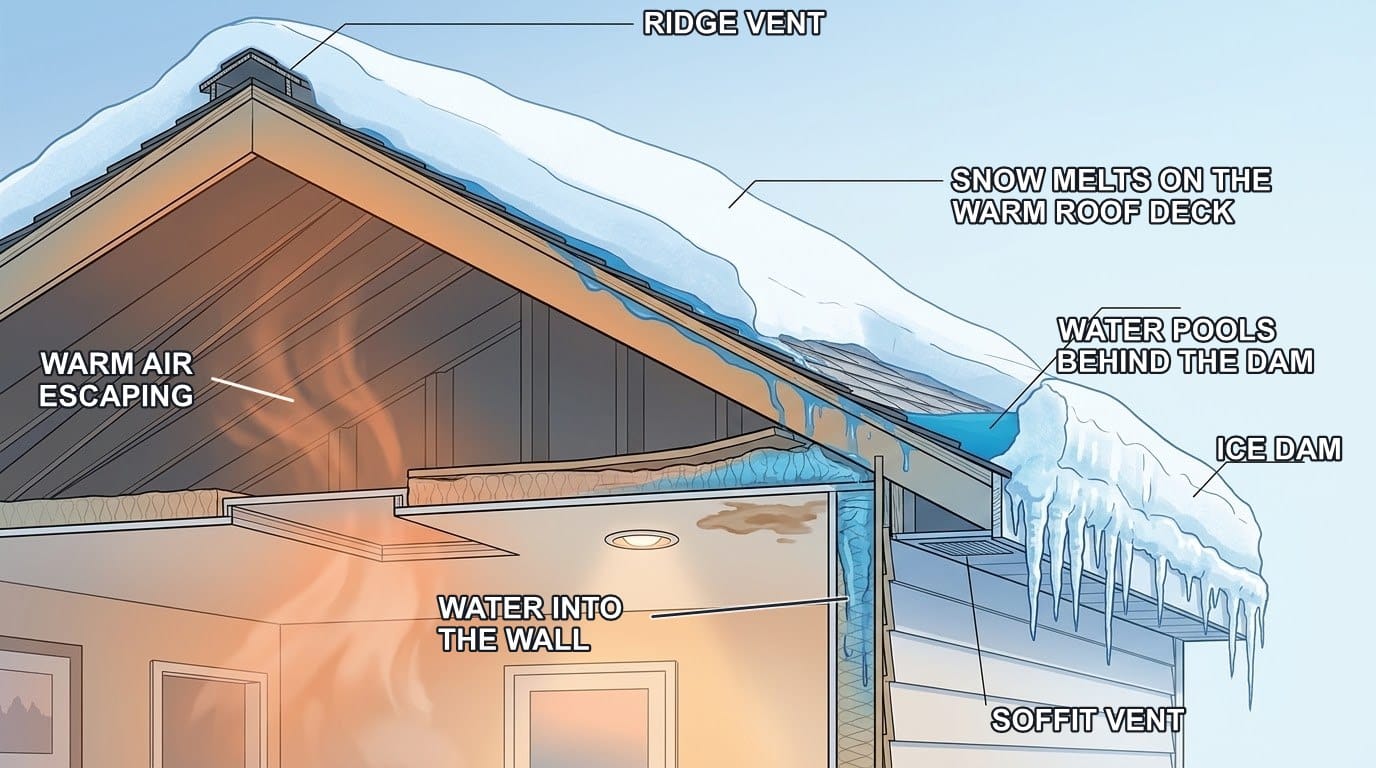
Several factors contribute to ice dam formation. Poor attic insulation allows excessive heat to escape through your roof. Inadequate attic ventilation traps warm air against the roof deck. Complex roof designs with multiple valleys and angles create areas where snow and ice accumulate. Even seemingly minor issues like recessed lighting fixtures or attic access hatches can create warm spots that trigger the melting process.
The Hidden Dangers of Ice Dams
The damage from ice dams extends far beyond what you can see from the ground. Water infiltration can saturate insulation, reducing its effectiveness and creating conditions for mold growth. Ceiling and wall damage manifests as staining, sagging drywall, and peeling paint. The constant freeze-thaw cycle can loosen or damage roof shingles, shortening your roof’s lifespan. Gutters filled with heavy ice can pull away from the fascia, causing structural damage. In severe cases, the weight of ice buildup can even compromise your roof’s structural integrity.
Perhaps most concerning is that much of this damage occurs hidden from view. By the time you notice water stains on your ceiling or walls, significant damage may have already occurred within your roof structure and insulation.
How to Prevent Ice Dams
Preventing ice dams comes down to keeping the roof cold and letting meltwater drain. The most effective strategies address the root cause: heat loss from your living space into the attic.
Start with your attic insulation. Current energy codes call for far more attic insulation than many older houses around Wilmette have. This thick blanket of insulation keeps heat where it belongs: in your living spaces. However, insulation alone isn’t enough. You need proper ventilation to maintain a cold attic space. A well-ventilated attic allows cold outdoor air to circulate, preventing the roof deck from warming above freezing.
Adequate ventilation typically requires both intake vents at the soffits and exhaust vents at or near the roof ridge. The general rule calls for one square foot of ventilation for every 150 square feet of attic space. Again, many of the older houses in our area do not have these modern designs. Ridge vents paired with soffit vents create natural airflow that keeps your attic temperature close to the outdoor temperature.
Sealing every potential air leak between your living space and attic helps. Common culprits include recessed lights, plumbing stacks, electrical wiring penetrations, and attic hatches. Even small gaps can allow significant heat loss. Use appropriate fire-rated sealants and weatherstripping to close these pathways.
Keeping your gutters clean throughout the fall and winter is another routine task. Clogged gutters contribute to ice dam formation by creating areas where water pools and freezes. While cleaning gutters in winter can be challenging, autumn maintenance pays dividends when cold weather arrives.
Consider installing heat cable along your roof’s edge. These electrical cables warm the roof enough to create channels for meltwater to drain safely. While they consume electricity and address the symptom rather than the cause, heat cables provide an additional layer of protection, especially for problem areas.
After heavy snowfalls, lower roof lines can benefit from a roof rake to remove snow from the lower three to four feet of the roof while standing safely on the ground. This eliminates the source material for ice dams. However, exercise caution to avoid damaging shingles or injuring yourself. Never attempt to climb on a snow-covered or icy roof.
What to Do If Ice Dams Form
Despite your best prevention efforts, ice dams can still develop during severe winter conditions. If you discover an ice dam forming on your roof, take action quickly to minimize damage.
First, address any active leaks inside your home. Place buckets to catch dripping water and move furniture and valuables away from affected areas. If water is actively flowing, this constitutes an emergency that may require professional intervention.
Without climbing onto the roof, you can create emergency channels for water drainage. Fill pantyhose or tube socks with calcium chloride ice melt and lay them vertically across the ice dam. This creates channels for water to escape without requiring you to climb onto your roof. Never use rock salt, which can damage your roof and landscaping.
Resist the temptation to chip away at ice dams with hammers, ice picks, or other sharp tools. This approach almost always causes more harm than good, damaging shingles and potentially creating more leak points. The risk of personal injury from falling ice or slipping is also significant.
For serious ice dam situations, contact a professional removal service. These specialists use low-pressure steam to safely melt ice without damaging your roof. While this service costs money, it’s far less expensive than repairing water damage to your home’s interior.
If you can safely access your attic, consider using a box fan to blow cold air at the area where water is leaking through. This can freeze the water in place and temporarily stop the leak until you can arrange for proper ice dam removal.
Does Homeowners Insurance Cover Ice Dams?
Ice dam coverage under homeowners insurance policies can be complex, and many homeowners only learn the details after filing a claim. Understanding your coverage before problems arise helps you make informed decisions about prevention and response.
An ice dam can damage both the building and belongings. Dwelling coverage addresses covered repairs to walls, ceilings, and other building components; personal property coverage addresses damaged contents.
The key distinction involves sudden and accidental damage versus damage from neglect or lack of maintenance. If an ice dam forms during an unusually severe winter storm and causes water damage to your home, most policies will cover the resulting damage. However, if the ice dam formed because you failed to maintain your roof, gutters, or insulation, or if you ignored warning signs of developing problems, your insurer might deny the claim.
Covered interior water damage can include drywall, flooring, paint, and belongings under their respective coverages. Keep receipts for emergency work needed to stop further damage, including any ice removal. Routine preventive removal is a maintenance expense.
However, standard policies generally do not cover improvements or upgrades to prevent future ice dams. If your adjuster determines that inadequate insulation or ventilation caused your ice dam, the policy will cover repairing the immediate damage but won’t pay to upgrade your insulation to prevent future problems. Some insurers have started offering limited coverage for preventive improvements after a covered ice dam claim, recognizing this as a risk reduction measure.
Deductibles apply to ice dam claims just as they do to other types of claims. If your damage costs less than your deductible, you’ll pay out of pocket. Even when damage exceeds your deductible, you should consider whether filing a claim is worth a potential increase in your premiums.
Some insurance companies in our area have begun adding specific ice dam exclusions or limitations to policies. These might include seasonal coverage limitations, requiring proof of adequate insulation and ventilation, or imposing special deductibles for ice dam claims. Review your policy carefully and discuss any concerns with your insurance agent. Longmeadow Insurance can review your policy and show you alternatives.
Documenting Damage for Insurance Claims
If ice dams cause damage to your home, thorough documentation strengthens your insurance claim. Take photographs and videos of the ice dams on your roof, showing their location and size. Document any visible water damage inside your home, including stains on ceilings and walls, damaged flooring, and affected personal property. Keep receipts for any emergency repairs you make to prevent further damage. You can report the claim through us, and we will help you work out the next steps.
Note the dates when you discovered the ice dam and when the damage occurred. If possible, photograph or document weather conditions during the relevant period. Your insurance company may want to verify that the damage resulted from a specific weather event.
Contact your insurance company or agent as soon as you discover damage. Most policies require prompt notification of claims. Be honest and complete in describing the situation. Your adjuster will assess the damage and determine coverage, but providing thorough initial documentation helps the process move smoothly.
The Cost-Benefit Analysis of Prevention
Some homeowners hesitate to invest in prevention, viewing attic insulation and ventilation improvements as expensive. However, the math strongly favors prevention over repair.
Professional ice dam removal typically costs several hundred to several thousand dollars, depending on the severity. Water damage repairs often run into tens of thousands of dollars when you factor in drywall replacement, repainting, flooring repairs, and addressing any mold issues (which often have limited coverage). Insurance claims can lead to increased premiums that cost you money for years.
In contrast, improving attic insulation and ventilation might cost a few thousand dollars but provides benefits beyond ice dam prevention. Better insulation reduces heating and cooling costs, potentially saving hundreds of dollars annually. Nicor and ComEd often offer rebates for insulation upgrades and weatherproofing, reducing your out-of-pocket expense. The improvements increase your home’s value and reduce the likelihood of many types of weather-related damage.
Keep the Attic Cold and Read Your Policy Before Winter
Ice dams represent a significant threat to your home and your finances, but they’re largely preventable through proper maintenance and home improvements. Focus on keeping your attic cold through adequate insulation and ventilation, maintain your gutters, and address any heat loss pathways between your living space and attic.
If ice dams do form despite your best efforts, act quickly to minimize damage and contact professionals when needed.
Prevention costs less than repairs. Before winter, fix the attic insulation and ventilation, clean the gutters, and read the ice dam and water damage terms in your policy. If you want a second opinion on those terms, send us your declarations page.
Frequently Asked Questions
Does homeowners insurance cover ice dams?
Yes, most standard homeowners insurance policies cover the interior damage caused by ice dams, such as water leaking through the roof into walls, ceilings, and floors. However, the policy typically will not pay for the actual removal of the ice dam itself unless removal is necessary to prevent further covered damage.
Does homeowners insurance cover ice dam removal?
Generally, ice dam removal is only covered when an active ice dam is causing damage to the interior of your home and removal is needed to stop that damage. Preventive removal before any damage occurs is usually considered maintenance and is not covered.
Does homeowners insurance cover roof leaks from ice dams?
Yes, if an ice dam causes water to back up under your shingles and leak into your home, the resulting interior damage to drywall, insulation, paint, and flooring is typically covered. However, the cost to repair or replace the roof shingles themselves may not be covered if the insurer determines the roof was already in poor condition.
Does homeowners insurance cover water damage from ice dams?
Water damage from ice dams is generally covered under the dwelling and personal property sections of your homeowners policy. This includes damaged drywall, carpet, hardwood floors, furniture, and electronics. Mold remediation may have limited coverage depending on your policy.
Will filing an ice dam claim raise my insurance premiums?
It can. Filing a claim may lead to a premium increase at renewal, especially if you have had prior claims. For smaller amounts near your deductible, it may be more cost-effective to pay out of pocket. Talk to your agent before filing to weigh the long-term cost.
Are ice dam prevention improvements covered by insurance?
No. Standard homeowners policies do not pay for improvements like adding insulation, ventilation, or heat cables. These are considered home maintenance and upgrades. However, some insurers offer limited coverage for preventive improvements after a covered ice dam claim as a risk-reduction measure.
How do I document ice dam damage for an insurance claim?
Photograph the ice dam on your roof from the ground, document all interior damage with photos and video, keep receipts for emergency repairs, and note the dates when damage was discovered. Contact your insurance agent as soon as possible: most policies require prompt notification.
What should I do if I have an ice dam right now?
Move belongings away from active leaks and catch dripping water where it is safe to do so. Arrange professional roof and ice-dam help rather than climbing onto an icy roof or chipping at the ice. Photograph the damage and keep emergency-work receipts.
North Shore Insurance Resources
- Insurance for Northbrook Homes
- Insurance for Winnetka Homeowners
- Insurance for Wilmette Homeowners
- Insurance for Glencoe Homeowners
- Insurance for Kenilworth Homeowners
- Insurance for Evanston Homeowners
Coverage Options
Why Ice Dams Create Both Prevention and Claim Questions
Ice dams are partly a home-maintenance issue and partly a weather-loss issue. Poor attic insulation, ventilation, clogged gutters, roof design, snow accumulation, and freeze-thaw cycles can all contribute. Insurance may respond to sudden covered damage, but it is not a substitute for correcting the conditions that caused recurring ice dams.
Homeowners should document the event, mitigate active leaks, photograph damage, keep receipts, and avoid permanent repairs until the claim process is clear. They should also review whether interior water damage, roof damage, mold, repeated seepage, and maintenance-related issues are treated differently by the policy.
North Shore Homes With Older Roofs and Finished Interiors Need Extra Care
Many homes in Wilmette, Winnetka, Glencoe, Kenilworth, Evanston, and nearby communities have older roofs, dormers, complicated rooflines, additions, and finished upper floors. Those features can make ice-dam prevention and repair more complicated.
After an ice-dam event, the insurance conversation should include the deductible, claim size, whether mitigation is needed, whether the roof or interior damage is covered, and whether preventive improvements are separate from the covered repair.
Related Insurance Guides
- What to do when weather damage strikes
- Water backup and spring rain coverage
- When to file a homeowners insurance claim
Coverage We Write
- Flood and water backup coverage
- Home insurance on the North Shore
- Condo insurance and HO-6 coverage
- Personal insurance overview
Call 847.242.1040 or request a quote online.