
Category: Uncategorized

  • Insurance Requirements for Small Businesses in Illinois: What You Really Need

    Starting or running a small business in Illinois means navigating a complex landscape of insurance requirements. Not all insurance is created equal—some policies are legally mandated, others are demanded by landlords or clients, and still others are simply smart business practices. Let’s break down what you actually need.

    What’s Legally Required in Illinois

    Illinois law mandates specific insurance coverage depending on your business structure and whether you have employees.

    Workers’ Compensation Insurance is required for nearly all Illinois businesses with employees. Even if you have just one employee—full-time, part-time, or seasonal—you must carry workers’ comp. The only exceptions are sole proprietors with no employees, certain corporate officers who opt out, and a handful of specific exemptions like real estate licensees working on commission. Penalties for non-compliance are steep, including fines up to $500 per day and potential criminal charges.

    Unemployment Insurance is mandatory if you pay wages of $1,500 or more in any quarter or employ at least one person for 20 weeks during a calendar year. You’ll register with the Illinois Department of Employment Security and pay into the state’s unemployment fund.

    Disability Insurance isn’t required in Illinois (unlike some states like California or New York), but workers’ compensation does cover work-related injuries and illnesses.

    Commercial Auto Insurance is legally required if your business owns or regularly uses vehicles. Illinois requires minimum liability coverage of $25,000 per person for bodily injury, $50,000 per accident for bodily injury, and $20,000 for property damage. These minimums are often insufficient for business purposes, so higher limits are advisable.
    Professional Liability Insurance may be legally required for certain licensed professionals. Doctors, lawyers, architects, accountants, and other licensed professionals often must carry malpractice or errors and omissions insurance as a condition of maintaining their state license.

    What Landlords Typically Require

    If you’re leasing commercial space in Illinois, your landlord will almost certainly require specific insurance coverage as part of your lease agreement.

    General Liability Insurance is the most common landlord requirement, typically with minimum coverage of $1 million per occurrence and $2 million aggregate. This protects against third-party claims for bodily injury or property damage that occur on your premises. Your landlord wants assurance that if a customer slips and falls in your space, your insurance—not theirs—will handle the claim.

    Property Insurance covering your business contents, improvements, and betterments is often required. Landlords want to ensure that if you’ve made improvements to the space or if your property causes damage, you can cover the costs.

    Landlord as Additional Insured is a standard lease clause. Your general liability policy must name your landlord as an additional insured party, which extends certain protections to them for claims arising from your operations. This is non-negotiable in most commercial leases.

    Certificates of Insurance must typically be provided before you can take occupancy and renewed whenever your policy renews. Many landlords require 30 days’ notice if your insurance is cancelled or significantly changed.

    Some landlords may also require business interruption insurance or specific coverage for your industry. A restaurant lease might require liquor liability insurance, while a fitness studio lease might demand higher liability limits due to injury risk.

    What Clients and Contracts Require

    Your clients—particularly corporate clients, government entities, or those hiring you for significant projects—often impose their own insurance requirements.

    General Liability Insurance with limits of $1 million per occurrence and $2 million aggregate is the baseline for most client contracts. Many larger clients or government contracts require $2 million per occurrence or higher.

    Professional Liability/Errors & Omissions Insurance is commonly required for service-based businesses. If you’re a consultant, IT provider, marketing agency, designer, or other professional service provider, clients want protection if your advice or work causes them financial harm. Coverage limits of $1 million to $2 million are typical.

    Cyber Liability Insurance is increasingly required, especially if you handle client data, personal information, or payment card information. This coverage addresses data breaches, cyber attacks, and privacy violations. Tech companies, healthcare providers, and retailers are particularly likely to face this requirement.

    Client as Additional Insured is another common contract clause. Like landlords, clients often want to be named as additional insureds on your general liability policy for work you perform on their behalf.
    Umbrella or Excess Liability Coverage may be required for larger contracts. If a client needs $5 million in coverage but your general liability only provides $2 million, an umbrella policy fills the gap.

    Proof of Insurance in the form of certificates is standard practice before contract execution. You’ll need to provide these promptly, and many clients require ongoing proof that coverage remains in force.

    What’s Normal and Recommended to Have

    Beyond legal and contractual requirements, certain insurance policies are considered standard practice for responsible small business owners in Illinois.

    Business Owner’s Policy (BOP) bundles general liability and property insurance at a lower cost than purchasing them separately. This is the foundational coverage for most small businesses—retail shops, offices, restaurants, and service businesses. A BOP typically costs $500 to $3,000 annually depending on your industry and coverage limits.

    Commercial Property Insurance protects your building (if you own it), equipment, inventory, furniture, and other physical assets against fire, theft, vandalism, and certain natural disasters. Even if you rent and only need to cover contents, this is essential if your business couldn’t quickly recover from a major loss.

    Business Interruption Insurance covers lost income and ongoing expenses if you’re forced to close temporarily due to a covered event like a fire or natural disaster. Since many small businesses operate on thin margins, this coverage can mean the difference between recovery and permanent closure.

    Commercial Umbrella Insurance provides additional liability coverage above your other policies, typically in $1 million increments. For a few hundred dollars annually, you get significant extra protection against catastrophic claims.

    Employment Practices Liability Insurance (EPLI) protects against claims of wrongful termination, discrimination, harassment, and other employment-related issues. With businesses of all sizes facing employment lawsuits, this coverage is increasingly considered essential if you have employees.

    Commercial Crime Insurance covers losses from employee theft, fraud, forgery, and similar crimes. If employees handle cash, have access to accounts, or could otherwise commit financial crimes against your business, this coverage provides important protection.

    Product Liability Insurance is crucial if you manufacture, distribute, or sell physical products. Even retailers can face claims if a product sold in their store causes injury or damage.

    Directors and Officers (D&O) Insurance protects the personal assets of your company’s directors and officers if they’re sued for actual or alleged management errors. While traditionally associated with larger corporations, D&O insurance is becoming more common for LLCs and smaller companies with multiple owners.

    Industry-Specific Considerations

    Certain industries face unique insurance needs. Restaurants typically need liquor liability insurance, food contamination coverage, and equipment breakdown insurance. Contractors require builder’s risk insurance and potentially surety bonds. Healthcare providers need HIPAA compliance coverage and medical malpractice insurance. Tech companies should prioritize cyber liability and tech errors and omissions coverage.

    Making Smart Insurance Decisions

    Start by understanding your legal obligations—workers’ compensation if you have employees, commercial auto if you use vehicles, and any professional licensing requirements. Review your lease carefully to understand landlord requirements before signing. Ask for specification sheets from clients early in the contracting process so insurance doesn’t become a last-minute obstacle.

    Work with an insurance broker who understands Illinois small business insurance and your specific industry. They can help you bundle coverage, find competitive rates, and ensure you’re neither over-insured nor dangerously under-covered. Review your coverage annually as your business grows and changes.

    The cost of proper insurance is real, but it’s modest compared to the cost of a single uninsured lawsuit, property loss, or business interruption. For most small businesses in Illinois, comprehensive coverage including workers’ compensation (if applicable), a BOP, commercial auto (if needed), and industry-specific policies will typically run $3,000 to $10,000 annually—a worthwhile investment in protecting what you’ve built.

    Remember that insurance requirements can change, new laws can be enacted, and your specific circumstances matter. When in doubt, consult with an insurance professional and legal advisor to ensure you have the right coverage for your Illinois small business. While this guide provides a helpful overview, it’s not a substitute for professional advice tailored to your unique situation.
    Coverage Options

  • Life Insurance Requirements: When Coverage Becomes Non-Negotiable

    Most homeowners purchasing a residential property are pleasantly surprised to learn that their mortgage lender doesn’t require them to carry life insurance. While it’s often a smart financial move for protecting your family, it remains a personal choice rather than a lending requirement.

    The business world operates quite differently.

    Key Person Insurance: Protecting Your Investors’ Interests

    When you’re running a business and bringing on investors or institutional lenders, life insurance frequently shifts from optional to mandatory. This typically comes in the form of “key person insurance” (also called “key man insurance”), which protects the business against the financial impact of losing a critical executive or owner.

    Investors and lenders require this coverage for good reason. They’ve placed significant capital into your business based partly on your ability to lead and execute. If something were to happen to you or another essential person, they want assurance that the company can survive the transition, pay off debts, or provide investors with a return on their investment.

    These requirements often appear as covenants in loan agreements or investment term sheets. Violating them can trigger default provisions, so maintaining the required coverage isn’t just good practice—it’s a legal obligation.

    The Pricing Challenge

    Life insurance for business purposes is priced similarly to personal coverage, with premiums based on the insured person’s age, health, lifestyle, and the death benefit amount. However, the stakes are often higher. A 45-year-old executive might face annual premiums of $2,000 to $5,000 for a million-dollar policy, but business policies frequently require much larger death benefits, driving costs into the five-figure range annually.

    These premiums become a real line item in your operating budget, and they increase as key people age or if their health changes.

    The Underwriting Puzzle: How Much Is Enough?

    One of the trickiest aspects of securing key person insurance is determining—and justifying—the appropriate coverage amount. Life insurance underwriters want to ensure the death benefit is reasonable and tied to actual financial risk, not inflated speculation.
    Here’s where terminology matters significantly.

    When structured as “key person” insurance, insurers are generally more flexible with coverage amounts. The rule of thumb is straightforward: you can typically secure coverage worth approximately 10 times the person’s annual salary without extensive justification. If your CFO earns $200,000 annually, a $2 million policy usually clears underwriting without difficulty.
    When structured as “buy-sell” insurance, however, the process becomes considerably more complex. Buy-sell policies fund buy-sell agreements that allow surviving owners to purchase a deceased owner’s stake in the business. In these situations, life insurance companies typically require a formal business valuation or appraisal to justify the coverage amount.
    This makes sense from the insurer’s perspective—they want to ensure the death benefit reflects the actual value of the ownership interest being insured, not an inflated number that creates moral hazard. But it adds time, expense (business appraisals can cost $5,000 to $25,000 or more), and complexity to the process.

    Planning Ahead

    If you’re seeking outside capital or significant debt financing, don’t wait until the last minute to address life insurance requirements. The underwriting process can take weeks or even months, especially if medical exams reveal health issues that require additional investigation.

    Start the conversation with potential lenders and investors early to understand their coverage expectations. Get quotes from multiple insurers, factor the premiums into your financial projections, and if buy-sell coverage is needed, budget for a professional business valuation.

    Life insurance in the business context isn’t just about protecting people—it’s about protecting capital, honoring commitments, and ensuring business continuity. While it adds complexity and cost to your operations, it’s often the price of admission for accessing the growth capital your business needs.

    Coverage Options

  • Snow Removal Service Risks

    The Hidden Risks of Hiring Snow Plow Services: What Every Homeowner Should Know

    Winter storms can dump feet of snow on your driveway overnight, making that independent snow plow driver who advertises on neighborhood Facebook groups seem like a godsend. But before you hire someone to clear your property, you need to understand the serious insurance and liability risks that come with inviting commercial operators onto your land.

    The Independent Contractor Insurance Gap


    Many homeowners don't realize that the friendly neighbor with a plow attachment or the small operator who charges reasonable rates may be operating without adequate insurance coverage, or worse, without any insurance at all. Unlike established snow removal companies, independent drivers often lack:

    Commercial General liability Insurance that would cover property damage to your home, car, or landscaping. That decorative mailbox, the newly paved driveway, your garage door, or the expensive plantings along your walkway could all be at risk if the plow operator isn't adequately insured.

    Workers' Compensation Coverage for themselves or any helpers. If the driver gets injured on your property and doesn't have coverage, they may look to your homeowners insurance for medical bills and lost wages.

    Commercial Auto Insurance that covers their plow vehicle while performing commercial work. Personal auto policies typically exclude coverage for business use, meaning if they damage your property with their truck, their personal policy won't pay.

    When Things Go Wrong: Real Liability Scenarios


    The risks aren't theoretical. Consider these common scenarios:

    A plow driver backs into your garage door, causing $3,000 in damage. When you ask about insurance, you discover they only have a personal auto policy that won't cover commercial plowing operations.

    The driver slips on ice in your driveway while clearing snow and breaks their arm. Without workers' compensation insurance, they file a premises liability claim against your homeowners policy for medical expenses and lost income.

    While plowing, the driver damages your sprinkler system or cuts into underground utility lines. The repair costs reach $8,000, but the driver has no business liability coverage.

    Snow is piled against your home's foundation, causing water infiltration and basement flooding once it melts. The resulting mold remediation costs $15,000, and the uninsured contractor has disappeared.

    How Your Homeowners Insurance Responds


    Here's the critical issue: when an uninsured or underinsured contractor causes damage on your property or gets injured there, your homeowners insurance often becomes the first line of defense.

    For Property Damage: If the snow plow driver damages your property and lacks insurance, you'll typically need to file a claim under your own homeowners policy. This means paying your deductible (often $1,000 to $2,500) and having a claim on your record even though you weren't at fault.

    For Bodily Injury: Your homeowners liability coverage may be triggered if the driver or their employee is injured on your property. Even if they were performing work you hired them to do, premises liability could still apply. Your policy would cover legal defense costs and any settlement or judgment up to your liability limits (typically $100,000 to $500,000 without an umbrella).

    For Third-Party Damage:
    If the plow driver damages a neighbor's property or injures someone else while working on your property, you could potentially face liability claims as the property owner who hired them.

    The Rate Increase and Non-Renewal Risk

    Filing claims against your homeowners insurance creates significant downstream consequences:

    Rate Increases: Insurance companies view claims history as a predictor of future risk. A single claim can increase your premiums by 20-40% at renewal, and the increase typically lasts for three to five years. Two claims within a short period might result in even steeper increases.

    Non-Renewal Risk: Multiple claims can lead to non-renewal when your policy term ends. Once your insurer decides not to renew your coverage, finding replacement insurance becomes more expensive and difficult. You'll likely need to work with non-standard carriers who charge substantially higher premiums.

    Difficulty Shopping for Coverage: Claims follow you when you try to switch insurers. When applying for new coverage, you must disclose claims history for the previous three to five years, and many preferred insurers will decline applicants with multiple recent claims.

    Impact on Your CLUE Report: Claims are reported to the Comprehensive Loss Underwriting Exchange (CLUE), a database that insurers check when underwriting policies. This report stays on your record for seven years and affects your ability to obtain affordable coverage.

    The financial impact extends far beyond the immediate claim. If you file a $3,000 property damage claim and your premiums increase by $500 annually for five years, you've actually paid $2,500 in additional premiums on top of your deductible.

    Protecting Yourself: Due Diligence Steps


    Before hiring any snow removal service, take these essential precautions:

    Request Certificates of Insurance showing current commercial general liability coverage of at least $1 million, commercial auto coverage for their plow vehicle, and workers' compensation if they have employees. The certificate should list you as the certificate holder and show coverage that extends through the winter season.

    Verify the coverage directly with the insurance company listed on the certificate. Unscrupulous operators have been known to provide fraudulent certificates. Call the agent or company to confirm the policy is active and in good standing.

    Get everything in writing including the scope of work, pricing, timeline, and what happens if damage occurs. A professional operator should provide a written contract or service agreement.

    Ask for references from other homeowners they've worked for and follow up to ask about their experience.

    Check for proper business licensing required in your area for commercial snow removal operations.

    Consider established companies over individuals. While they may cost more, legitimate businesses typically maintain proper insurance and have more to lose reputationally if problems arise.

    The Bottom Line

    That budget-friendly snow plow operator might save you money upfront, but hiring an uninsured or underinsured contractor exposes you to potentially thousands of dollars in out-of-pocket costs, insurance deductibles, years of higher premiums, and possible difficulty obtaining coverage in the future.

    Before signing up for snow removal services, remember that you're not just paying for someone to move snow—you're potentially assuming significant liability risk. The modest cost difference between a properly insured professional and an uninsured independent operator pales in comparison to the financial consequences of a single claim against your homeowners insurance.

    Ask questions, verify coverage, and protect your home and your insurance record. Your future self will thank you when the next storm rolls through and you can watch the plows work without worrying about what might go wrong.

    Coverage Options

  • Roadside Assistance Coverage

    Auto Insurance Roadside Assistance: Is the Convenience Worth the Cost?

    Picture this: It's 9 PM on a Tuesday night, you're 30 miles from home on a dark highway, and your tire just blew out. Your phone battery is at 15%, you're not sure if you even have a spare, and the thought of changing a tire in the dark is making your heart race. This is exactly when roadside assistance coverage seems worth its weight in gold.

    But here's what many drivers don't realize until it's too late: using that roadside assistance benefit through your auto insurance policy often counts as a claim. And claims, even seemingly minor ones, can significantly impact your insurance premiums for years to come.

    As an insurance agency that's helped thousands of drivers navigate their coverage options, we believe it's crucial to understand both the value and the potential pitfalls of auto insurance roadside assistance. Let's dive into what you need to know to make informed decisions about this coverage.

    What Is Auto Insurance Roadside Assistance?

    Roadside assistance is an optional add-on coverage available through most auto insurance policies. For a relatively small additional premium—typically between $5 and $25 per year—this coverage provides emergency help when your vehicle breaks down or you encounter common roadside problems.

    Standard roadside assistance coverage typically includes:

    -Towing services to the nearest repair shop or a location of your choice, usually up to a specified mileage limit (commonly 15-100 miles depending on your policy)
    -Battery jump-starts when your battery dies
    -Fuel delivery when you run out of gas
    -Flat tire changes using your spare tire
    -Lockout services when you lock your keys in your car
    -Winching or extraction if your vehicle gets stuck in snow, mud, or a ditch

    Some policies offer additional perks like trip interruption coverage, which may reimburse you for lodging or meals if your car breaks down far from home.

    The Real Value of Roadside Assistance

    There's no denying that roadside assistance provides genuine peace of mind and practical benefits. Here's why many drivers find it valuable:

    Convenience When You Need It Most


    Breakdowns rarely happen at convenient times or in convenient places. Having 24/7 access to professional help means you don't have to scramble to find a tow truck company, compare prices in a panic, or wait hours for help. One phone call to your insurance company's roadside assistance line connects you with a service provider who can help, often within 30-60 minutes.

    Cost Savings for Multiple Incidents


    If you use roadside assistance multiple times throughout the year, the coverage can pay for itself. A single tow can cost anywhere from $75 to $200 or more, depending on distance and your location. If your annual premium for roadside assistance is $15 and you need just one tow, you've already come out ahead—at least in immediate out-of-pocket costs.

    Safety and Security


    Breaking down can leave you vulnerable, especially on busy highways, in unfamiliar areas, or during bad weather. Professional roadside assistance ensures you don't have to accept help from strangers or put yourself at risk trying to fix problems you're not equipped to handle.

    Coverage for the Whole Family

    Many roadside assistance policies cover you regardless of which vehicle you're driving, and some even extend coverage to household members. This means your college student or teenage driver also has access to help when they need it.

    The Hidden Cost: How Roadside Assistance Claims Affect Your Premiums

    Here's where things get complicated, and where many policyholders feel blindsided. Using your auto insurance roadside assistance typically counts as a claim on your policy. While it's not a collision or comprehensive claim, it goes into your claims history nonetheless.

    Why This Matters for Your Insurance Rates

    Insurance companies use your claims history as a key factor in determining your premiums. The logic is straightforward from their perspective: someone who files claims is statistically more likely to file future claims, making them a higher risk to insure.

    Even small roadside assistance claims can trigger premium increases because they signal to insurers that you're actively using your coverage. While a single roadside assistance claim might result in a modest increase—or none at all with some carriers—multiple claims paint a pattern that can lead to substantial rate hikes.

    The Long-Term Impact

    Here's what many drivers don't consider: claims typically stay on your record for three to five years, depending on your state and insurance company. This means a $50 tow today could potentially cost you hundreds of dollars in higher premiums over the next several years.

    Let's look at a real-world scenario. Suppose your roadside assistance coverage costs $15 per year, and you call for a tow that would have cost $100 out-of-pocket. Seems like a good deal, right? But if that claim results in even a $10 per month increase in your premium, you're paying an additional $120 per year. Over three years, that's $360 in extra costs—far more than the $100 tow you saved on.

    Impact on Future Insurance Shopping


    Your claims history follows you. When you shop for insurance with a new carrier, they'll review your claims history through databases like LexisNexis or the Comprehensive Loss Underwriting Exchange (CLUE). Multiple roadside assistance claims can make you appear to be a higher-risk customer, potentially resulting in higher quotes from new insurers or even difficulty finding coverage with preferred carriers.

    The Risk of Policy Non-Renewal

    While rare, excessive use of any coverage—including roadside assistance—can contribute to an insurance company's decision not to renew your policy. Insurers want customers who rarely file claims, and a pattern of frequent claims, even for small amounts, can work against you.

    When Should You Actually Use Your Insurance Roadside Assistance?

    Given the potential premium impact, the question becomes: when is it worth using your insurance roadside assistance versus paying out-of-pocket or using an alternative service?

    Use It For Major Emergencies


    If you're stranded in an unsafe location, facing severe weather, or dealing with a mechanical failure that requires a long-distance tow (especially one that exceeds what alternative services would cover), using your insurance roadside assistance makes sense. In these situations, the immediate cost savings and safety benefits outweigh the potential premium increase.

    Skip It For Minor, Inexpensive Issues

    If you've locked your keys in your car in your driveway, have a flat tire in a safe location where you can easily change it yourself or call a local service, or need a jump-start that a neighbor could provide, consider paying out-of-pocket or handling it yourself. A $75-$100 expense today is often cheaper than years of elevated premiums.

    Consider the Bigger Picture

    Before calling, ask yourself:
    - How much would this service cost if I paid for it myself?
    - Do I have other claims on my record already?
    - Am I approaching my policy renewal date?
    - Could I handle this situation another way?
    - Is this a genuine emergency or an inconvenience?

    Better Alternatives to Auto Insurance Roadside Assistance

    For many drivers, alternatives to insurance-based roadside assistance offer better value without the risk of premium increases.

    Auto Club Memberships (AAA, Better World Club)

    Organizations like AAA offer comprehensive roadside assistance memberships starting around $50-$100 per year. These services don't count as insurance claims, don't affect your premiums, and often provide more generous benefits than insurance policies. AAA memberships also include additional perks like travel discounts, trip planning, and DMV services.

    The service levels are typically tiered, with basic memberships covering shorter tow distances and premium tiers offering 100+ mile tows, multiple service calls per year, and coverage for RVs or motorcycles.

    Credit Card Roadside Assistance


    Many premium credit cards include complimentary roadside assistance as a cardholder benefit. Check your card's benefits guide—you might already have coverage you're not using. While these services may have some limitations compared to dedicated programs, they're free and won't impact your insurance.

    Manufacturer Warranties and Programs


    If you've purchased a new or certified pre-owned vehicle recently, you likely have roadside assistance included through the manufacturer's warranty program. These typically last for three years or 36,000 miles (though luxury brands often offer longer terms) and provide comprehensive coverage without affecting your insurance.

    Pay-Per-Use Services

    Apps like Urgent.ly, Honk, and Agero connect you directly with local service providers at competitive rates. You only pay when you need service, and the costs are transparent upfront. While you'll pay more per incident than an annual membership would cost, you avoid monthly or yearly fees if you rarely need help.

    Network-Specific Programs

    Some companies and membership organizations offer roadside assistance as a benefit. AARP members, Costco members, and employees of certain companies may have access to discounted or included roadside assistance programs.

    Making the Smart Choice for Your Situation

    So should you carry auto insurance roadside assistance or not? The answer depends on your individual circumstances.

    You Might Benefit from Insurance Roadside Assistance If:

    - You drive an older, less reliable vehicle that's more likely to break down
    - You frequently drive in remote areas where help might be difficult to find
    - You don't qualify for or can't afford alternative roadside assistance programs
    - You want the simplicity of one-stop coverage through your insurance carrier
    - You've never filed claims and have a pristine record that could absorb a minor claim or two

    You're Probably Better Off with Alternatives If:

    - You drive a newer, reliable vehicle under warranty
    - You already have AAA or another roadside assistance membership
    - You have a history of claims on your auto policy
    - You're approaching policy renewal and want to keep premiums stable
    - You're comfortable paying out-of-pocket for occasional roadside needs
    - You have access to roadside assistance through a credit card or other membership

    Best Practices for Roadside Assistance Decisions

    Regardless of which coverage option you choose, here are some smart practices:

    Document Everything. If you do file an insurance claim for roadside assistance, keep detailed records of the incident, the service provided, and any correspondence with your insurer. This helps if you need to discuss the claim's impact on your rates later.

    Ask Before You Call. When you're deciding whether to use your insurance roadside assistance, call your agent or insurer first and explicitly ask whether the service will count as a claim and how it might affect your rates. Get clarity before you commit.

    Review Your Policy Annually. Your needs change over time. A roadside assistance add-on that made sense when you drove a 15-year-old car might be unnecessary after you purchase a new vehicle with manufacturer roadside assistance.

    Build an Emergency Fund. Set aside $200-$300 for unexpected car emergencies. This gives you the financial flexibility to pay out-of-pocket for minor roadside incidents without stressing about the immediate cost.

    Maintain Your Vehicle.
    The best roadside assistance is the kind you never need. Regular maintenance—checking tire pressure and tread, testing your battery, keeping your gas tank above a quarter full, and addressing warning lights promptly—prevents many common roadside emergencies.

    Keep Emergency Supplies. A basic roadside emergency kit (jumper cables, flashlight, flares or reflective triangles, basic tools, and a phone charger) can help you handle minor problems without calling for help at all.

    The Bottom Line

    Auto insurance roadside assistance offers genuine value and convenience when you're stranded and need help. However, the fact that using it counts as a claim—with potential long-term impacts on your premiums—means it's not always the bargain it appears to be at first glance.

    For many drivers, alternative roadside assistance options like AAA memberships or credit card benefits provide better overall value. These services deliver similar or superior coverage without the risk of insurance rate increases, and they often include additional perks that make them worthwhile even if you never need a tow.

    The key is to evaluate your specific situation honestly. Consider your vehicle's reliability, your driving patterns, your claims history, and your financial comfort with out-of-pocket expenses. Make an informed decision based on your needs, not just the low annual premium that roadside assistance coverage advertises.

    If you do carry insurance roadside assistance, treat it as emergency coverage for major situations, not as a convenience service for minor inconveniences. Save it for when you really need it, and you'll be more likely to avoid the premium increases that can turn a good deal into an expensive mistake.

    Remember, the cheapest roadside assistance is the one you never have to use—but when you do need help, having the right coverage at the right price makes all the difference. Take the time to review your options, ask the right questions, and make a choice that protects both your safety on the road and your financial well-being.

    Related Articles

  • Condo Insurance in Illinois and Chicago: A Complete Guide for Unit Owners

    If you own a condo in Illinois—whether in a Chicago high-rise, a suburban townhome community, or anywhere in between—understanding insurance can feel confusing. Unlike homeowners who need just one policy, condo owners navigate a unique two-policy system where both the building and individual owners carry separate coverage. Let’s break down how condo insurance works and what you need to know to protect yourself properly.

    The Two-Policy System: Building vs. Owner Coverage

    The most important concept to grasp about condo insurance is this: your condo association has a master policy that covers the building and common areas, while you need your own individual policy (called an HO-6 policy) to cover your unit and personal belongings. Think of it this way: the association’s policy protects the structure you all share, while your personal policy protects what’s uniquely yours.

    What the Association’s Master Policy Covers

    Your condo association’s insurance typically covers:
    -The building’s exterior structure (roof, walls, foundation)
    -Common areas like lobbies, hallways, elevators, and amenities
    -Shared systems such as plumbing, electrical, and HVAC infrastructure
    -Liability for injuries that occur in common areas
    -The association’s property and equipment (gym equipment, landscaping tools, etc.)

    However, there’s an important detail that varies by association: some master policies cover only the “bare walls” of your unit, while others cover original fixtures and installations. You’ll need to review your association’s policy to understand exactly where their coverage ends and yours begins.

    What Your Individual Condo Policy (HO-6) Covers

    Your personal condo insurance fills in the gaps left by the association’s master policy. Here’s what it typically includes:

    Property Coverage:

    -Your personal belongings (furniture, clothing, electronics, jewelry)
    -Improvements and upgrades you’ve made to your unit (custom cabinets, hardwood floors, upgraded appliances)
    -Interior fixtures and finishes (depending on what the master policy covers)
    -Additional living expenses if your unit becomes uninhabitable due to a covered loss

    Liability Coverage:

    -Legal protection if someone is injured in your unit
    -Coverage for damage you accidentally cause to neighboring units (like a water leak from your dishwasher that damages the unit below)
    -Legal defense costs if you’re sued
    -Medical payments to others injured in your unit

    Understanding Property Limits

    One of the most critical decisions you’ll make is selecting appropriate coverage limits for your personal property and unit improvements.

    Personal Property Limits: Most policies allow you to choose coverage amounts ranging from $10,000 to $100,000 or more for your belongings. Take a detailed inventory of what you own—furniture, electronics, clothing, kitchenware, artwork, and more. Many people significantly underestimate the replacement value of their possessions. In Chicago, where the cost of living is higher, you may need more coverage than you’d expect.

    Loss Assessment Coverage: This is a unique feature of condo insurance that many owners overlook. If the association’s master policy has a large deductible or doesn’t fully cover a claim (say, after a major storm damages the building), the association may levy a special assessment on all unit owners to cover the shortfall. Loss assessment coverage protects you from having to pay thousands out of pocket in these situations. Coverage typically ranges from $1,000 to $50,000 or more.

    Improvements and Betterments: If you’ve renovated your kitchen, installed custom closets, or upgraded your bathroom, you’ll want sufficient coverage for these improvements. The association’s policy won’t cover these enhancements.

    Liability Coverage: Protecting Your Assets

    Liability coverage is arguably the most important part of your condo policy, yet it’s often misunderstood.

    How Much Liability Coverage Do You Need? Standard condo policies typically offer $100,000 to $300,000 in liability coverage, but this may not be enough, especially in Chicago where lawsuit settlements and medical costs can be substantial. Consider these scenarios:

    -A guest slips on your freshly mopped floor and suffers a serious injury requiring surgery and rehabilitation
    -Your bathtub overflows while you’re at work, causing water damage to multiple units below yours
    -Your dog bites a visitor who requires medical treatment

    In any of these situations, you could face tens or even hundreds of thousands of dollars in liability claims. Many insurance professionals recommend carrying at least $300,000 to $500,000 in liability coverage, with $1 million becoming increasingly common.

    Umbrella Policies: For maximum protection, consider adding an umbrella policy that provides an additional $1 million to $5 million in liability coverage beyond your standard policy limits. These are surprisingly affordable, often costing just a few hundred dollars per year.

    Which Policy Covers What? Common Scenarios

    Understanding which policy applies in different situations can save you headaches when filing a claim.

    Water damage from a pipe in the wall: If it’s a pipe that serves the entire building, the association’s policy typically covers it. If it’s a pipe that serves only your unit, your policy may apply.
    Fire damage to your unit: The association’s master policy covers rebuilding the structure to its original condition, while your HO-6 policy covers your personal belongings, any upgrades you made, and additional living expenses while repairs are made.
    Someone slips in the building lobby: The association’s liability coverage applies since this occurred in a common area.
    Someone is injured inside your unit: Your personal liability coverage applies.
    Your refrigerator leaks and damages the unit below: Your liability coverage would typically cover the damage to your neighbor’s unit.

    Special Considerations for Chicago Condo Owners

    If you own a condo in Chicago, there are a few additional factors to consider:
    Higher replacement costs: Building materials and labor in Chicago are more expensive than in many parts of Illinois, so ensure your coverage limits reflect actual replacement costs.
    Seasonal risks: Chicago’s harsh winters can lead to ice dams, frozen pipes, and other weather-related damage. Verify that your policy covers these perils.
    Older buildings: Many Chicago condos are in vintage buildings with unique features. Make sure your policy adequately covers the cost to replace or repair distinctive elements.

    Getting the Right Coverage

    Before purchasing or renewing your condo insurance, take these steps:
    -Request a copy of your association’s master policy to understand exactly what it covers and where the gaps are.
    -Create a home inventory with photos and receipts to determine how much personal property coverage you need.
    -Assess your liability risk based on your assets, lifestyle, and exposure to potential lawsuits.
    -Shop around and compare quotes from multiple insurers, as rates can vary significantly.

    Let Longmeadow review your coverage annually to ensure it keeps pace with improvements you’ve made and changes in your personal property value.

    Understanding the interplay between your association’s master policy and your individual HO-6 policy is essential for proper protection. By ensuring you have adequate property limits and sufficient liability coverage, you can enjoy your Illinois condo with peace of mind, knowing you’re protected against whatever comes your way.

    Coverage Options

  • How Much Umbrella Insurance Do You Really Need?

    Most people don’t think about umbrella insurance until they need it—and by then, it’s too late. This extra layer of liability protection can shield your assets from devastating lawsuits, but determining how much coverage to buy isn’t always straightforward.

    What Umbrella Insurance Actually Does

    Umbrella insurance kicks in when you’ve exhausted the liability limits on your home, auto, boat or other primary insurance policies. If someone sues you for $2 million after a serious car accident and your auto policy only covers $500,000, umbrella insurance covers the remaining $1.5 million. Without it, you’d be personally responsible for that difference—meaning your savings, investments, and future earnings could be at risk.
    Beyond just higher limits, umbrella policies often cover situations your base policies don’t, like certain defamation claims or false arrest accusations. The coverage is remarkably affordable, typically $150-300 annually for $1 million in protection.

    The Traditional Approach: Net Worth Plus Future Earnings

    The most common advice is to carry umbrella coverage equal to your total net worth. Add up your home equity, retirement accounts, investment portfolios, and other assets. If that totals $800,000, you’d want at least $1 million in umbrella coverage.

    But this formula misses an important piece: your future earning potential. Courts can garnish future wages to satisfy judgments. If you’re 40 years old earning $100,000 annually, you might earn $2-3 million more before retirement. A young doctor or software engineer could have $5-10 million in future earnings at stake.

    Risk Factors That Should Increase Your Coverage

    Certain situations elevate your liability exposure and should push you toward higher coverage amounts:

    You have significant assets to protect. The wealthier you are, the more attractive you become as a lawsuit target. If you have a net worth over $1 million, consider $2-5 million in umbrella coverage.

    You own rental properties. Landlords face liability from tenant injuries, slip-and-falls, and various premises liability claims. Each rental property increases your exposure.

    You have teenage drivers. Auto accidents involving young, inexperienced drivers can result in catastrophic injuries and multi-million dollar lawsuits. This is one of the most common triggers for umbrella claims.
    You employ household workers. Nannies, housekeepers, or gardeners who get injured on your property could sue. Many homeowners policies have limited or no coverage for household employees.

    You have a pool, trampoline, or dog. These are liability magnets. Dog bites alone account for billions in insurance claims annually, and pools create ongoing drowning risks that could lead to devastating lawsuits.
    You’re active on social media or serve on boards. These activities increase your exposure to defamation or libel claims, which umbrella policies typically cover but standard policies don’t.

    You have a high public profile
    . Business owners, executives, and professionals are more likely to be sued simply because they’re perceived as having deep pockets.

    A Practical Framework for Choosing Coverage

    Here’s a step-by-step approach to determining your coverage amount:

    Start by calculating your baseline need: current net worth plus 10-20 years of future earning potential. This gives you a floor—the minimum you should consider.

    Next, assess your risk multipliers. Add $1 million for each significant risk factor you have (teen drivers, rental properties, pool, etc.). Someone with a $1.5 million net worth, two teenage drivers, and a rental property might consider $4-5 million in coverage.

    Finally, consider the cost-to-benefit ratio. The first $1 million in coverage might cost $200 per year. Jumping from $1 million to $2 million often adds only $50-75 annually. The marginal cost of higher coverage is remarkably low relative to the protection it provides.

    Common Coverage Amounts and Who They Suit

    $1 million: Appropriate for younger professionals or families with modest assets (under $500,000 net worth), no high-risk exposures, and stable employment income.

    $2-3 million: Better for established professionals with $500,000-$2 million in assets, families with teen drivers, or anyone with one or two significant risk factors.

    $5 million or more: Often chosen by high-net-worth individuals, those with multiple rental properties, business owners, or anyone with several compounding risk factors.

    Don’t Forget the Prerequisites

    You can’t simply buy umbrella insurance—you need to maintain minimum liability limits on your underlying policies first. Most insurers require at least $250,000/$500,000 in auto liability coverage and $300,000 in homeowners liability before they’ll sell you an umbrella policy. Increasing these base coverages will add to your total cost.

    When to Reassess Your Coverage

    Your umbrella insurance needs aren’t static. Review your coverage every few years or whenever you experience major life changes: significant increases in net worth, buying rental property, children getting driver’s licenses, starting a business, or receiving an inheritance.

    The Bottom Line

    Given the relatively low cost and potentially catastrophic consequences of being underinsured, most financial advisors suggest erring on the side of more coverage rather than less. A lawsuit that exceeds your coverage by even $500,000 could derail your financial future entirely.

    A common question we get is: how much does umbrella insurance actually cost? The good news is that it is incredibly affordable. A standard $1 million personal umbrella policy typically costs between $150 and $300 per year.

    Coverage Options

  • The High-Deductible Advantage: Rethinking Your Insurance Strategy

    If you’re like most people, you probably chose your insurance deductible years ago and haven’t thought about it since. But here’s a question worth asking: Are you paying hundreds of dollars extra each year for coverage you’ll likely never use? The conventional wisdom says lower deductibles are safer. But for many people, this approach is costing them money while providing minimal additional protection. Let’s explore why a higher deductible strategy might be one of the smartest financial moves you can make.

    The Math That Insurance Companies Hope You’ll Ignore

    Insurance companies price their policies based on risk, and they’re very good at math. When you choose a lower deductible, you’re not just paying for coverage—you’re paying a premium for the privilege of filing smaller claims.

    Consider a typical auto insurance scenario: The difference between a $500 deductible and a $1,000 deductible might save you $200-300 annually. Over five years, that’s $1,000-1,500 in your pocket. If you don’t file a claim during that time, you’ve essentially paid for the higher deductible and then some.

    Even if you do need to file one claim, you’re often breaking even or coming out ahead compared to the cumulative premium savings. The math becomes even more compelling over a decade or lifetime of coverage.

    The Hidden Cost of Filing Small Claims

    Here’s what many policyholders don’t realize: filing claims can cost you far more than the immediate payout. Insurance companies track your claims history meticulously, and even a single claim can trigger premium increases that last for years.

    A $1,500 claim might get you $1,000 after your deductible, but it could also increase your premiums by $300-500 annually for the next three to five years. Suddenly, that claim has cost you far more than if you’d simply paid out of pocket.

    Moreover, multiple claims can lead to non-renewal or difficulty finding coverage elsewhere. Your claims history follows you through databases like CLUE (Comprehensive Loss Underwriting Exchange), affecting your insurability and rates across multiple insurers.

    Building Your Own Safety Net

    The key to making higher deductibles work is treating the premium savings as a dedicated insurance fund. Instead of paying an insurance company to cover small losses, you’re essentially self-insuring for minor incidents.

    Here’s how to implement this strategy effectively:

    Create an emergency fund. The money you save on premiums should go directly into a separate savings account designated for potential claims. If you’re saving $250 annually by increasing your deductible by $500, you’ll have that deductible covered in two years—and it keeps growing from there.

    Set it and forget it. Automate transfers of your premium savings into this account so you’re not tempted to spend it elsewhere. This fund becomes your first line of defense against small losses.

    Let it compound. Unlike insurance premiums that disappear whether you file a claim or not, your self-insurance fund remains yours. Over time, with interest or investment returns, it can grow substantially.

    When Higher Deductibles Make the Most Sense

    This strategy is particularly powerful for people who are:

    Financially stable. If you have emergency savings and can absorb a $1,000-2,500 expense without hardship, higher deductibles are a no-brainer. You’re already prepared for the worst-case scenario.

    Good risk managers. If you maintain your home, drive defensively, and take reasonable precautions, your likelihood of filing claims is lower than average. Why pay for coverage geared toward higher-risk individuals?

    Long-term thinkers. The benefits of higher deductibles compound over time. The longer you go without filing claims, the more you save—and the larger your self-insurance fund grows.

    The Claim-Filing Mindset Shift

    Insurance should be viewed as protection against catastrophic financial loss, not as a maintenance plan for everyday mishaps. A $2,000 fender bender or a $1,500 home repair is frustrating, but it’s not financially devastating for most people.

    By raising your deductibles, you’re drawing a clearer line between what you handle yourself and what truly requires insurance intervention. This mindset shift has several benefits:

    -You’ll be more motivated to prevent losses when you know you’re on the hook for the first $1,000 or $2,000. This often leads to better risk management habits—being more careful, maintaining property better, and avoiding situations that could lead to claims.

    -You’ll save time and hassle by not dealing with claims adjusters, paperwork, and the stress of the claims process for smaller incidents. Anyone who’s filed a claim knows it’s rarely a pleasant experience.

    -You’ll maintain a cleaner claims history, which protects your future insurability and keeps your premiums lower over the long term.

    Finding Your Sweet Spot

    This doesn’t mean you should choose the highest possible deductible without consideration. The right deductible balances premium savings with your financial comfort zone.

    Ask yourself: What amount could I pay out of pocket without serious financial strain? That’s likely your ideal deductible. For many people, this lands somewhere between $1,000 and $2,500 for auto insurance and $2,500 to $5,000 for homeowners insurance.

    Let Longmeadow Insurance run the numbers for you. Calculate exactly how much you’d save annually with different deductible levels, then project those savings over five and ten years. The results might surprise you.

    The Bottom Line

    Insurance is essential for protecting against financial catastrophe, but it’s one of the few products where you often pay more to use it more. By choosing higher deductibles and being more selective about filing claims, you take control of your insurance costs while still maintaining crucial protection.

    The money you save isn’t just a number—it’s real dollars that can be invested, saved, or used to improve your financial security in other ways. And perhaps most importantly, you’re building the habit of self-reliance for smaller financial setbacks while keeping comprehensive protection for the losses that truly matter.

    Related Coverage

  • Navigating Roof Coverage Insurance in Chicago: What You Need to Know

    If you’re a homeowner in the Chicago area, you’ve likely noticed something troubling: roof coverage insurance has become increasingly expensive and difficult to obtain. What was once a standard part of homeowners insurance has transformed into a complex challenge, with some insurers dramatically raising deductibles or limiting coverage altogether. Understanding why this happened and how to navigate today’s market can save you thousands of dollars.

    The Storm Chasing Problem: How Fraud Changed Everything

    The root of Chicago’s roof insurance crisis lies in a pattern of abuse that emerged over the past decade. After major hailstorms swept through the region, unscrupulous contractors began what became known as “storm chasing.” These operators would canvass neighborhoods, offering free roof inspections and promising homeowners brand new roofs at no cost through insurance claims.

    The scheme was straightforward but costly. Contractors would identify minor hail damage on roofs, sometimes damage that was years old or even questionable, then file insurance claims on behalf of homeowners. They’d push for full roof replacements when repairs would have sufficed, inflating costs and sometimes even creating or exaggerating damage to justify their claims.

    For homeowners, it seemed like a windfall. For insurance companies, it became an epidemic of fraudulent and inflated claims. Insurers found themselves paying for complete roof replacements on homes where the existing roof had years of serviceable life remaining. The fundamental insurance principle was violated: carriers were paying to upgrade old, depreciated roofs rather than restoring homes to their pre-loss condition.

    The Market Response: Higher Premiums and Reduced Coverage

    The insurance industry’s response has been dramatic and, for many homeowners, painful. Faced with mounting losses from roof claims, insurers have taken several steps to protect themselves:

    -Skyrocketing premiums have hit neighborhoods that experienced high claim volumes particularly hard. Some homeowners have seen their insurance costs double or triple, even without filing claims themselves.

    -Coverage restrictions have become the new normal. Many insurers now exclude certain roof types entirely or offer only actual cash value coverage, which depreciates the roof’s value rather than providing replacement cost coverage.

    -Increased deductibles represent perhaps the most significant change. State Farm and other major carriers serving the Chicago area have begun implementing percentage-based deductibles specifically for roof damage. In many cases, these deductibles now equal or exceed the cost of a complete roof replacement, effectively making the coverage worthless for many claims. A homeowner with a 300,000 dollar home might face a 2% wind and hail deductible of 6,000 dollars, while a new roof costs 15,000 to 20,000 dollars. However, carriers are increasingly pushing these deductibles even higher, sometimes to amounts that would cover most or all of a roof replacement.

    Good News for Responsible Homeowners

    Despite these market challenges, quality coverage remains available for homeowners who’ve maintained their properties responsibly. At Longmeadow Insurance, we work with multiple carrier partners who recognize that not all roofs represent the same risk.

    If you have a well-maintained roof or have recently replaced your roof, we can secure comprehensive coverage with reasonable deductibles. These policies provide the protection you need without the punitive pricing that has become common in the market. Insurers are willing to offer competitive terms when they can verify that a roof is in good condition and hasn’t been the subject of questionable claims.

    The key is documentation. If you’ve replaced your roof in recent years, keep all receipts, permits, and contractor information. For existing roofs, periodic professional inspections can document their condition and support your case for better coverage terms.

    Special Challenges: Wood and Flat Roofs

    Wood shake roofs and flat roofs present unique insurance challenges in today’s market. Many standard carriers have stopped insuring these roof types entirely, viewing them as higher risk for both damage and claims.

    Wood roofs face concerns about fire risk and durability, while flat roofs have historically generated more leak-related claims than pitched roofs. However, coverage isn’t impossible to find. We maintain relationships with specialty market partners who will consider these roof types, evaluating each property individually based on the roof’s age, condition, and maintenance history.

    If you have a wood or flat roof, expect the insurance process to be more involved. You may need a professional roof inspection, and premiums will likely be higher than for standard asphalt shingle roofs. However, with the right approach and documentation, adequate coverage is achievable.

    A Strategic Option: Self-Insuring Newer Roofs

    For homeowners with recently installed roofs, there’s an often-overlooked strategy that can generate significant savings: voluntarily excluding or limiting hail coverage.

    Consider the math. If you installed a new roof two years ago with a 25 to 30 year expected lifespan, what’s the real risk of needing a full replacement from hail damage in the next several years? While hail can certainly damage a roof, catastrophic damage requiring complete replacement is relatively rare, especially on newer installations.

    By accepting a higher deductible specifically for hail damage or even excluding hail coverage entirely for a period, you can often reduce your premium by hundreds of dollars annually. Over five years, that’s thousands of dollars in savings that you’re essentially banking against the possibility of hail damage.

    This approach makes the most sense if you have adequate savings to cover a roof replacement if needed and if your roof is new enough that you’d be paying for protection you’re unlikely to use. It’s self-insurance in its purest form, and it can be a smart financial strategy for the right homeowner.

    Working with the Right Agent Matters

    Navigating today’s roof insurance market requires expertise and market access. At Longmeadow Insurance, we understand the challenges Chicago-area homeowners face. We don’t just place coverage with a single carrier; we shop your risk among our various market partners to find the combination of coverage, deductibles, and pricing that works for your specific situation.

    Whether you’re struggling with renewal terms from your current insurer, trying to find coverage for a specialty roof, or looking to optimize your coverage strategy for a newer roof, we can help. The market has changed, but options remain for informed homeowners working with knowledgeable agents.

    The storm chasing era may have disrupted the insurance market, but it doesn’t have to leave you without good options. With proper documentation, strategic thinking, and access to the right insurance markets, you can still secure the roof coverage you need at a price you can afford.

    Related Coverage

  • Personal Insurance – Trust and LLC Ownership: What You Need to Know

    When it comes to personal insurance, most homeowners and drivers don’t give much thought to how they hold title to their property. You own your house, you own your car, and you insure them—simple, right? But as people explore estate planning strategies or asset protection techniques, they often discover that transferring property into trusts or LLCs can complicate what was once straightforward.

    Let’s break down how different ownership structures affect your insurance coverage and what you should expect when working with your insurance agent.

    Living Trusts: Usually No Big Deal

    A revocable living trust is one of the most common estate planning tools, and for good reason. It helps you avoid probate, maintain privacy, and simplify the transfer of assets to your beneficiaries after you pass away. The good news? Transferring your home or vehicle into a living trust typically doesn’t create major insurance headaches.

    Because you maintain complete control over a revocable living trust during your lifetime—you can modify it, revoke it, or transfer assets in and out—insurance companies generally treat property held in a living trust the same as property you own personally. You’re still the beneficial owner, and the trust is essentially just a legal wrapper around your assets.

    That said, you should always notify your insurance company before transferring property into any trust. Most policies require this, and failing to update your policy could potentially create coverage issues down the road.

    Irrevocable Trusts: More Complicated Territory

    Here’s where things get trickier. Unlike a revocable trust, an irrevocable trust means you’re giving up ownership and control of the asset. You typically can’t modify the trust terms or take the property back, and you’re no longer the beneficial owner in the eyes of the law.

    Insurance companies view this differently because the risk profile has changed. When your home is in an irrevocable trust, you’re no longer the legal owner—the trust is. This can affect everything from underwriting to claims handling.

    Some of the complications you might encounter include:

    -Higher premiums or more limited coverage options. Not all insurance carriers are comfortable insuring property in irrevocable trusts, which can limit your choices and potentially increase costs.

    -Additional documentation requirements. Your insurance company will likely want to review the trust document itself to understand the arrangement, who has what rights, and how claims would be handled.

    -Loss of certain discounts or policy features. Some insurers offer discounts or special provisions for owner-occupied homes that may not apply when property is in an irrevocable trust.

    -Potential issues with mortgage requirements. If you still have a mortgage on the property, your lender will need to approve the transfer, and they may have their own insurance requirements that complicate matters further.

    The bottom line: if you’re considering putting your home into an irrevocable trust, talk to your insurance agent before you do it. What seems like a smart estate planning or asset protection move could create insurance complications that undermine those benefits or add unexpected costs.

    Montana LLCs for Vehicle Registration: The Hidden Costs

    You may have heard about Montana LLCs as a way to avoid sales tax or registration fees in your home state, particularly for luxury vehicles, RVs, or exotic cars. The strategy involves forming an LLC in Montana (which has no sales tax) and registering your vehicle there, even though you live elsewhere. Setting aside the legal and ethical questions around this practice—many states consider it tax evasion and are cracking down—let’s focus on the insurance implications.

    When you register a vehicle in an LLC’s name, you’re creating a commercial insurance situation. Your personal auto insurance policy typically won’t cover a vehicle owned by a business entity, even if you’re the only member of that LLC. This means you’ll likely need:

    -A commercial auto policy, which is almost always more expensive than personal auto insurance, sometimes significantly so. The cost difference can easily wipe out any tax savings you thought you were getting.

    -Additional liability coverage, because commercial policies often have different minimum requirements and exclusions than personal policies.

    -More complex claims processes, since you’re now dealing with commercial underwriting and claims departments that may have different procedures and timelines.

    -Potential coverage gaps, if you’re not careful about how the policy is structured and who’s listed as drivers.

    Moreover, if your insurance company discovers that you’re actually using the vehicle personally in a different state than where it’s registered, you could face policy cancellation or even denial of claims. Insurance fraud is a serious matter, and misrepresenting where a vehicle is principally garaged is a quick way to find yourself without coverage when you need it most.

    Working with Your Insurance Agent

    The key takeaway here is simple: communicate with your insurance agent before you make any changes to how you hold title to insured property. A knowledgeable agent can guide you through the process and help you understand the costs and potential complications upfront.

    Living trusts? They’re routine, and your agent should handle them easily. Irrevocable trusts and LLC ownership? These require careful planning, additional documentation, and likely some extra cost. Make sure those costs and complications are worth whatever benefit you’re seeking from the ownership change.

    Estate planning and asset protection are important, but they shouldn’t come at the expense of adequate insurance coverage. The best approach is to coordinate between your estate planning attorney, your insurance agent, and your financial advisor to ensure that your overall plan makes sense and doesn’t create unexpected problems.

    After all, the point of insurance is to protect you when something goes wrong. Don’t let well-intentioned planning create gaps in that protection.

    Coverage Options

  • Flood Insurance on Chicago’s North Shore: What Homeowners Need to Know

    If you own a home on Chicago’s North Shore, you might wonder whether flood insurance is necessary. After all, we’re not exactly known for hurricanes or coastal storm surges. But flooding can happen anywhere—and when it does, the financial consequences can be devastating.

    Let’s break down why flood insurance matters, your coverage options, and some important distinctions that could save you money and headaches down the road.

    Why You Need Flood Insurance: Two Compelling Reasons

    Managing Your Risk

    Standard homeowners insurance doesn’t cover flood damage. If heavy rainfall overwhelms storm sewers, if snowmelt causes the nearby creek to overflow its banks, or if Lake Michigan or the Skokie Lagoons decide to make an unwelcome appearance in your basement, you’re on your own without flood insurance.

    The North Shore has seen its share of significant rain events in recent years. Communities like Wilmette, Winnetka, and Highland Park have all dealt with flooding that’s left homeowners facing tens of thousands of dollars in damages. Your home is likely your largest financial asset—protecting it from flood risk just makes sense.

    Your Mortgage Lender Requires It


    If your property is located in a Special Flood Hazard Area (SFHA)—what FEMA designates as a high-risk flood zone—and you have a federally backed mortgage, flood insurance isn’t optional. It’s mandatory. Even if you’re not in a high-risk zone, your lender may still require coverage based on their own risk assessment.
    This requirement isn’t your bank being difficult. It’s protecting their investment in your property, which also happens to protect yours.

    NFIP vs. Private Flood Insurance: Understanding Your Options

    For decades, the National Flood Insurance Program (NFIP) was essentially your only option. Backed by the federal government and administered through FEMA, the NFIP provides standardized flood coverage with premiums based on flood risk.

    However, the private flood insurance market has grown significantly in recent years, and many homeowners now have choices.

    NFIP Coverage offers policies up to $250,000 for your dwelling and $100,000 for contents. The program has standard terms, waiting periods (typically 30 days), and rates that are relatively consistent regardless of which insurance agent you work with. If you’re in a high-risk area with a mortgage requirement, NFIP coverage will satisfy your lender.

    Private Flood Insurance can often provide higher coverage limits, more flexibility in terms, and potentially competitive pricing depending on your specific property and risk profile. Some homeowners find that private options offer better coverage for less money, particularly if their home has flood mitigation features or if they’re in a moderate-risk area. The catch? Not all private flood policies meet mortgage requirements, which brings us to an important nuance.

    The Homeowners Insurance Scenario: Coverage That Doesn’t Check All Boxes

    Some carriers, including Erie Insurance, offer water backup coverage that can be extended to cover flood damage on a broader basis than the NFIP. This can be incredibly valuable protection—water backup claims are common on the North Shore, and this coverage can save you significant out-of-pocket expenses when your sump pump fails during a torrential downpour.
    However, while this coverage will pay claims related to flooding or water intrusion, it typically doesn’t satisfy mortgage requirements for flood insurance. If your lender requires flood coverage and you’re relying solely on this type of endorsement, you may not be in compliance with your mortgage terms.

    This doesn’t mean the coverage is worthless—far from it. It can work beautifully alongside a compliant flood insurance, or as practical coverage for homeowners without mortgage requirements who want protection against water damage.

    Making the Right Choice for Your Situation


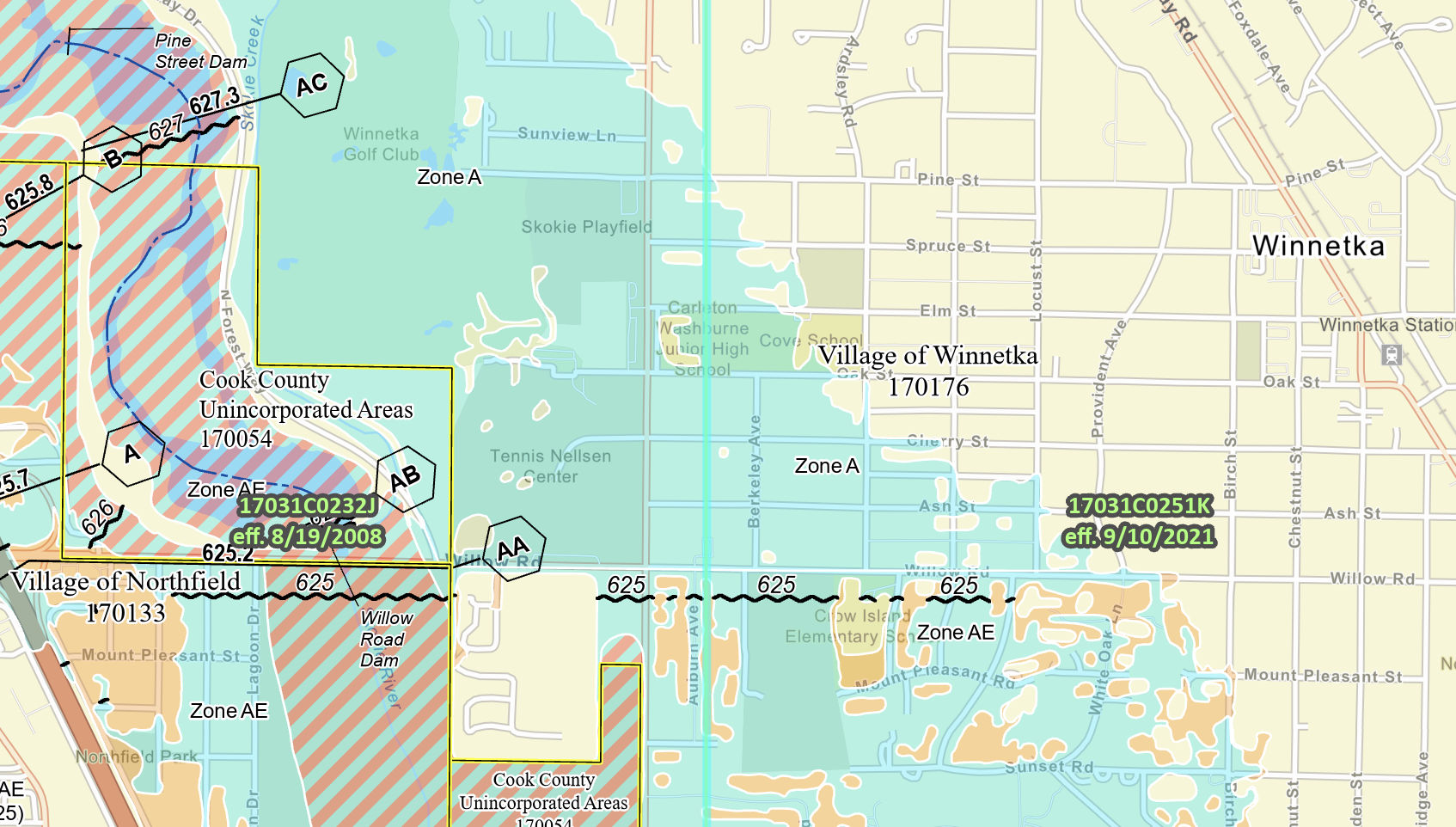
    The best approach depends on your specific circumstances. Start by determining whether you’re in a flood zone that triggers mandatory insurance requirements, Longmeadow can help you check FEMA’s flood map service center online.

    north shore winnetka flood zone

    Then compare options. Get quotes for both NFIP and private flood policies. Ask specifically whether private policies will satisfy your mortgage requirements if that applies to you. And consider how add-ons like water backup coverage might work with your overall flood protection strategy.

    The North Shore’s proximity to Lake Michigan, our network of creeks and drainage systems, and increasingly intense weather events all mean that flood risk is real here—even if it doesn’t feel like it until water is pooling in your finished basement.

    The right flood insurance won’t just protect your home. It’ll give you peace of mind that you’re covered when the unexpected happens, and that you’re meeting your obligations to your lender. In a region where a single storm can cause millions in damage across multiple communities, that protection is worth its weight in gold—or at least in sandbags.


    Related Coverage