
Boat and Watercraft Insurance in Illinois and Wisconsin
Coverage at a Glance
Select a part of the boat or harbor, a numbered marker, or a coverage name below the picture to see how boat insurance applies.
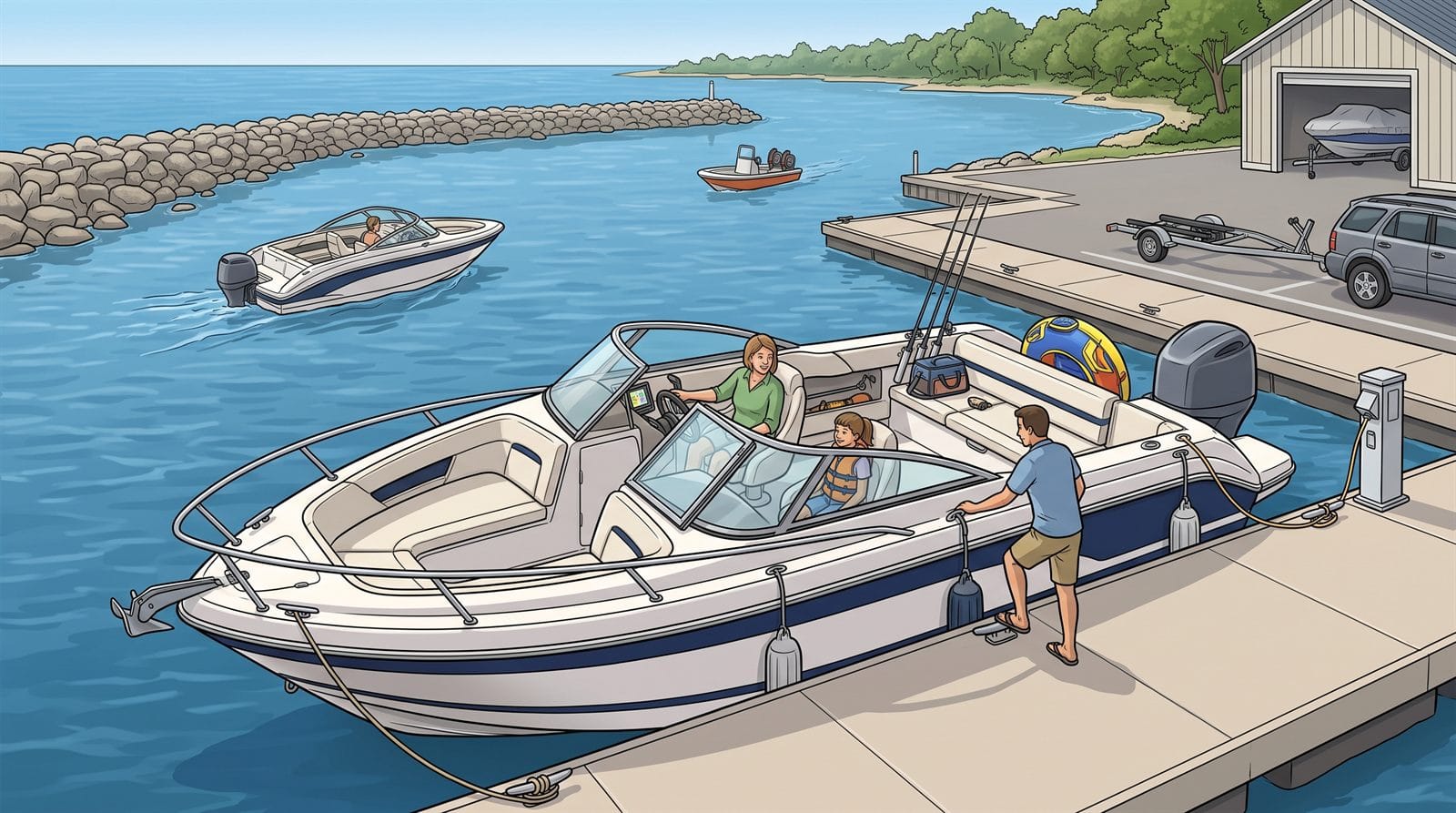
- Hull and physical damage
What would it take to repair or replace your boat?
A collision, storm, theft, or other covered event can damage your boat. Physical damage coverage helps protect the insured vessel. Ask how agreed value, actual cash value, or replacement coverage would affect a total-loss payment and whether depreciation applies to repairs.
- Boating liability
An accident can affect more than your boat.
If you’re legally responsible for injuring someone or damaging another boat or dock, watercraft liability can help with covered damages and legal expenses. Review limits against your boating activities and coordinate eligible watercraft with your umbrella policy.
- Medical payments
What if someone aboard needs medical care?
Medical payments coverage can help with qualifying medical expenses after a boating accident, regardless of fault. Review who is covered, the available limit, and how it coordinates with health insurance. It serves a different purpose from liability coverage.
- Uninsured or underinsured boaters
What if the other boater has too little insurance?
If another boater causes an accident and has no liability insurance or insufficient limits, uninsured or underinsured boater coverage may help with covered bodily injuries. Damage to your boat is a separate coverage question.
- Engine and mechanical breakdown
An engine failure isn’t always an insured loss.
Damage from a covered collision differs from an engine simply wearing out. Standard boat coverage generally excludes wear and neglected maintenance. Optional mechanical breakdown protection may cover specified components, subject to eligibility and exclusions. Ask exactly which engine parts are protected.
- Equipment and belongings
Don’t overlook what you bring aboard.
Fishing equipment, boating gear, and personal belongings can represent a substantial investment. Review protection for theft and covered damage, including item limits and deductibles. Permanently installed electronics and portable equipment may be treated differently.
- Watersports
Does your coverage include the fun behind the boat?
Tubing, waterskiing, and wakeboarding create additional injury exposures. Review coverage for participants and your liability as the boat operator. Covered activities and exclusions vary; don’t assume every activity involving a tow rope is included.
- On-water towing and assistance
Who helps when you can’t get back to shore?
An engine failure or dead battery can leave you stranded. On-water towing and assistance can help with eligible towing, jump-starts, or fuel delivery. Check service territory, limits, and dispatch requirements. Towing assistance does not pay to repair the underlying breakdown.
- Fuel-spill liability
A fuel spill can create cleanup costs.
A leaking tank, fueling accident, or sinking can release fuel into the water. Fuel-spill liability can help address covered cleanup obligations. Review the available limit and whether this protection is separate from, or shares, other liability limits.
- Salvage and wreck removal
Recovering a boat can be expensive, too.
After a grounding or sinking, recovering or removing your boat may require specialist equipment. Review salvage and wreck-removal provisions, including when removal is covered and whether those expenses reduce the amount available for damage to the boat.
- Trailer protection
Your trailer needs its own coverage check.
Make sure your boat trailer is included for covered physical damage. Roadside assistance and trailer-trip interruption may be separate benefits. Review how your boat and auto policies work together while towing; damage to the boat, trailer, and tow vehicle involves different coverage.
- Storage and winter protection
Your boat still has exposures on land.
Theft, fire, and other covered damage can happen during storage. Review year-round protection, any required lay-up period, and winterization conditions. Freeze damage is not automatically covered, and keeping insurance in force does not replace proper winter maintenance.
- Navigation territory and permitted use
Does your policy fit where and how you boat?
Tell us where you cruise and how you use the boat. Review navigation limits before longer trips, including travel into Canadian waters. Paid charters, rentals, racing, and other changes in use need a separate coverage review before you depart.
Protect your boat and the days you spend aboard.
Illustrative coverage options. Availability, navigation limits, permitted uses, deductibles, and exclusions vary by policy.
Short answer: your homeowners policy covers a small boat badly and a real one not at all. Once you are past a modest horsepower and value threshold, you need a separate watercraft or yacht policy, and the three settings that matter most are agreed value versus actual cash value, where the policy lets you operate, and whether hauling and storage are covered.
We write boats kept on Lake Michigan, on the Chain O’Lakes, at Wisconsin lake houses, and on trailers in a garage in Wilmette eleven months a year. The right structure is different for each of those.
What Your Homeowners Policy Actually Does
Most homeowners forms include a small amount of watercraft coverage, and it runs out quickly. Typical limits stop at a low physical damage figure, and liability for boats above a modest length or horsepower is excluded outright. Canoes, kayaks, paddleboards and small tenders are usually fine. A runabout, a pontoon with a real motor, a cruiser, or anything you would call a boat is not.
The exclusion that catches people is liability. A physical damage gap costs you the boat. A liability gap on the water, where injuries and fuel spills get expensive fast, costs considerably more.
Agreed Value or Actual Cash Value
This is the single largest difference between two quotes that otherwise look alike.
- Agreed value. You and the carrier settle on the insured value when the policy is written, and that is what pays on a total loss with no depreciation taken. Costs more, and it is what you want on a boat you care about.
- Actual cash value. The carrier pays depreciated value at the time of loss. On a fifteen year old boat, the difference between the two can be most of what you thought you had.
Some policies split the difference, using agreed value on the hull and actual cash value on sails, canvas, and outboards. Read which parts fall where before you compare premiums.
Where the Policy Lets You Go
Every watercraft policy defines a navigational territory, and running outside it means you are uninsured, not merely in breach of a clause. For our clients the practical questions are:
- Does it cover all of Lake Michigan, or only within a set distance from shore?
- Does it include Wisconsin inland lakes if the boat lives at a second home there?
- Are Canadian waters included, which matters on the northern end of the lake?
- Is there a lay-up period, meaning months when the boat must be out of the water and coverage changes?
A boat that splits the season between Chicago and a Wisconsin lake needs the territory written to match, and that is a conversation with the underwriter rather than a checkbox.
Trailered, Docked, or Stored
| How you keep it | What tends to bite |
|---|---|
| On a trailer, launched at ramps | Damage in transit, theft from a driveway, and whether the trailer itself is scheduled |
| In a slip or on a lift | Marina contract requirements, wind and wake damage, and named storm or ice provisions |
| Moored or on a buoy | Breaking loose, sinking at mooring, and salvage costs after a storm |
| Winter storage, indoor or shrink wrapped | Whether coverage continues during lay-up, and freeze damage to the block |
Marinas frequently require you to name them as an additional insured and to carry a specific liability limit. Send us the slip contract and we will make the policy match it rather than finding out at renewal.
The Coverages That Get Left Off
- Wreck removal. If your boat sinks in a channel or slip, you are responsible for raising it. This limit is often far too low.
- Fuel spill liability. Federal and state pollution rules apply to recreational boats. Cleanup costs do not scale with the size of the boat.
- Uninsured boater. Fewer boaters carry liability than drivers do, and this covers injuries when the other operator has nothing.
- Towing and assistance on the water. A tow off Lake Michigan is not a roadside call, and the bill reflects that.
- Personal effects and fishing gear. Rods, electronics, and tackle are usually a small sublimit unless scheduled. Serious anglers routinely exceed it.
- Trailer coverage. Sometimes included, often a separate item, and it is the part most likely to be missing.
- Mechanical breakdown and consequential damage. Rarely covered, and worth knowing before an engine claim rather than after.
Liability, and Why an Umbrella Matters Here
Boating liability claims involve injuries to passengers and to people in other boats, and they are among the more serious exposures a household takes on voluntarily. Base watercraft liability limits are often lower than the auto limits the same family carries.
Most personal umbrella policies will sit above a boat, but only if the underlying watercraft liability meets the umbrella’s required limit, and some carriers exclude larger or faster boats entirely. That has to be checked rather than assumed. See umbrella insurance for how the layer works.
Chartering, Renting Out, and Commercial Use
The moment money changes hands, a personal watercraft policy generally stops responding. Taking paying passengers, listing the boat on a peer to peer rental platform, or running any kind of charter is commercial use and needs commercial marine coverage.
This is the most common uninsured claim we see in this line, because the exclusion is quiet and the activity feels casual. We cover it in detail in why a cheap personal marine policy may not cover a charter.
Owning in Illinois, Boating in Wisconsin
A large share of our boat clients live in Illinois and keep the boat somewhere else. That creates a few specific questions worth settling in advance.
- Registration state and insured location do not have to match, but the policy needs to reflect where the boat actually sits.
- A boat stored at a Wisconsin lake house may be picked up by that property’s policy for limited physical damage while ashore, and almost never for liability afloat.
- Coverage for the dock, lift, and boathouse usually belongs to the lake property policy, not the boat policy. See lake property insurance in southeastern Wisconsin.
- If the second home is rented out at all, both the property and the watercraft arrangements change.
Common Questions
Does my homeowners insurance cover my boat?
Only up to a small physical damage limit, and liability is excluded above a modest length and horsepower. Small paddle craft are generally fine on a homeowners policy. Anything with a meaningful motor needs its own watercraft policy, and the liability gap matters more than the property gap.
Is boat insurance required in Illinois or Wisconsin?
Neither state requires liability insurance for recreational boats the way both require it for cars. In practice it is still required of you: marinas, slip contracts, yacht clubs, and lenders almost always demand proof of coverage with specific limits.
What is a lay-up period?
A defined stretch of the year, typically over winter here, when the boat must be out of the water and out of use. Coverage narrows during lay-up and the premium reflects it. If you plan to use the boat outside the stated season, the policy has to be written for that.
Should I insure my boat for agreed value?
On anything newer or worth keeping, yes. Actual cash value depreciates the settlement at exactly the moment you need to replace the boat, and the premium difference is usually small relative to what you would lose on a total loss.
Can I put my boat on my umbrella policy?
Usually, provided the watercraft liability underneath meets the umbrella’s required limit and the boat is not excluded by size or speed. It is a genuine check rather than a formality, and we confirm it in writing when we place the two together.
Get a Boat Policy Reviewed
Send us the current declarations page along with your slip or storage contract, and we will tell you where the settlement basis, the navigational territory, and the liability limit actually leave you. We compare across the carriers we hold appointments with rather than quoting a single company.
Call or text 847.242.1040, email hello@longmeadow.agency, or start a quote online.