
Short answer: Tell your agent before a major renovation. The project can change the dwelling limit, occupancy, and coverage needed during construction. Moving out temporarily does not automatically make the house vacant. Review your contractor’s insurance and required endorsements as well; a certificate summarizes coverage but does not create it.
Tell your insurance agent about a renovation before work begins. The project cost, structural work, contractor arrangements, and whether you will live in the home during construction can affect your home insurance during the renovation.
Does Homeowners Insurance Cover a Home Renovation?
Most standard homeowner’s insurance policies are written to cover your home as it currently exists. When you start a renovation, several things change that can put your coverage at risk.
Your coverage limits may no longer be adequate
If your renovation significantly increases the value of your home, say with a kitchen addition or a finished basement, your existing dwelling coverage may fall short of the cost to rebuild. Update your policy limits before or immediately after completing major work.
Vacant or partially occupied homes face coverage restrictions
If you will live elsewhere during a renovation, explain the schedule, furnishings, and scope of work to your agent before construction starts. An unoccupied home is not necessarily vacant, and the insurer may need to adjust the coverage for the project.
Construction-related damage may not be covered
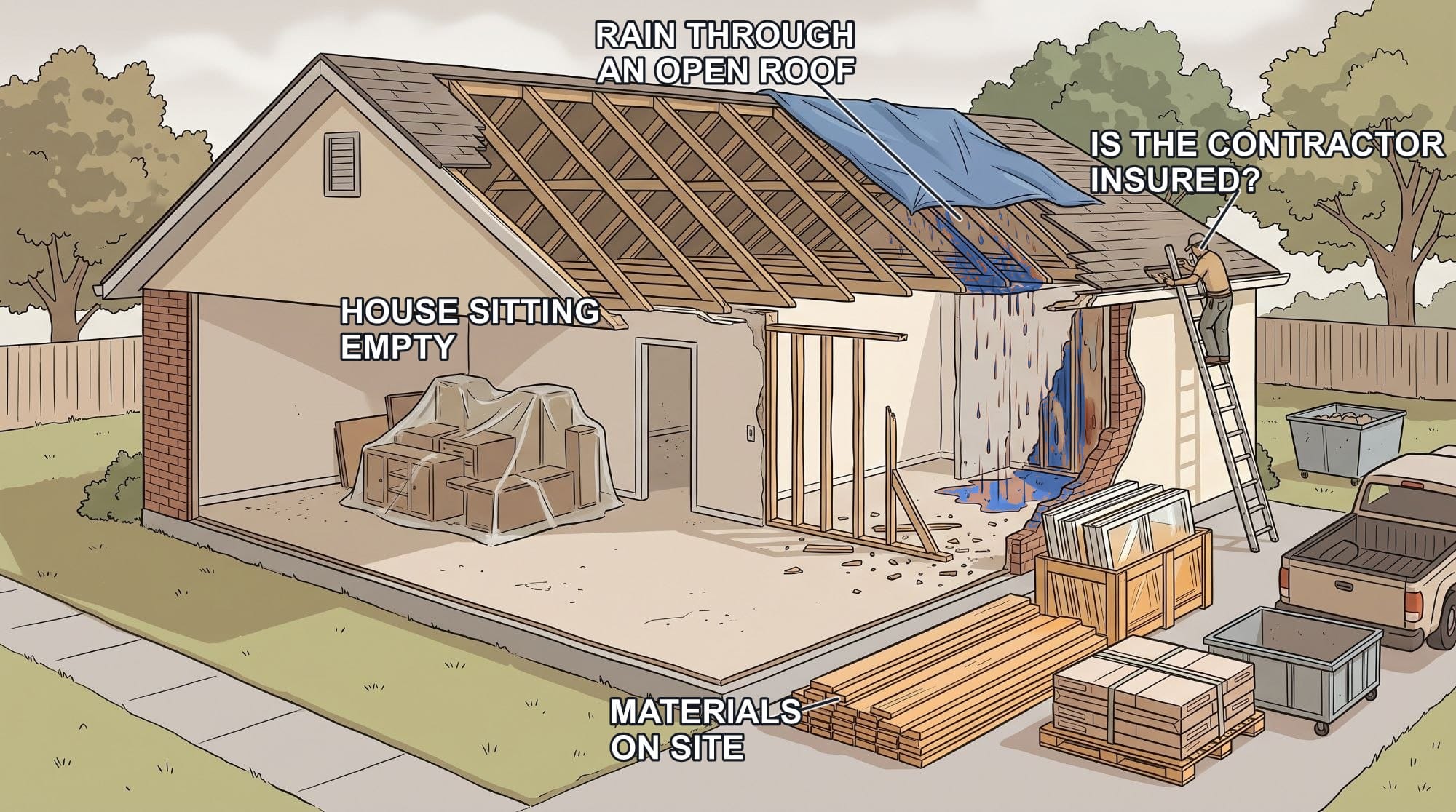
Standard homeowner’s policies typically exclude damage that occurs as a direct result of construction activity. If a wall collapses during demolition or materials are damaged by rain through an open roof, you may be left holding the bill. A “Builder’s Risk” policy (also called a dwelling under construction policy) can bridge this gap.
Personal property on-site is at risk
Materials and equipment stored at your home during a renovation may not be covered under your existing policy, especially if they’re stolen or damaged. Ask about additional coverage for building materials.
The Risk of Hiring an Uninsured Contractor
This is where many homeowners make a costly mistake: hiring a contractor without verifying their insurance. If a worker is injured on your property or a subcontractor causes damage to a neighbor’s home, you could be held liable if the contractor doesn’t have proper coverage.
What Contractor Insurance Should Include
Before signing any contract, always request a Certificate of Insurance from your contractor and verify that it includes the following:
General Liability Insurance
This is the baseline requirement. General liability covers property damage and bodily injury caused by the contractor’s work. At minimum, look for $1 million per occurrence and $2 million aggregate coverage. For larger projects, higher limits are appropriate.
Workers’ Compensation Insurance
If a contractor or their employee is injured while working on your property, workers’ comp covers their medical bills and lost wages. Without it, an injured worker may be able to sue you directly. Illinois requires workers’ comp for nearly every contractor with employees.
Commercial Auto Insurance
If the contractor or their crew is driving vehicles to and from your property for work purposes, personal auto insurance won’t cover accidents that occur in the course of that work. Make sure their vehicles are covered under a commercial policy.
Umbrella or Excess Liability
For larger renovation projects, it’s worth asking whether your contractor carries an umbrella policy that extends their general liability limits. This provides an extra layer of protection if a claim exceeds their base coverage.
Ask to be listed as an Additional Insured on the contractor’s general liability policy. Their policy can then respond on your behalf if a covered claim arises from their work on your property.
Don’t Overlook the Cleanup
Large renovation projects generate a lot of debris (old drywall, lumber, fixtures, roofing materials), and managing that waste is part of the job. Many homeowners and contractors rely on a dumpster rental service to handle the heavy lifting of debris removal. Beyond convenience, having a designated dumpster keeps your worksite organized, which reduces trip-and-fall hazards that could lead to injury claims. A cluttered jobsite is a liability claim waiting to happen.
Before You Renovate: A Quick Insurance Checklist
Before starting any significant renovation project:
- Call your insurance agent and give them the scope and timeline of the project.
- Review your dwelling coverage limit so it reflects the home’s value after the work.
- Ask about a Builder’s Risk policy if your project involves significant structural changes.
- Verify contractor insurance: request a Certificate of Insurance and confirm it includes general liability and workers’ comp.
- Request additional insured status on your contractor’s liability policy.
- Clarify vacancy clauses if you plan to move out during construction.
- Update your policy once the renovation is complete to reflect the home’s new value.
Call Before the Contractor Starts
If you are planning a project, call us before the contractor starts. We will look at your current policy, the project scope, and the contractor’s certificate, and tell you what needs to change.
Coverage We Write
- Home insurance on the North Shore
- Flood and water backup coverage
- Umbrella insurance
- Personal insurance overview
Call 847.242.1040 or request a quote online.