
Renovation changes the insurance risk. A home that was properly insured yesterday may need different coverage once walls are opened, contractors are on site, materials are delivered, utilities are modified, or the family moves out temporarily. This is especially important in Chicago, Oak Park, Evanston, Wilmette, Winnetka, Glencoe, Kenilworth, Northbrook, Elmhurst, and other communities with older homes, high replacement costs, strict permits, and expensive finishes. Before the first contractor starts work, homeowners should review insurance. The goal is to prevent a renovation problem from becoming an uncovered claim. For a condo renovation in Chicago, also check the association’s rules: they can set insurance requirements for your contractor, and the association documents decide which interior work your HO-6 has to cover.
Tell Your Insurance Agent Before Work Begins
The most important step is simple: notify your agent before the project starts. A small cosmetic update may not require major policy changes. A large addition, structural work, roof replacement, kitchen expansion, basement build-out, or whole-home renovation may require underwriting review or a different policy structure. Insurance companies care about construction because it increases fire, theft, water, liability, and vacancy exposure. If the insurer learns about a major renovation only after a claim, the situation becomes much harder.
Verify Contractor Insurance
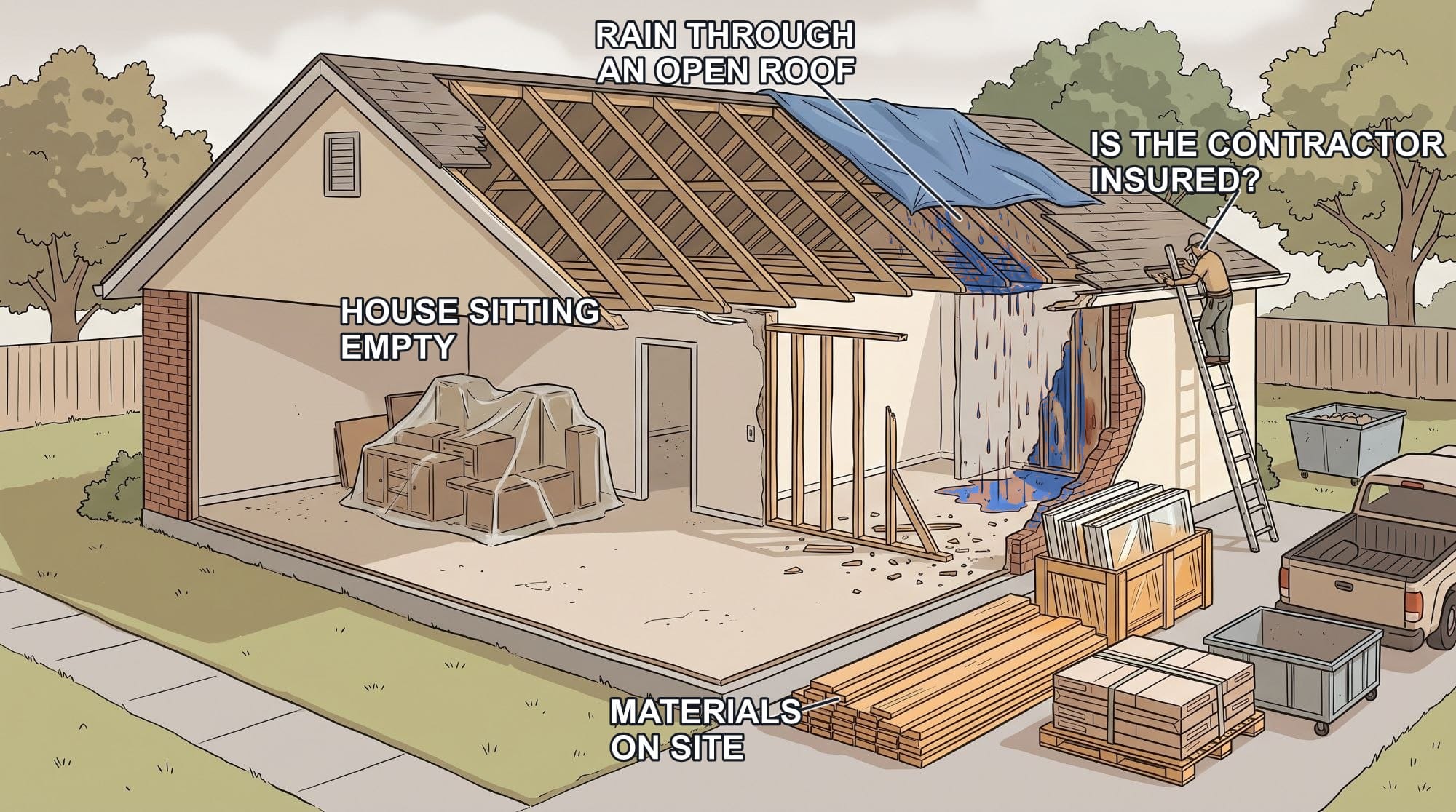
Homeowners should request certificates of insurance from the general contractor and key subcontractors. The certificate should show general liability, workers compensation, and commercial auto where appropriate. For larger projects, homeowners may also request additional insured status. A contractor without proper insurance can create risk for the homeowner. If a worker is injured, a neighbor’s property is damaged, or faulty work causes a loss, the contractor’s insurance position matters.
Builder’s Risk or Renovation Coverage May Be Needed
A standard homeowners policy may not adequately cover a major renovation. Builder’s risk or renovation coverage can protect the structure, materials, and work in progress during construction, depending on the policy terms. This is especially important when the project involves structural changes, significant materials stored on site, a vacant home, or a large increase in property value. The homeowner should confirm who is responsible for insuring materials before and after installation.
Vacancy and Temporary Relocation Change the Risk
If the home will be vacant or unoccupied during renovation, coverage may change. Vacant homes are more vulnerable to theft, vandalism, frozen pipes, unnoticed leaks, and fire. Some policies restrict coverage after a certain vacancy period. Homeowners should disclose whether they are moving out, how long the project will take, who will monitor the home, and whether utilities will remain active.
Update Replacement Cost After the Project
Renovations often increase the replacement cost of the home. A new kitchen, addition, finished basement, custom built-ins, upgraded mechanical systems, new roof, or exterior improvements should be reflected in the dwelling limit after completion. Homeowners should keep contracts, plans, invoices, photos, permits, and completion records. These documents help update coverage and can be valuable during a future claim.
Common Renovation Insurance Mistakes
The most common mistake is assuming the contractor’s insurance protects the homeowner completely. Contractor coverage is important, but it does not replace the homeowner’s property and liability program. Another mistake is starting work before insurance review. Once demolition begins, materials arrive, or the home becomes vacant, the risk has already changed. A third mistake is failing to update coverage after the project. A successful renovation can increase replacement cost substantially.
Contract Review Issues
Construction contracts should address insurance, indemnity, responsibility for materials, change orders, site security, permits, and cleanup. Homeowners should not rely only on verbal assurances. For larger projects, it may be appropriate to have an attorney review the contract and to ask the insurance agent what documentation is needed from the contractor.
After the Project Is Complete
Send completion details to your agent, including total project cost, updated square footage, major systems, roof work, finished basement space, new detached structures, and high-value finishes. The policy should reflect the improved home, not the pre-renovation version.
A Practical Renovation Example
Consider a homeowner who moves out for a six-month renovation. Contractors open walls, materials are stored in the garage, plumbing is disconnected, and the home is unoccupied most nights. That is not the same risk as an occupied finished home. If theft, fire, or water damage occurs, the insurance company will ask about the construction and occupancy status. The answers should already be reflected in the coverage. Review coverage well before the renewal date, while there is still time to change it.
Coverage Review Checklist
- Notify your agent before signing major construction contracts
- Collect contractor certificates of insurance
- Ask whether builder’s risk or renovation coverage is needed
- Disclose vacancy or temporary relocation
- Confirm who insures materials on site
- Review liability limits and umbrella coverage
- Update replacement cost after completion
Review Coverage Before Work Starts and After It Ends
Longmeadow Insurance can review your renovation plans and insurance coverage before work begins on a Chicago, North Shore, or suburban home.
How Longmeadow Insurance Can Help
Longmeadow Insurance is an independent agency based in Wilmette, Illinois. Send us your current declarations pages and we will tell you what they cover, and where the gaps are, before we quote anything. For a coverage review, call 847.242.1040 or request a consultation online.
Coverage We Write
- Home insurance on the North Shore
- Flood and water backup coverage
- Umbrella insurance
- Personal insurance overview
Call 847.242.1040 or request a quote online.