
A Wisconsin lake house needs more than a copy of your primary homeowners policy with a new address. Seasonal occupancy, docks, boats, guest use, storms, freezing temperatures, detached structures, rental activity, and distance from fire protection can all change the insurance picture. This matters for Wisconsin lake homes, from Lake Geneva, Delavan, Twin Lakes, Powers Lake and Lauderdale Lakes in the southeast to Green Lake and Door County farther north, and the many smaller lake communities Illinois families use as second homes. The same issues often apply to Michigan lake houses as well, especially when the home is seasonal, remote, rented part of the year, or paired with boats and water toys. Make sure the policy reflects how the property is actually used before a fire, freeze, storm, dock injury, boat incident, or rental claim exposes a gap.
Second Homes Are Underwritten Differently Than Primary Homes
A primary home is usually occupied year-round. A lake house may sit unoccupied for weeks, close for the winter, host guests without the owner present, or be used heavily only during summer weekends. That occupancy pattern affects theft, water damage, fire, freeze, vandalism, and liability risk. The insurance company needs to know whether the home is seasonal, year-round, rented, empty and vacant, or used by family and friends. A policy written as a normal primary residence may not fit a Wisconsin or Michigan lake house if the use is materially different. Owners should also confirm who has access to the property, whether there is a caretaker, how utilities are managed in winter, and whether smart water shutoff or temperature monitoring devices are installed.
Replacement Cost Can Be Harder Near the Water
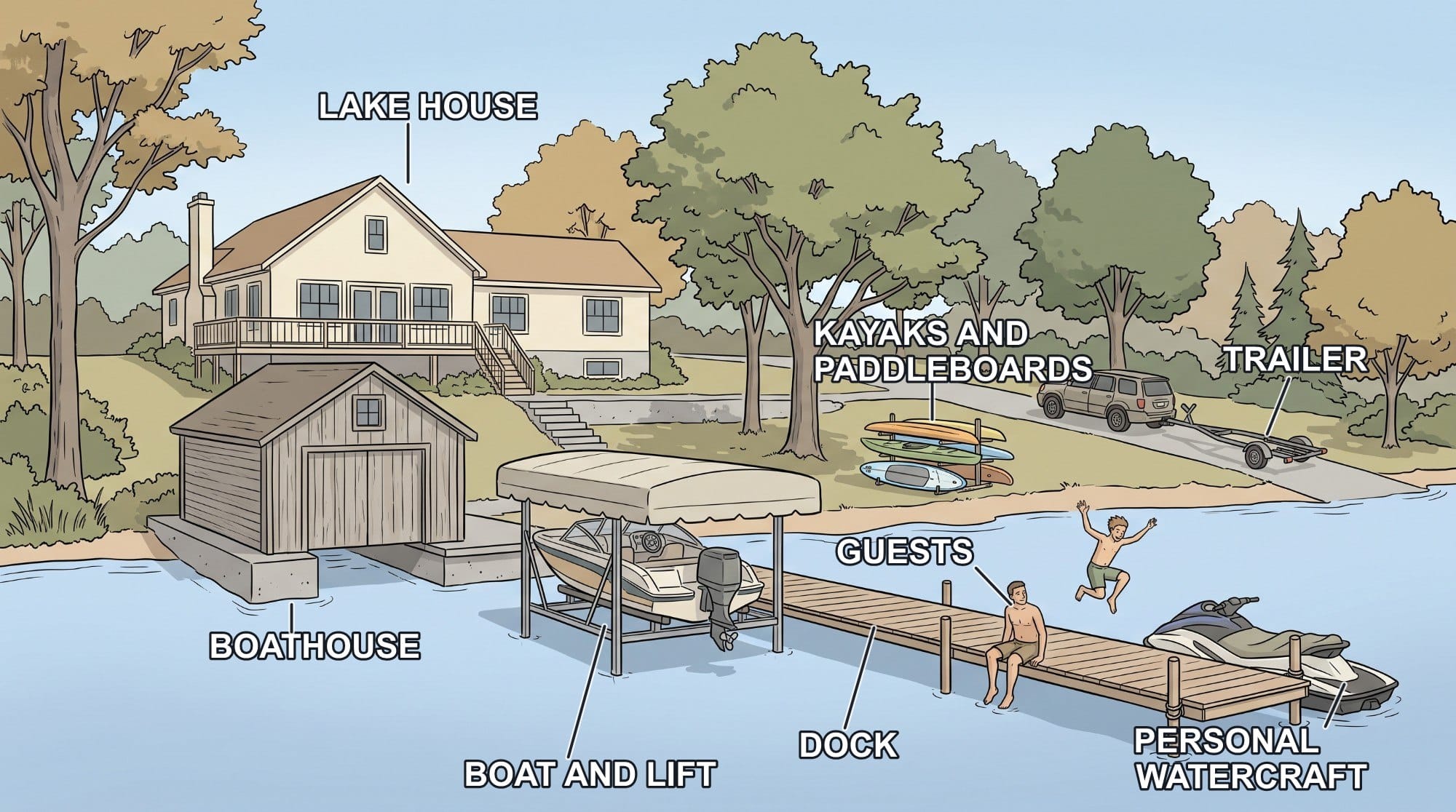
Lake homes can be expensive to repair. Access may be limited, local contractors may be busy during storm seasons, materials may be specialized, and shoreline rules can affect rebuilding. Older cottages may also have additions, finished walkout basements, boathouses, garages, decks, piers, and custom features that are not obvious in a basic estimate. The dwelling limit should be based on realistic reconstruction cost, not purchase price or tax value. Land value near a lake can distort the number. Insurance is focused on the structure and covered property, not the market premium for waterfront land. Detached structures need their own review. Garages, sheds, boat houses, guest houses, piers, lifts, decks, seawalls, and permanent docks may not be fully covered unless scheduled, endorsed, or included within adequate other-structures limits.
Water Damage Is Not One Coverage
Lake property owners often think water near the house means water is covered. That is not how policies work. A burst pipe, sewer backup, sump overflow, surface water, flood, seepage, ice movement, and water entering from the lake can all be treated differently. Standard homeowners policies usually exclude flood. Sewer backup and sump overflow often require an endorsement. Service line coverage may be separate. Shoreline erosion, seepage, and gradual water intrusion can be limited or excluded. A lake house coverage review should include flood options, sewer backup, sump pump failure, service line, freezing pipes, winterization expectations, and whether the property has a basement, crawl space, or low-lying mechanical systems.
Liability Extends Beyond the House
Lake homes create liability risks that are easy to underestimate. Guests can slip on docks, fall on stairs, use kayaks or paddleboards, swim from the property, drive golf carts or ATVs, bring dogs, consume alcohol, or use fire pits and grills. A serious injury can exceed the base liability limit quickly. Owners should review personal liability limits, medical payments coverage, umbrella insurance, and whether boats, jet skis, ATVs, golf carts, short-term rentals, and paid events are excluded or require separate coverage. If friends or extended family use the lake house without the owner present, the policy should still match the real exposure. Informal use can still create formal claims.
Short-Term Rental Can Change the Policy You Need
Many Wisconsin and Michigan lake houses are rented for part of the season. Even occasional rental activity can change the insurance requirement. A personal homeowners or seasonal dwelling policy may restrict business use, short-term rental, platform rentals, or tenant-caused damage. Owners should disclose rental activity before listing the home. The policy may need a rental endorsement, landlord form, commercial package, or specialty short-term rental coverage depending on frequency, services, occupancy, and revenue. Do not rely only on a rental platform protection program. Those programs are not a substitute for properly structured property and liability coverage.
Coverage Review Checklist
- Confirm the home is insured as seasonal, secondary, rental, or year-round based on actual use
- Review replacement cost for the house and detached structures
- Check coverage for docks, lifts, boathouses, garages, decks, and seawalls
- Review flood, sewer backup, sump overflow, service line, and freezing-pipe exposures
- Confirm liability coverage for guests, docks, swimming, water toys, and recreational vehicles
- Disclose any short-term rental activity before listing the property
- Consider umbrella coverage for higher-risk lake property ownership
Match the Policy to How the Lake House Is Used
Longmeadow Insurance can help Illinois families review Wisconsin and Michigan lake house coverage before seasonal use, rental activity, or a claim creates a problem.
How Longmeadow Insurance Can Help
Longmeadow Insurance is an independent agency based in Wilmette, Illinois. Send us the home, boat, and umbrella declarations pages and we will show you any gaps between them. For a coverage review, call 847.242.1040 or request a consultation online.
For the full picture, see our boat and watercraft insurance guide for Illinois and Wisconsin, covering agreed value, navigational territory, lay-up periods, trailers, and charter exclusions.
Coverage We Write
Call 847.242.1040 or request a quote online.