
Lake property in southeastern Wisconsin brings a different insurance profile than a standard suburban home. In areas such as Salem Lakes, Paddock Lake, Silver Lake, Twin Lakes, Powers Lake, Bristol, Trevor, and western Kenosha County, homeowners may have shoreline exposure, boats, docks, detached structures, seasonal occupancy, septic systems, wells, and recreational vehicles.
A normal homeowners policy may be appropriate for some year-round homes, but it should not be assumed. The way the property is used matters. A primary residence, family cottage, short-term rental, home closed for the winter, and newly purchased lake home can each require different underwriting.
The goal is to protect the structure, contents, liability, and recreational exposures without leaving avoidable gaps.
Occupancy Drives the Policy
Insurance companies care whether the home is primary, secondary, seasonal, rented, vacant, or under renovation. Seasonal use can affect theft, water damage, heating, frozen pipes, and inspection requirements. Short-term rental activity can create a business exposure that may be excluded without proper coverage.
Owners should be clear about how often the property is occupied, whether guests use it, whether it is rented, and who checks on it during the off-season. Accuracy matters because claim problems often begin with occupancy assumptions.
Water Exposure Is More Than Flood Insurance
Lake homes should review flood exposure, surface water, sewer or septic backup, sump pump failure, shoreline conditions, and drainage. Standard homeowners policies exclude flood damage, and water backup coverage usually requires an endorsement.
A property does not need to be directly on the water to have meaningful water exposure. Low-lying lots, heavy rain, frozen ground, and drainage patterns can all create problems. Owners should evaluate both flood insurance and water backup options.
Docks, Lifts, Boats, and Recreational Equipment Need Review
Docks, boat lifts, boats, personal watercraft, trailers, ATVs, snowmobiles, kayaks, paddleboards, and other recreational equipment may not be adequately covered by the homeowners policy. Some items require separate policies or endorsements.
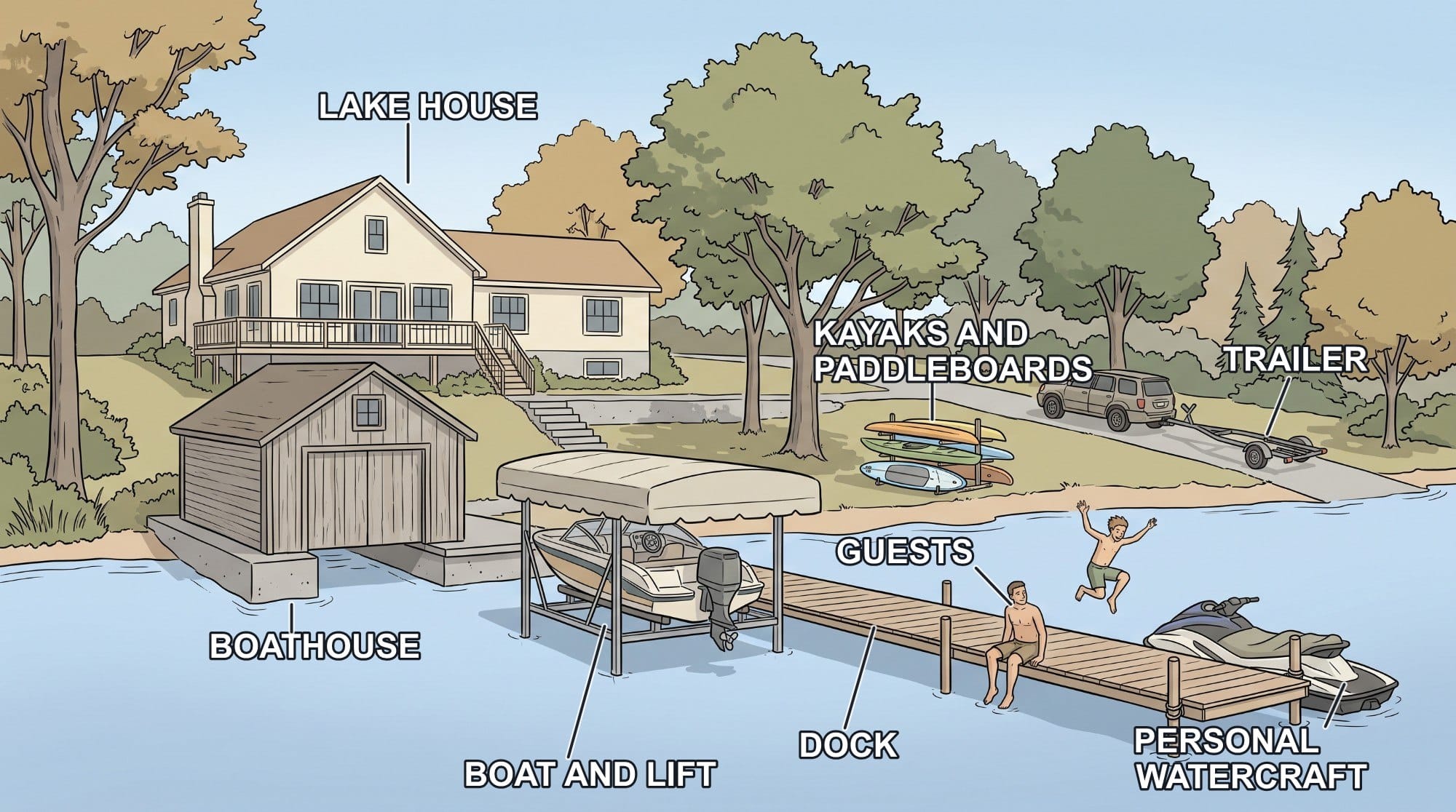
Liability is also important. Guests using a boat, walking on a dock, swimming, or riding recreational vehicles can create serious injury exposure. Owners should coordinate homeowners, boat, recreational vehicle, and umbrella coverage.
Detached Structures and Outbuildings Can Be Undervalued
Lake and rural properties often include detached garages, sheds, workshops, barns, boathouses, guest spaces, or storage buildings. Default other-structures coverage may not be enough if these buildings are substantial or improved.
The policy should list and value these structures accurately. Owners should also confirm whether any structure used for business, rental, farming, or storage of commercial equipment requires special treatment.
Wisconsin and Illinois Households Need Coordination
Many southeastern Wisconsin lake property owners live or work in Illinois. That creates coordination questions involving auto garaging, umbrella policies, primary residence coverage, vehicles kept at the lake, and liability across multiple properties.
The best approach is to review the full household program together rather than insuring the lake property in isolation.
Common Lake Property Insurance Mistakes
The first mistake is failing to disclose rental or occasional guest use. A property used by paying guests can create a different exposure than a family-only cottage.
The second mistake is assuming docks, lifts, boats, and recreational vehicles are automatically covered. They often need separate review.
The third mistake is underestimating off-season water and freeze risk. A small leak or frozen pipe can become severe if nobody is checking the property.
Questions for Lake Property Owners
Who uses the property? Is it rented? Is it occupied year-round? Are there boats, docks, lifts, ATVs, trailers, or outbuildings? Is there a septic system, well, wood stove, or shoreline exposure? Who checks the home during winter?
These answers shape the policy and help determine whether additional coverage is needed.
Liability Around Water
Water increases liability risk. Swimming, boating, docks, guests, children, alcohol, and recreational equipment can all create serious injury scenarios. Umbrella coverage should be reviewed alongside the property and boat policies.
A Practical Lake Property Example
Consider a seasonal lake home that is checked only occasionally during winter. A frozen pipe bursts, water runs for days, and damage spreads through flooring, walls, furniture, and mechanical systems. The claim may depend on occupancy, heat maintenance, inspection practices, water shutoff, and policy language. Lake property owners should plan for the months they are not there, not only the weekends they are.
Review coverage well before the renewal date, while there is still time to change it.
Coverage Review Checklist
- Disclose whether the property is primary, seasonal, rented, or vacant
- Review flood and water backup coverage
- Insure docks, lifts, boats, and recreational vehicles properly
- Value detached structures separately
- Consider umbrella liability coverage
- Protect against frozen pipe and off-season losses
- Coordinate Wisconsin property with Illinois home and auto policies
Plan for the Months Nobody Is at the Lake
Longmeadow Insurance can help owners in Salem Lakes, western Kenosha County, and nearby Wisconsin communities review lake property, home, auto, boat, and umbrella coverage.
How Longmeadow Insurance Can Help
Longmeadow Insurance is an independent agency based in Wilmette, Illinois. Send us your current declarations pages and we will tell you what they cover, and where the gaps are, before we quote anything.
For a coverage review, call 847.242.1040 or request a consultation online.
A lake home in Southeastern Wisconsin may be a primary residence, weekend home, seasonal cabin, short-term rental, family property, or future retirement home. Each use creates different insurance questions. Seasonal occupancy, vacancy, winterization, docks, detached structures, boats, lifts, seawalls, and guest use all affect the coverage review.
A standard homeowners approach may miss important details if the property is not occupied year-round or if waterfront features are not properly described. The policy should match how the home is actually used and maintained.
Waterfront does not mean every water loss is covered
Waterfront owners should separate flood, surface water, sewer or drain backup, seepage, sump overflow, ice damage, wind damage, and accidental discharge from plumbing. These are different claim scenarios with different coverage rules. A lender may not require flood insurance, but that does not mean flood exposure is irrelevant.
Docks, lifts, boats, personal watercraft, and detached structures may need separate review. Some items may not be covered automatically, or may be subject to sublimits, exclusions, or special conditions.
What to gather before a lake property quote
Useful details include year built, roof age, updates, occupancy pattern, winterization plan, rental use, distance to water, flood information, dock/lift details, detached structures, boats, claims history, and who owns the property. Longmeadow Insurance can help Illinois and Wisconsin lake-property owners compare practical coverage options.
Related Insurance Guides
For the full picture, see our boat and watercraft insurance guide for Illinois and Wisconsin, covering agreed value, navigational territory, lay-up periods, trailers, and charter exclusions.
Coverage We Write
Call 847.242.1040 or request a quote online.