
Two-flats and three-flats are a core part of Chicago housing. They are also one of the easiest property types to insure incorrectly. The same building can be a primary residence, partial rental, full rental, family arrangement, short-term vacancy, renovation project, or mixed-use investment depending on how it is occupied.
That occupancy detail drives the insurance. A policy written as a standard owner-occupied home may not properly cover a building with tenants. A landlord policy may not cover the owner’s personal property in the same way. A vacant or renovation exposure may require additional underwriting.
Before buying or renewing coverage, owners should make sure the policy matches the actual use of the building.
Owner-Occupied Is Different From Fully Rented
An owner living in one unit and renting the other unit has a different insurance profile than an investor renting all units. The policy needs to reflect rental exposure, liability from tenants and guests, loss of rental income, and coverage for owner property used to maintain the building.
If the owner moves out and rents the former primary unit, the insurance company needs to know. A policy that was appropriate when the owner lived there may become inappropriate once the building is fully tenant-occupied.
Misstated occupancy can create problems during a claim. It is better to address the change before the loss than explain it afterward.
Building Coverage Must Reflect Chicago Construction Costs
Many two-flats and three-flats are older masonry or frame buildings with features that are expensive to repair. Replacement cost should account for current labor, materials, demolition, code upgrades, porches, garages, finished basements, and building systems.
A low dwelling limit can create a coinsurance or underinsurance problem. It may also leave the owner short after a major fire, wind, or water loss. Investors sometimes focus on cash flow and premium, but the building limit is the foundation of the policy.
Water Backup Is Often a Major Exposure
Chicago multi-unit buildings frequently have basements, garden units, shared laundry, mechanical rooms, or storage areas below grade. Sewer backup and drain backup coverage should be reviewed carefully, especially if tenants occupy lower-level space.
A small endorsement limit may not be enough if water damages common areas, tenant property, mechanical equipment, flooring, drywall, or owner-owned appliances. Owners should understand what is covered, what limit applies, and whether tenant belongings are excluded.
Landlord Liability Needs Adequate Limits
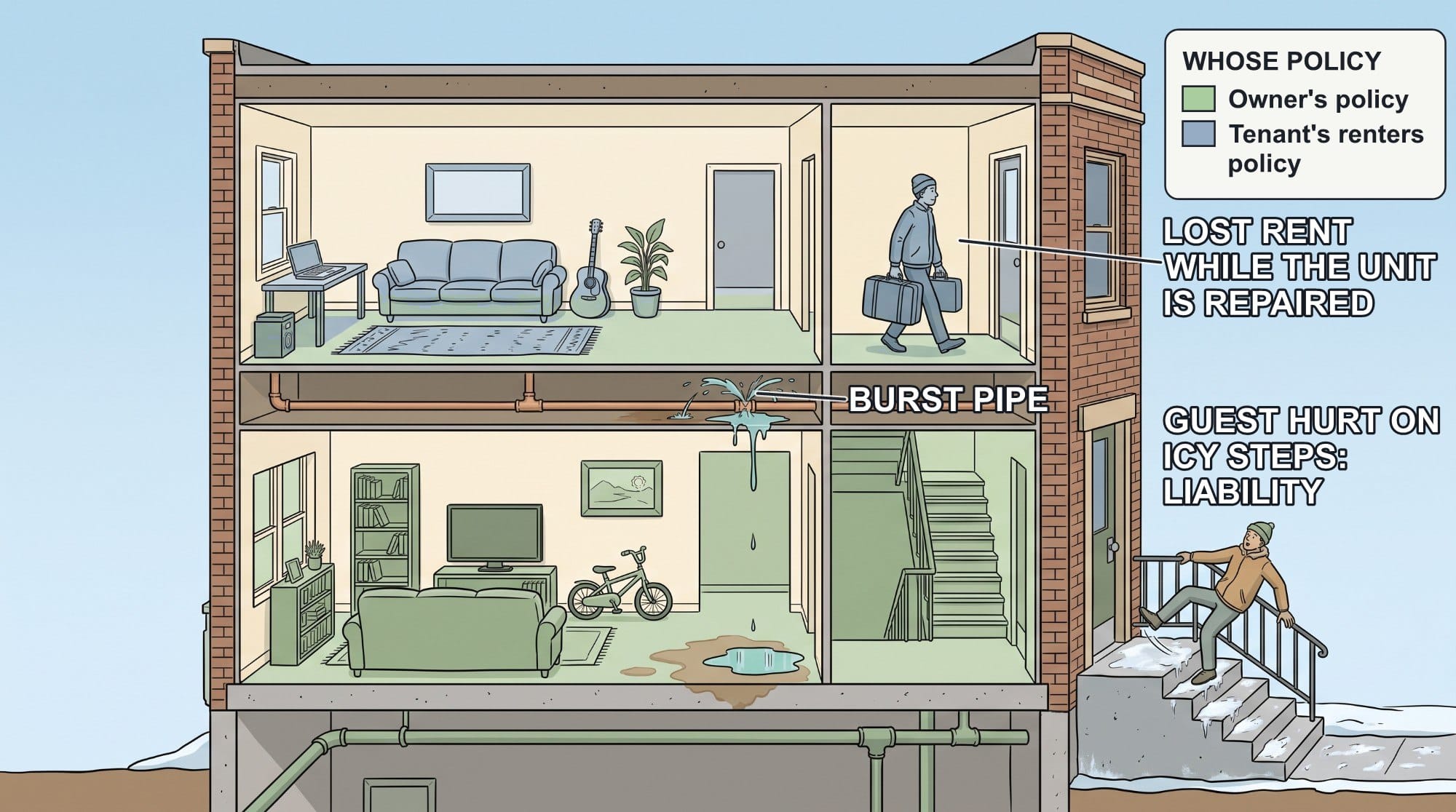
Premises liability is a major concern for rental buildings. Claims can involve falls on stairs, icy sidewalks, porch injuries, loose railings, poor lighting, dog incidents, or allegations of negligent maintenance.
An umbrella policy may be appropriate, particularly for owners with multiple properties, meaningful personal assets, or higher tenant traffic. The umbrella should be coordinated with the underlying landlord and auto policies so there are no limit mismatches.
Short-Term Rentals and Vacancy Need Special Attention
Short-term rental activity can change the insurance exposure significantly. Some policies exclude or restrict business use, transient occupancy, or platform-based rentals unless specifically endorsed. Owners should not assume a normal landlord policy covers short-term rental activity.
Vacancy also matters. If a building is empty for renovation, between tenants, or awaiting sale, theft, vandalism, water, and coverage restrictions may change. The owner should notify the agent before the vacancy becomes a claim issue.
Common Two-Flat Insurance Mistakes
The first mistake is using the wrong policy form for the occupancy. An owner-occupied two-flat, a fully rented three-flat, and a vacant building under renovation are different risks. The insurance should reflect the current use.
The second mistake is failing to include loss of rents. If a covered claim makes units uninhabitable, the owner may lose rental income while still owing the mortgage, taxes, utilities, and repairs.
The third mistake is ignoring tenant requirements. Tenants should carry renters insurance because the landlord policy generally does not cover tenant belongings.
Lease and Risk Management Considerations
A good lease should clearly address insurance responsibilities, maintenance, pets, smoking, grills, snow and ice, and tenant obligations. Insurance works best when paired with good property management.
Owners should document move-in condition, maintain common areas, respond to repair requests, and keep records. Liability claims often turn on whether the owner acted reasonably before the injury or loss.
When to Call Your Agent
Call before renting a new unit, changing occupancy, starting renovation, accepting short-term rental guests, buying another building, or leaving the property vacant. These changes can affect coverage immediately.
A Practical Two-Flat Example
Consider an owner who lives in the first-floor unit and rents the second-floor unit. A pipe bursts while the tenant is away, damaging both units and forcing the tenant to relocate. The owner needs building coverage, possibly loss of rents, liability protection, and clarity about tenant belongings. If the building was insured as a single-family home or if rental exposure was not disclosed, the claim can become complicated quickly.
Coverage Review Checklist
- Confirm whether the building is owner-occupied, partially rented, or fully rented
- Review replacement cost and ordinance coverage
- Add or increase sewer backup coverage
- Include loss of rental income where appropriate
- Verify liability limits and umbrella options
- Disclose short-term rental activity
- Notify your agent before major renovation or vacancy
Match the Policy to How the Building Is Occupied
Longmeadow Insurance can review Chicago two-flat and three-flat insurance for owner-occupants, landlords, and investors.
How Longmeadow Insurance Can Help
Longmeadow Insurance is an independent agency based in Wilmette, Illinois. Send us your current declarations pages and we will tell you what they cover, and where the gaps are, before we quote anything.
For a coverage review, call 847.242.1040 or request a consultation online.
Two-flats and three-flats are not standard homeowners risks
Chicago two-flats and three-flats often sit between personal insurance and commercial property insurance. The right structure depends on owner occupancy, number of rental units, lease terms, building ownership, short-term rental exposure, renovations, liability limits, and whether the property is held personally, in an LLC, or another entity.
A building with tenants needs landlord coverage, rental income protection, premises liability, property coverage, water backup review, ordinance or law coverage, and careful attention to who is named insured. Owner-occupied two-flats may have different options than fully tenant-occupied buildings.
Ordinance, water, and liability deserve special attention
Older Chicago buildings can have expensive code, electrical, plumbing, masonry, porch, roof, and water issues. Ordinance or law coverage can matter after a covered loss when repairs must meet current building code. Water backup coverage is also important because basement units, shared utilities, sump systems, and older sewer lines can create costly claims.
Liability limits should be reviewed with the building’s occupancy and ownership structure. Stairs, porches, sidewalks, snow and ice, pets, tenants, guests, and contractors can all create liability exposure.
Questions to answer before quoting coverage
A strong quote starts with accurate details: number of units, owner occupancy, lease terms, short-term rental use, roof age, updates, building systems, loss history, rents, square footage, detached structures, and whether any business or contractor storage occurs on site. Longmeadow Insurance can help organize those details before comparing carriers.
Related Insurance Guides
Coverage We Write
- Home insurance on the North Shore
- Flood and water backup coverage
- Umbrella insurance
- Personal insurance overview
Call 847.242.1040 or request a quote online.