
Auto Insurance on Chicago’s North Shore
Coverage at a Glance
Select a part of the scene, a numbered marker, or a coverage name below the picture to see how auto insurance applies.
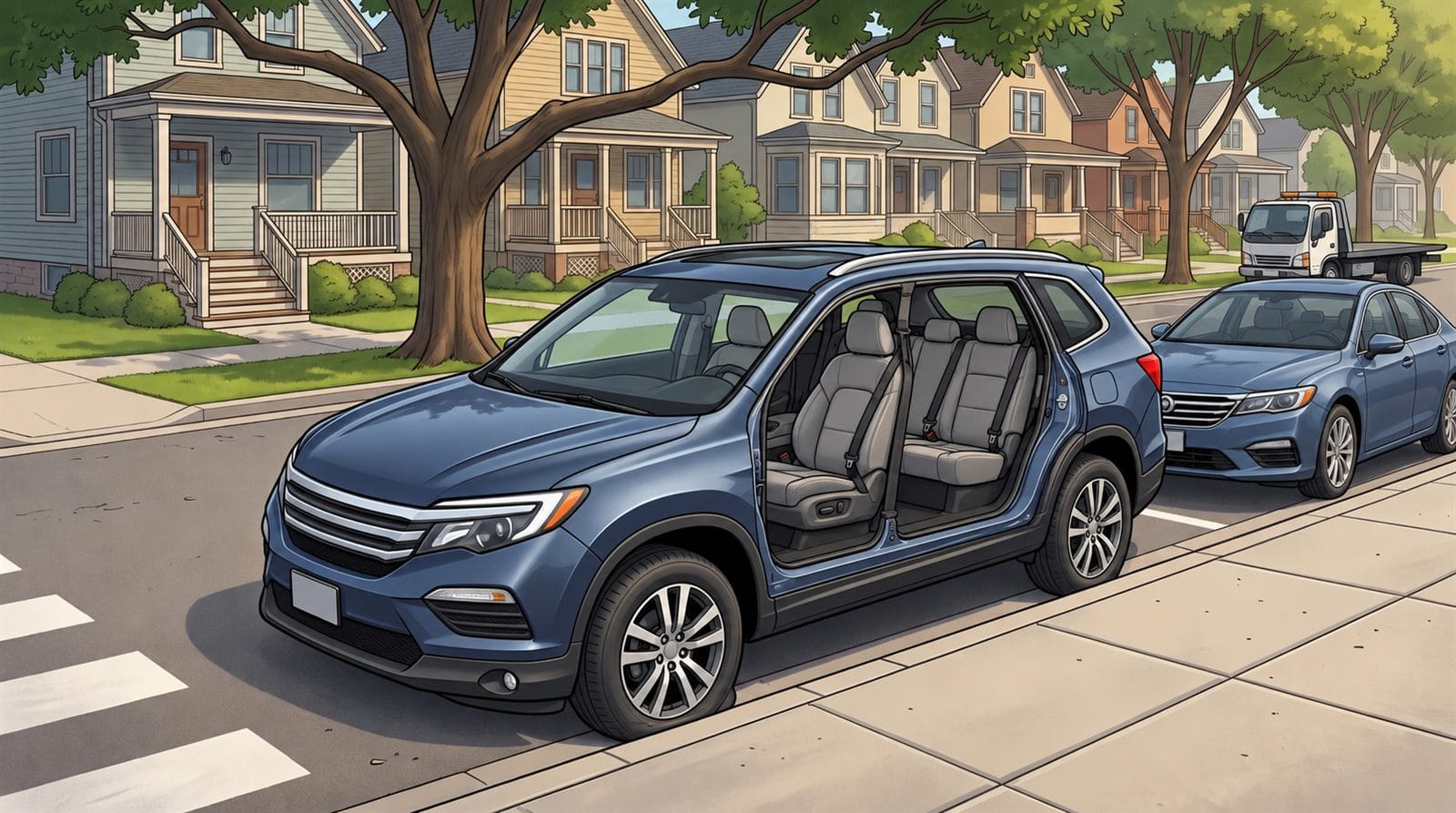
- Bodily injury liability
What if you injure someone?
Bodily injury liability helps pay covered damages when you’re legally responsible for injuring someone in an auto accident. These can include medical expenses, lost income, and legal defense. Serious injuries can exceed basic limits. Ask whether higher liability limits and an umbrella policy fit your needs.
- Property damage liability
Damage to someone else’s car is your liability exposure.
Property damage liability helps pay for damage you’re legally responsible for causing to another vehicle or property, such as a fence or building. Your limit applies to covered property damage from the accident, which can involve several vehicles.
- Collision coverage
Who pays to repair your car after a collision?
Collision coverage helps repair or replace your vehicle after a covered crash with another vehicle or object, or a rollover. It can apply even when you caused the accident. Your deductible applies, and a total-loss payment generally reflects the vehicle’s actual cash value.
- Comprehensive coverage
Some damage happens without a collision.
Comprehensive coverage helps protect your vehicle against covered events such as falling branches, hail, theft, vandalism, fire, flooding, and animal impacts. A deductible usually applies. It generally doesn’t pay for routine wear or mechanical breakdown.
- Glass coverage
A small chip can become a bigger repair.
Glass damage is often handled under comprehensive coverage. Repair and replacement may have different deductible rules, and optional glass coverage may be available. Ask how your policy handles windshield replacement and any required camera or sensor recalibration.
- Medical payments coverage
What about injuries to you and your passengers?
Medical payments coverage can help pay qualifying medical expenses for you and your passengers after an auto accident, regardless of fault. It has its own limit and can work alongside health insurance. Ask how the coverages coordinate.
- Uninsured and underinsured motorist coverage
What if the other driver has too little insurance?
Uninsured and underinsured motorist bodily injury coverage can help protect you and covered passengers when an at-fault driver has no liability insurance or insufficient limits. This is injury protection; damage to your car is a separate coverage question. Limits and offsets affect payment.
- Roadside assistance
Help when you’re stranded.
Optional roadside assistance can help arrange services such as towing, a jump-start, lockout assistance, or changing a flat tire. Service and distance limits apply. It generally doesn’t pay to repair the underlying mechanical problem or buy a replacement tire.
- Rental reimbursement
How would you get around while your car is repaired?
Rental reimbursement can help pay for a temporary vehicle while yours is out of service because of a covered claim. Daily and total limits apply. Choose a limit that fits the vehicle your household needs; ordinary maintenance or breakdowns generally don’t qualify.
- Gap coverage
Could you owe more than your totaled car is worth?
If a covered total loss leaves your loan or lease balance higher than your vehicle’s actual cash value, optional gap coverage may help with the eligible difference. Limits and exclusions apply. Gap coverage doesn’t provide a new replacement vehicle or automatically erase every loan-related charge.
- Belongings in the car
Your belongings need a different coverage check.
Auto insurance generally doesn’t cover personal belongings such as a laptop stolen from your car. Homeowners or renters insurance may help, subject to its deductible and limits. Damage to the vehicle from the break-in may fall under comprehensive coverage.
- Rideshare and delivery use
Do you use your car for deliveries or rideshare?
Driving for a rideshare or delivery platform can create gaps in personal auto coverage. Tell us before you start so we can review the platform’s insurance and whether you need an endorsement or different policy. Coverage can change depending on what you’re doing when an accident happens.
Send us your current auto declarations page and we will tell you what it covers before we quote.
Coverage varies by policy and state. Limits, deductibles, exclusions, and optional endorsements apply.
Auto Insurance for North Shore Families
Auto insurance is one of the most price-competitive products in the market, and one of the most variable. The same driver, same car, and same coverage can produce wildly different premiums depending on the carrier. That spread is the reason to compare. We quote the same drivers, vehicles, limits and deductibles with several carriers and show you the prices together.
Longmeadow Insurance serves drivers throughout Chicago’s North Shore, including Wilmette, Winnetka, Glencoe, Kenilworth, Northfield, Northbrook, Glenview, Highland Park, Evanston, and Skokie.
Coverage We Recommend
Liability Coverage
Illinois requires minimum liability limits of 25/50/20, but these minimums are dangerously low for North Shore families with assets to protect. We usually recommend at least 250/500/100, which is also the level many umbrella carriers require underneath. For families with significant net worth, pairing higher auto limits with an umbrella policy provides the most cost-effective protection.
Uninsured/Underinsured Motorist Coverage
This coverage protects you when the other driver has no insurance or not enough to cover your damages. A driver carrying only the Illinois minimum has $25,000 per person for your injuries, which a serious injury uses up quickly. We recommend matching your UM/UIM limits to your liability limits.
Collision and Comprehensive
Collision covers damage to your vehicle in an accident regardless of fault. Comprehensive covers theft, vandalism, hail, deer strikes, and other non-collision events. For newer vehicles, both are essential. For older vehicles with lower value, consider whether the premium justifies the coverage: a higher deductible or dropping these coverages can save meaningful dollars.
Medical Payments (MedPay)
MedPay covers medical expenses for you and your passengers regardless of fault. It fills gaps that health insurance might not cover immediately and is especially valuable for passengers who may not have their own health coverage.
Rental Car Coverage
If your vehicle is in the shop after a covered claim, rental car coverage pays for a temporary replacement. It usually adds $20 to $40 a year. Check the daily limit against what a comparable rental costs now.
Roadside Assistance
Towing, flat tire changes, lockout service, and jump starts. Available as a low-cost add-on to your auto policy, often more convenient than a standalone roadside membership. Read more in our roadside assistance guide.
Teen Drivers on the North Shore
Adding a teen driver is one of the biggest insurance cost increases a family will face. Premiums can rise 50 to 100 percent or more. We help families manage this transition by:
- Shopping the teen driver addition across multiple carriers (the best carrier for your family may change once a teen is added)
- Maximizing available discounts: good student, driver training, usage-based programs
- Structuring which vehicle the teen is rated on to minimize the impact
- Advising on appropriate coverage levels for the teen’s vehicle
Our teen driver insurance page covers how we handle the addition, and our complete guide to insuring your teen driver goes into the costs in detail.
How Drivers, Vehicles and the Umbrella Fit Together
An auto policy is rated on the combination of who drives what, and households change that combination more often than they update the policy. Three situations account for most of the surprises we correct.
- Assignment. Carriers assign each driver to a vehicle, and the assignment drives the price. A teen assigned to the newest car with the highest limits costs considerably more than the same teen assigned to an older vehicle. Carriers differ on how much control you have over this, which is one of the clearer reasons to compare more than one.
- Everyone in the household counts. Licensed household members are rated whether or not they drive your cars, unless they are formally excluded. An adult child home from school, a parent who moved in, or a roommate all belong in the conversation.
- The umbrella sets a minimum. Keep auto liability at or above the limit your umbrella requires. A shortfall can leave you paying the gap yourself or affect coverage. Check uninsured and underinsured motorist limits separately.
That last point is the one worth checking today. See umbrella insurance for how the layers connect.
College Students and Vehicle Changes
A student who goes away to school without a car may qualify for a distant student discount at many carriers, typically where the school is beyond a set distance from home. They stay on your policy and stay covered when they drive your cars on break. Removing them entirely is almost always the wrong move, because a gap in their own coverage history raises their rate for years once they need a policy of their own.
Vehicle changes have their own timing rules. Most policies extend automatic coverage to a newly acquired vehicle for a limited window, often fourteen or thirty days depending on the carrier and on whether you carry comprehensive and collision elsewhere on the policy. That window is shorter than people assume, and an added vehicle nobody reported is a coverage argument rather than an oversight. Tell us the day it is in the driveway.
How to Save on Auto Insurance
- Bundle home and auto: carrying both with one carrier usually earns a multi-policy discount, and the size varies by carrier
- Maintain a clean driving record: Accident-free and violation-free drivers get the best rates
- Increase deductibles: raising the collision deductible lowers that part of the premium, so weigh the saving against what you would pay at claim time
- Ask about all available discounts: Loyalty, paperless billing, autopay, defensive driving courses, anti-theft devices
- Review annually: carrier pricing changes often, so we compare your program with other carriers at renewal
Frequently Asked Questions
What auto insurance do I need in Illinois?
Illinois requires liability insurance with minimum limits of $25,000 per person / $50,000 per accident for bodily injury and $20,000 for property damage. Uninsured motorist coverage is also required. However, these state minimums provide very little protection: we strongly recommend higher limits.
How much does car insurance cost in Wilmette?
Auto insurance premiums on the North Shore vary based on driving record, vehicles, coverage levels, and household composition. A typical family with two cars and clean records might pay $1,500 to $3,000 a year for full coverage. Adding a teen driver increases this significantly.
Can I get car insurance quotes from multiple companies at once?
Yes. That is what an independent agent, often called an insurance broker, does. We quote your coverage with each of our appointed carriers and walk you through how the quotes differ.
Does my auto insurance cover rental cars?
Your liability and comprehensive/collision coverage typically extends to rental cars. However, some carriers have limitations. Ask us before you decline the rental company’s coverage.
Get a Free Auto Insurance Quote
Longmeadow Insurance is an independent agency in Wilmette. We compare auto insurance quotes from several carriers and explain what separates them before you choose. Request a free quote or call us at 847.242.1040.
Related Coverage
- Personal Insurance on the North Shore
- How Much Umbrella Insurance Do You Need?
- Guide to Insuring Your Teen Driver
- Classic and Antique Car Insurance
- Roadside Assistance Coverage
Getting an Erie Auto Insurance Quote
We are an appointed Erie Insurance agent and quote Erie auto coverage across Illinois. If you are looking specifically for an Erie quote, call 847.242.1040 or send us your current declarations page and we will run it.
Erie prices well for many North Shore households, particularly when auto and home sit together. Households adding a teenage driver are the clearest case for shopping it against other carriers, because the spread between companies widens sharply at that point.