
Retail Store Insurance
Coverage at a Glance
Select a numbered marker on the illustration, or a coverage name below it, to see where each coverage applies.
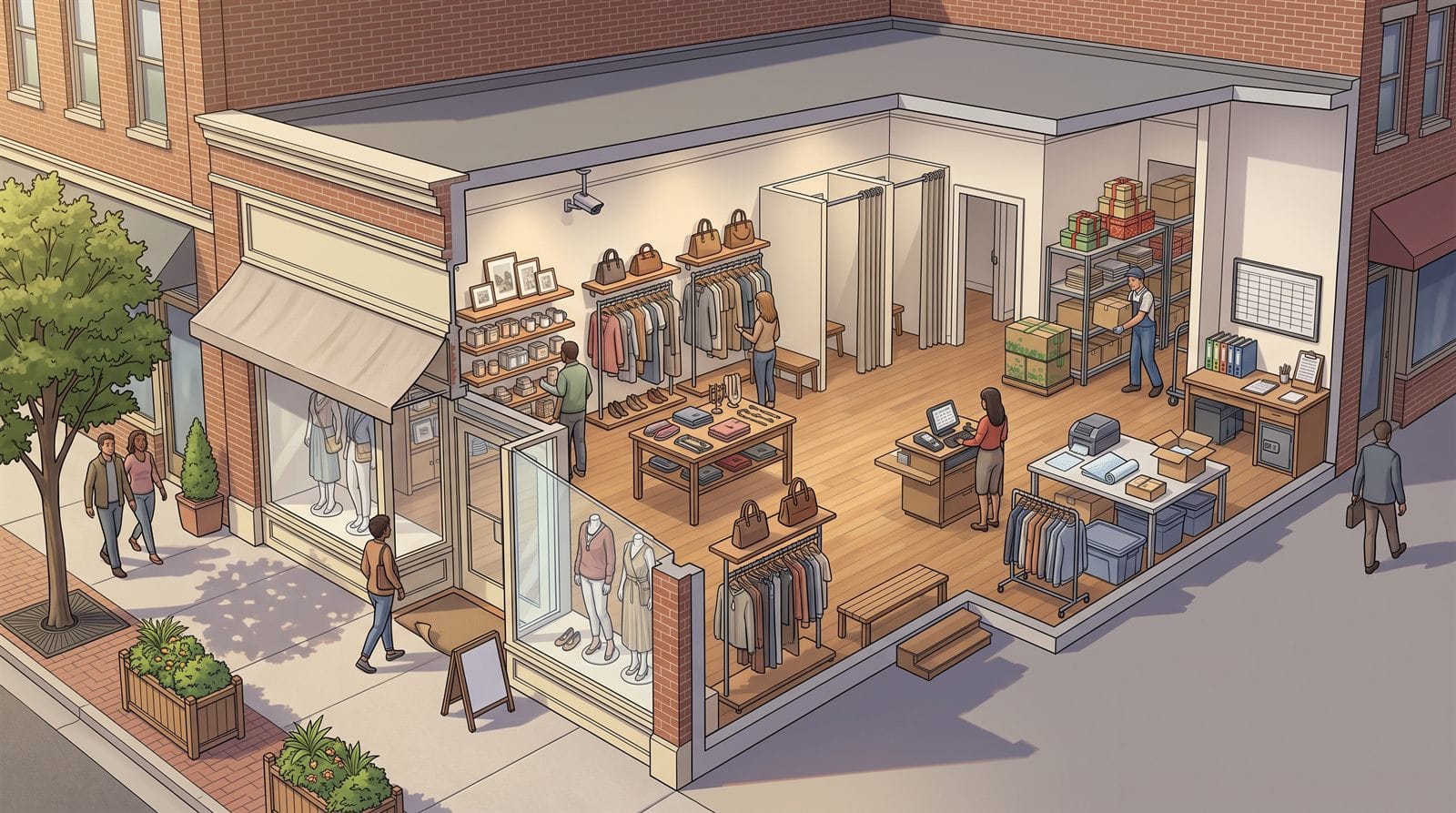
- General liability
What if a shopper gets hurt?
General liability insurance can help with covered claims when your business is legally responsible for a customer’s injury or damage to someone else’s property. It can include legal defense costs. Employee injuries generally need workers’ compensation protection instead.
- Commercial property and inventory
Your inventory is a major investment.
Commercial property coverage can help replace insured merchandise, fixtures, and equipment after a covered loss, such as fire. Review how stock is valued. You shouldn’t assume a claim pays the full retail selling price. Your landlord’s policy doesn’t automatically protect your inventory.
- Seasonal inventory increase
Does your coverage grow with holiday inventory?
Your busiest selling season may also bring your highest inventory values. Ask whether your policy includes an automatic seasonal increase, what conditions apply, and whether it is enough. Arrange additional protection before a large shipment puts your stock above the available limit.
- Theft coverage
Theft coverage isn’t the same as covering every shortage.
Your property policy may cover qualifying theft of merchandise, subject to exclusions and deductibles. Ask about shoplifting, burglary, and documentation requirements. Unexplained disappearance or shortages discovered only during an inventory count may be excluded; employee theft needs a separate review.
- Storefront glass coverage
Who pays when the display glass breaks?
Review coverage for storefront glass, display windows, and damage to the merchandise behind them. If you rent, your lease may make you responsible for glass replacement. Confirm the insured property, deductible, and any special glass provisions before a claim.
- Business income and extra expense
Could you keep paying bills during repairs?
Business income coverage replaces lost profit, plus continuing expenses like rent and payroll, while you recover from covered physical damage. Extra expense coverage may help you reopen elsewhere or resume sales sooner. A slow season or ordinary drop in demand doesn’t qualify.
- Products liability
A product can cause a claim after it leaves your store.
Products liability coverage may help if something you sell causes covered bodily injury or property damage. Retailers can face claims even when another company made the item. Tell us about imported goods, private-label products, and anything you manufacture or modify.
- Cyber insurance
A data breach can interrupt more than checkout.
Cyber insurance can help with covered breaches, cyberattacks, and related response costs. Review payment information, customer records, your online store, and dependence on outside providers. Ask about cyber-related business interruption; ordinary property coverage may not respond to a digital outage.
- Workers’ compensation
Protect your staff behind the scenes.
Workers’ compensation pays medical bills and lost wages for covered work injuries and illnesses, and Illinois requires it from your first employee. Include stockroom duties, deliveries, and seasonal employees when reviewing your operations. A customer-injury liability policy isn’t a substitute for employee injury coverage.
- Transit and shipping coverage
Does protection follow an online order?
Goods can be lost or damaged between your store and the customer. Review transit or shipping coverage, valuation, and when responsibility transfers. A shipping carrier’s liability or declared-value option may not match your full exposure, particularly for valuable or fragile merchandise.
- Off-premises and pop-up coverage
Taking the shop to a market or pop-up?
Inventory and displays taken off-site may need broader property coverage. Confirm protection during transport and at temporary selling locations, along with liability for the event. Review any venue requirements for certificates and additional insured endorsements before setting up.
- Employment practices liability
Employment disputes can affect a small shop, too.
Employment practices liability insurance pays defense costs and covered damages when an employee claims discrimination, harassment, or wrongful termination. Ask about claims involving customers as well as staff. Unpaid wages, overtime, and other wage-and-hour disputes often have exclusions or limited protection.
- Crime coverage
Protect cash and stock from internal theft.
Crime coverage can address specified losses involving employee dishonesty, money, or forgery. Review cash kept on-site, deposits in transit, and employee theft of merchandise. Ordinary property coverage may provide limited protection for money and exclude dishonest acts by employees.
- Dependent property coverage
What if a key supplier suffers a fire?
Dependent property coverage may help with qualifying income losses when covered physical damage at a supplier or another specified business disrupts your operations. Review which businesses and locations qualify. Ordinary shipping delays, supplier insolvency, or weak demand generally aren’t covered triggers.
Send us your current policy, your peak inventory value, and your lease, and we will show you which of these coverages you have.
Illustrative coverage options. Multiple policies or endorsements may be required. Coverage depends on your operations, policy terms, limits, deductibles, and exclusions.
Retail Store and Boutique Insurance on the North Shore
A boutique clothing store in Winnetka, a gift shop in Glencoe, a hardware store in Northfield, and a specialty retailer in Wilmette face the same core risks: a customer who falls, stock lost to fire or theft, inventory that swells before the holidays, and a card system that gets breached.
Most shops fit a business owner policy, and carriers differ most on theft terms, peak season limits, and how stock is valued.
Key Coverages for Retail Stores
- Equipment Breakdown: Protects your POS systems, security equipment, HVAC, refrigeration (for specialty food retailers), and other critical store infrastructure against mechanical and electrical failure.
- Income Protection (Actual Loss Sustained): If a covered event forces your store to close, this covers your lost income while you reopen, up to the policy’s time limit.
- Off-Premises Utility Failure: If a power outage from the utility company shuts down your store, this coverage protects your income even though the failure originated outside your premises.
- Dependent Properties Coverage: If a key supplier or nearby anchor tenant suffers covered physical damage that cuts your foot traffic or supply, this coverage can pay the income you lose.
- Peak Season Coverage: Raises your inventory limit during your busiest sales periods, such as the holidays or back-to-school, when stock levels are highest.
- Data Breach Response: Retail stores process thousands of card transactions. This covers notification costs, credit monitoring, forensic investigation, and legal expenses when your systems are breached.
- Employment Practices Liability: Protects against employee claims of discrimination, harassment, and wrongful termination. Wage-and-hour disputes are usually excluded or limited.
- Data Breach Liability: Covers third-party claims arising from a data breach, and regulatory fines where the law allows them to be insured.
Who We Insure
- Clothing boutiques and fashion retailers
- Gift shops and specialty stores
- Hardware and home improvement stores
- Sporting goods and outdoor retailers
- Jewelry stores
- Pet supply stores
- Bookstores and hobby shops
- Florists and garden centers
- Specialty food and wine shops
For a retail insurance quote, send us your current declarations page and lease, or call 847.242.1040.
Serving retail businesses in Wilmette, Northfield, Winnetka, Glencoe, Kenilworth, Evanston, Northbrook, Highland Park, Glenview, Skokie, and across Chicago’s North Shore.
Business Insurance Resources
Retail Risk Is More Than Inventory and a Storefront
Retail shops and boutiques on the North Shore face a mix of customer injury, inventory loss, theft, employee issues, cyber/POS exposure, product liability, business income, tenant improvements, and lease requirements. A small store can still have a large claim if a customer falls, a fire damages inventory, or a cyber incident affects payment data.
Coverage should reflect what the store sells, how inventory fluctuates, whether products are imported or private-labeled, whether the store sells online, and whether pop-ups, markets, or delivery are part of the business.
Inventory, Peak Season, and Business Income
Many retailers carry more inventory before holidays, seasonal launches, or promotional events. If the policy does not account for peak inventory, the store may be underinsured at the moment it holds the most stock. Business income coverage should also reflect how long it could take to reopen, rebuild inventory, and regain customers.
Lease Insurance Requirements
Retail leases often require general liability limits, property coverage for tenant improvements, additional insured status for the landlord, and proof of insurance before opening. Longmeadow Insurance can help shop owners compare lease requirements against the actual policy.
Related Insurance Guides
Erie Retail Insurance and Other Markets
Retail is a core commercial class for Erie Insurance, and as an appointed Erie agent we quote it regularly for shops and boutiques across the North Shore and Chicago. A business owner policy from Erie can bundle general liability, commercial property, and business income, with workers compensation alongside it.
Whether Erie is the best fit depends on your stock values, square footage, building age, and whether you own or lease. We compare Erie against the other carriers that want retail risks in this market and place the account where the terms and pricing land best.