
Insurance for Religious Organizations & Churches
Coverage at a Glance
Select a numbered marker on the illustration, or a coverage name below it, to see where each coverage applies.
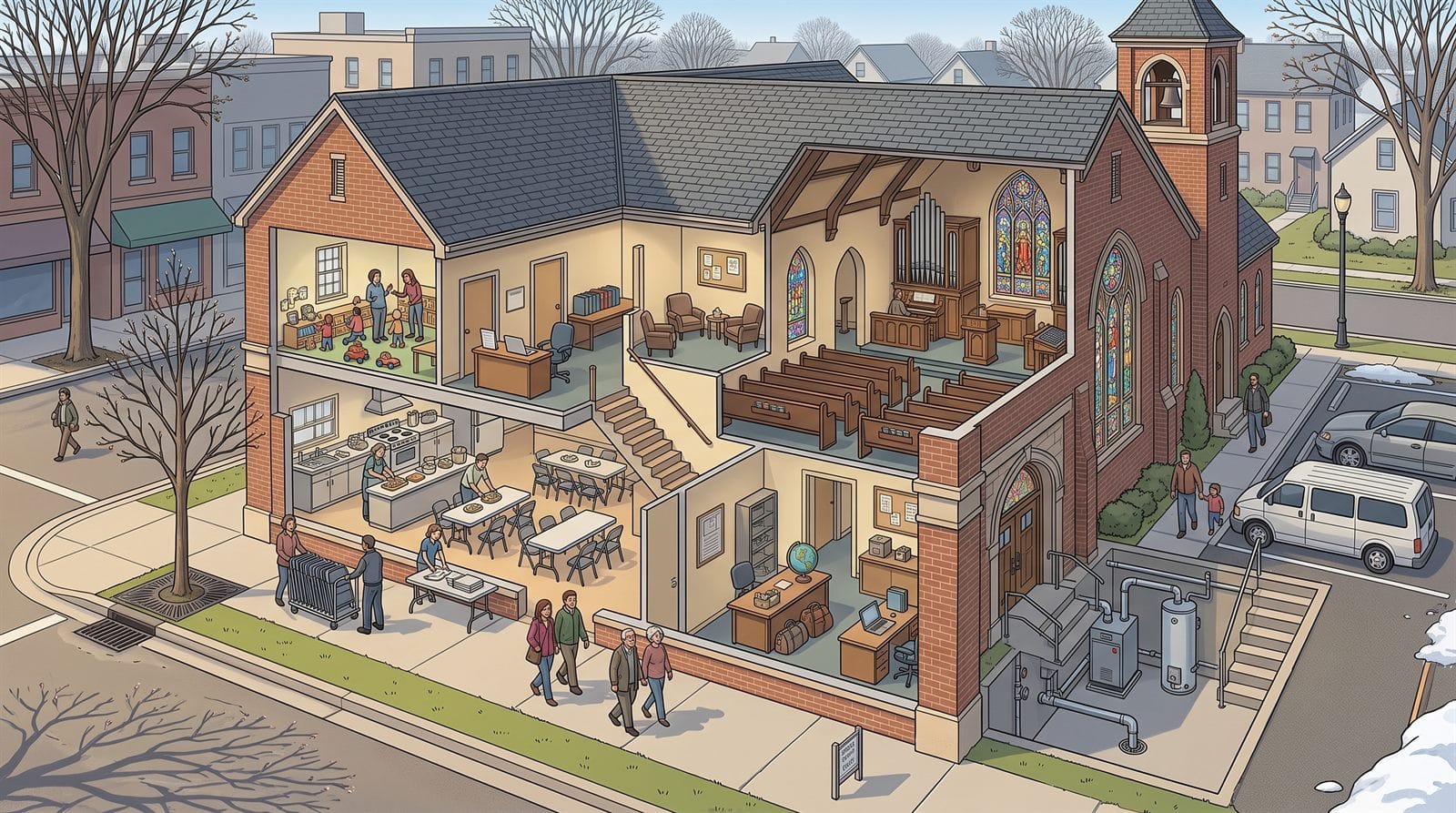
Building coverage
A fire or severe storm can damage more than a building. It can disrupt your congregation’s gathering place. Property insurance can help repair covered damage to the sanctuary and other insured structures. Review rebuilding values for older construction and distinctive architectural features.
Stained glass, organs, and special property
Stained glass, pipe organs, religious artwork, and ceremonial items may require specialized restoration or replacement. Review how these items are valued and whether special limits or scheduling apply. Their insurance value may differ substantially from ordinary furniture and equipment.
Premises liability
A visitor falls on the steps and alleges unsafe conditions. General liability insurance can help with legal defense and covered damages when your organization is responsible for bodily injury or damage to someone else’s property.
Ministry interruption and extra expense
Where would your congregation meet if covered damage closed the sanctuary? Business income and extra expense coverage can help address qualifying lost income and additional costs, such as renting temporary worship space. Review how your policy treats donations, rental income, and the restoration period.
Equipment breakdown
A sudden boiler or electrical breakdown can interrupt worship, classes, and community programs. Equipment breakdown coverage can help repair or replace covered equipment following a qualifying breakdown. Routine maintenance and ordinary wear and tear remain operating expenses.
Abuse and molestation liability
Programs serving children and vulnerable adults need dedicated protection. Specialized abuse and molestation coverage can help address covered claims against the organization, including allegations of negligent supervision. Review insured persons, reporting requirements, and limits alongside screening, supervision, and incident-response procedures.
Pastoral counseling liability
A person receiving spiritual counseling may allege that advice caused emotional harm. Pastoral counseling liability can help address covered counseling claims. Review who qualifies as an insured counselor and which activities are covered, particularly when services extend into licensed professional treatment.
Community meals and facility use
Community dinners, fundraisers, and outside groups bring additional exposures into your building. Review liability coverage for food service, special events, and rented space. Facility-use agreements and outside groups’ insurance should be coordinated with your organization’s coverage.
Directors and officers liability
Decisions about finances, staffing, and programs can lead to claims against your leadership. Directors and officers coverage can help defend covered allegations of wrongful management acts. Review protection for the organization, trustees, board members, and other leaders.
Employment practices liability
Religious organizations can face employment claims involving discrimination, harassment, or wrongful termination. Employment practices liability insurance can help with covered defense costs and damages. Review how the policy applies to clergy, other employees, applicants, and volunteers.
Crime and employee dishonesty
Donations and operating funds can be lost through theft, embezzlement, or forgery. Crime coverage can help address specified financial losses. Confirm whether employees, volunteer treasurers, and others handling money fall within the policy’s definitions.
Cyber insurance
Donation systems and membership records hold sensitive information. Cyber insurance can help with covered breach-response expenses and liability claims. Review ransomware, compromised payment instructions, and fraud protections individually, because they may require different coverage.
Workers’ compensation and volunteer accident
An employee injured while moving chairs may need medical treatment and time away from work. Workers’ compensation addresses covered work-related injuries. Volunteers may need separate accident coverage; confirm their protection rather than assuming everyone serving the organization is insured the same way.
Owned, hired, and non-owned auto
Transporting members or running ministry errands creates vehicle exposures. Commercial auto can cover insured church vehicles, while hired and non-owned auto liability addresses qualifying use of rented or personal vehicles. Review authorized drivers, passenger transportation, and physical damage separately.
Mission travel
A mission trip can take your organization beyond the reach of its everyday policies. Review foreign liability, travel medical, emergency evacuation, and coverage for equipment taken abroad. Protection should match the destination, activities, travelers, and trip length.
Send us your current policies and a list of the groups that use your building, and we will show you which of these coverages you already carry.
Church and Religious Organization Insurance in Illinois
Churches, synagogues, and mosques in Evanston, Northfield, and Glenview carry risks most commercial policies were not written for: older buildings with stained glass and pipe organs, programs for children, pastoral counseling, and a large volunteer base.
Several carriers write religious organizations as a specialty class, and their programs include coverages a standard commercial package leaves out.
Built-In Protections for Religious Organizations
Religious organizations have specialized property and liability needs that generic commercial policies don’t address. The specialty programs we quote often include features like these in the base policy:
- Building features: confirm how pews, organs, bells, stained glass, and permanently installed equipment are valued and included in the property limit.
- People and organizations insured: review protection for clergy, employees, volunteers, board members, and affiliated organizations under the program you select.
Key Optional Coverages
- Clergy & Pastoral Professional Liability: Extends professional liability protection to clergy, pastors, and counselors for claims arising from their spiritual guidance and counseling activities.
- Key Person Extra Expense: Covers additional expenses resulting from the death or disability of a pastor or key clergy member: helping the organization maintain operations during a difficult transition.
- Teachers Professional Liability: addresses covered claims arising from educational activities. Review the insured educators, activities, and disciplinary-action exclusions.
- Newly Acquired or Constructed Property: Automatic coverage for buildings and business personal property your organization acquires or builds, up to limits set by the program.
- Sports Activities Medical Payments: ask about accident benefits for church-sponsored sports, who is eligible, and the available per-person limit.
- Unused residences: confirm how the program handles parsonages, rectories, and other residences between occupants rather than assuming the usual vacancy provisions are waived.
Abuse & Molestation Coverage
Any organization that works with children or vulnerable adults needs this coverage. Look for these terms:
- Defense and indemnification for abuse and molestation claims
- Defense costs paid outside the policy limits, so legal fees do not erode your limits
- Available on either claims-made or occurrence basis
- Limits up to $1M per claim and $2M aggregate
- Access to policyholder loss prevention resources and training
Directors & Officers Liability
Church boards and leadership face the same governance risks as any nonprofit. D&O coverage protects directors and officers against claims of wrongful acts, errors, omissions, or breach of fiduciary duty, and it is written on a claims-made basis.
Who We Insure
- Churches and parishes
- Synagogues and temples
- Mosques and Islamic centers
- Religious schools and education centers
- Dioceses and denominational offices
- Nonprofit religious organizations
- Camp and retreat centers
For a church and religious organization insurance quote, call 847.242.1040 or request one online.
Serving religious organizations in Wilmette, Northfield, Winnetka, Glencoe, Kenilworth, Evanston, Northbrook, Highland Park, Glenview, Skokie, and across Chicago’s North Shore.
Coverages a Congregation Needs
- Property on a replacement cost basis. Older sanctuaries with stained glass, pipe organs, custom millwork, and bell towers cannot be rebuilt at generic square footage rates. Ordinance and law coverage matters as well, since a rebuild must meet current codes.
- General liability. This is the base of church liability insurance, covering injury on the premises, at fellowship events, and during off-site activities.
- Sexual abuse and molestation liability. Frequently sublimited or excluded on standard forms. For any organization working with minors, this is the coverage to read first.
- Directors and officers liability. Board and elder decisions on employment, membership, and finances create claims that general liability does not cover.
- Pastoral professional liability. Covers counseling activity, which is a professional service rather than a premises exposure.
- Employment practices liability. Wrongful termination and discrimination claims from staff.
- Commercial auto and hired non-owned auto. Vans for youth trips, and volunteers driving personal vehicles on the organization’s behalf.
- Workers compensation. Required for paid staff, and volunteer coverage is worth adding.
Abuse and Molestation Coverage
This is the exposure that has closed congregations. Many policies carry it at a fraction of the general liability limit, some write it claims-made while the rest of the policy is occurrence-based, and some exclude it entirely.
Carriers underwrite it on your practices: background screening, two-adult rules, documented reporting procedures, and training records. Organizations with those controls in place get both better terms and better limits.
Buildings Used by Outside Groups
Congregations frequently host day schools, preschools, scout troops, twelve-step meetings, food pantries, polling places, and community events. Each outside use is a separate exposure, and some carriers restrict or exclude them.
Tell us about every group using the building. A preschool operating in the fellowship hall changes the underwriting materially, and an undisclosed occupancy can lead to a coverage dispute. Outside groups should carry their own liability and name the organization as an additional insured.
Related Coverage
Erie and Specialty Religious Organization Markets
We are an appointed Erie Insurance agent and quote Erie where it fits a congregation’s property and liability needs.
Religious organizations also have exposures that standard commercial forms handle poorly, including directors and officers liability for the board, abuse and molestation coverage, counseling liability, and coverage for volunteers and outreach activity. Several specialty carriers write this class specifically, and we compare those programs against a standard package.