
Brewery, Winery & Distillery Insurance
Coverage at a Glance
Select a numbered marker on the illustration, or a coverage name below it, to see where each coverage applies.
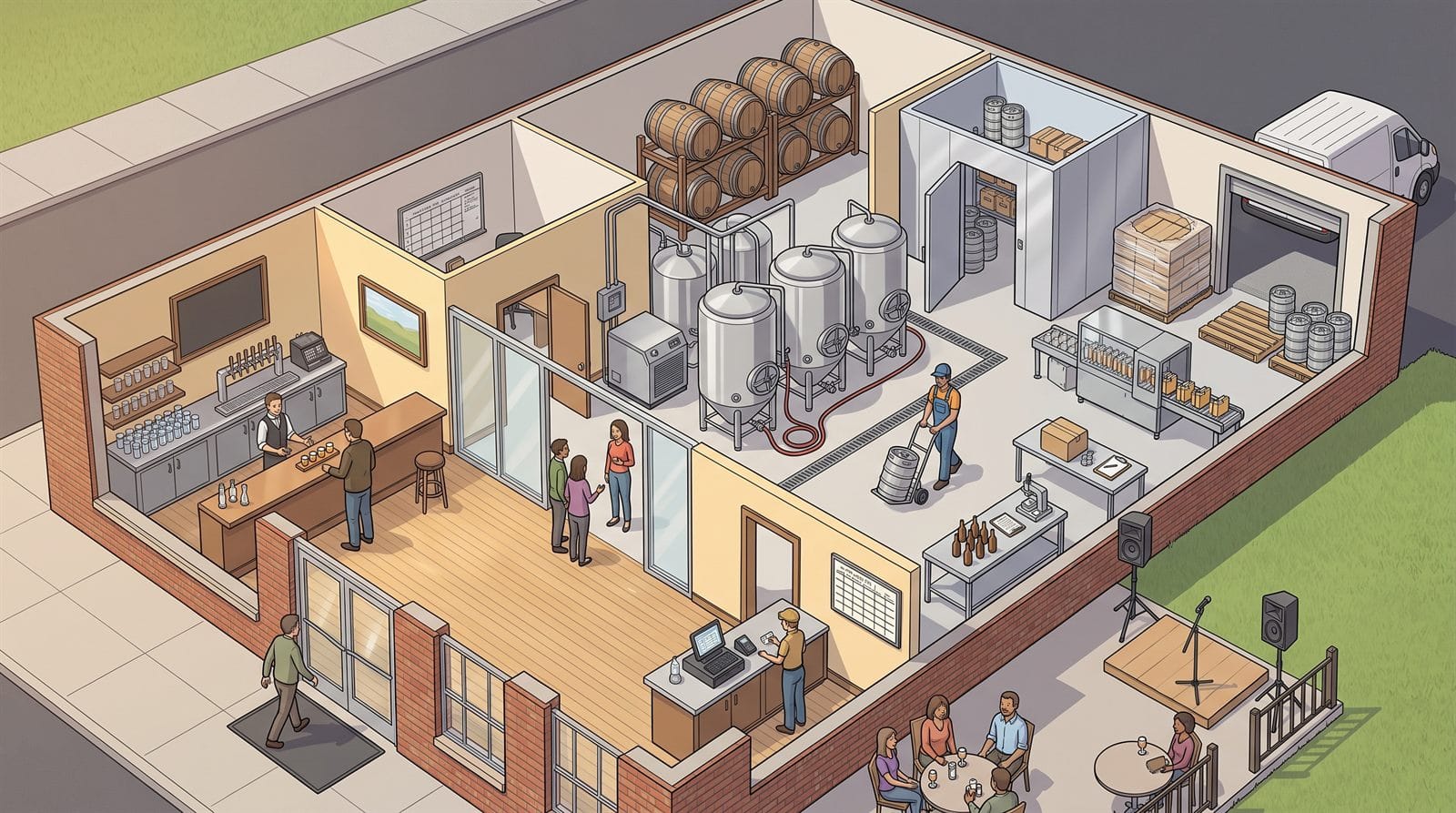
- Commercial property
Protect the place and equipment behind every batch.
Commercial property coverage can help restore insured buildings, improvements, equipment, and stock after a covered loss. Include installation costs and specialized production equipment when reviewing values. If you lease, clarify which improvements and building components are your responsibility.
- Leakage coverage
One leak can drain an entire batch.
Leakage coverage may help replace product lost through a qualifying tank, barrel, or equipment leak. Ask what causes are covered and whether cleanup or related income losses are included. Normal evaporation, routine process losses, and every leaking connection aren’t automatically insured.
- Equipment breakdown
A cooling failure can damage more than equipment.
Equipment breakdown coverage can help with qualifying sudden mechanical or electrical failures. Review the cost to repair the equipment separately from spoiled stock and interrupted production. Temperature-change losses may need specific protection; ordinary wear and maintenance generally remain your responsibility.
- Contamination coverage
What if a batch becomes contaminated?
Specialized contamination or product-alteration coverage may help with qualifying losses to your stock. Review testing, disposal, cleanup, and income-loss provisions. A batch that simply misses your preferred flavor or quality standard isn’t necessarily a covered loss.
- Stock and inventory valuation
Your inventory represents time as well as ingredients.
Barrel-aged beer, wine, and spirits can accumulate significant value before sale. Review how the policy values aging stock and finished products, including any selling-price or market-value provisions. Keep peak inventory and off-site barrel storage included in the coverage review.
- Products liability
Your product can create a claim after it leaves.
Products liability coverage may help if a beverage you make or sell causes covered bodily injury or property damage. Claims can involve contamination, packaging defects, or labeling and warnings. This is different from replacing your stock or paying to recall it.
- Product recall
Who pays to retrieve an affected product?
Product recall coverage may help with specified expenses to notify customers, retrieve products, and manage a qualifying recall. Review the triggering conditions and covered costs. Replacement products, lost sales, and reputational damage aren’t automatically included.
- Liquor liability
Alcohol service creates a distinct liability exposure.
Liquor liability insurance can help with covered claims alleging that your alcohol service contributed to injury or property damage. Review tastings, taproom sales, private events, and off-site service. Ordinary host liquor protection generally isn’t sufficient for a business selling alcohol.
- General liability
What if a guest gets hurt on your premises?
General liability coverage can help with covered claims when your business is legally responsible for a visitor’s injury or property damage. Include the tasting room, patio, and production tours in your review. Alcohol-related claims require their own liquor liability consideration.
- Events and excess liability
Events can change your insurance needs.
Live music, private rentals, festivals, and other events can introduce additional exposures. Confirm that your activities and locations are covered, and review vendor insurance requirements. Consider excess liability and verify whether it follows both general and liquor liability.
- Workers’ compensation
Protect the people doing the heavy lifting.
Workers’ compensation pays medical bills and lost wages for covered work injuries and illnesses, and Illinois requires it from your first employee. Review production, packaging, tasting-room, and delivery duties, including seasonal staff. Employee injury protection is separate from liability coverage for guests.
- Business income
A shutdown can disrupt more than this week’s sales.
Business income coverage replaces lost profit, plus continuing expenses like rent and payroll, while you recover from covered physical damage. Review the time needed to repair equipment and restore production. Long fermentation or aging cycles deserve particular attention when choosing coverage periods and limits.
- Transit and cargo coverage
Does protection follow your product to market?
Transit or cargo coverage can protect qualifying shipments between your facility, distributors, storage sites, and events. Review temperature sensitivity, breakage, leakage, and reusable kegs left with others. A carrier’s liability may not reimburse the full value of a shipment.
- Commercial auto
The delivery vehicle needs separate protection.
Commercial auto insurance can address covered liability from business vehicle accidents, with separate options for vehicle damage. Review delivery drivers, rented vehicles, and employee-owned vehicles used for work. Cargo and equipment carried inside require their own coverage review.
- Cyber insurance
Digital systems connect your sales and operations.
Cyber insurance can help with covered data breaches, ransomware, and related response costs. Review payment processing, customer records, online sales, and production-system dependencies. Ask about cyber-related interruption and outside-provider failures; ordinary downtime isn’t automatically covered.
Send us your current policies, your tank and barrel values, and your taproom details, and we will check them against each coverage above.
Illustrative coverage options. Coverage must match your production methods, products, storage, distribution, and alcohol service. Policy terms, limits, deductibles, and exclusions apply.
Craft Brewery and Microbrewery Insurance in Illinois
A microbrewery in Evanston, a winery in Highland Park, and a craft distillery in the northern suburbs share one insurance problem: tanks, aging stock, and a taproom under one roof, which a standard business policy was not written for.
Why Craft Beverage Businesses Need Specialized Coverage
Brewing, winemaking, and distilling involve expensive equipment, temperature-sensitive inventory, complex supply chains, and the added regulatory burden of producing and serving alcohol. A standard business policy leaves gaps for producers who also operate taprooms, host events, or distribute through retail channels.
Key Coverages for Breweries, Wineries & Distilleries
- Equipment Breakdown: Protects your brewing kettles, fermentation tanks, bottling lines, refrigeration systems, and climate control equipment against mechanical and electrical failure.
- Income Protection: If a covered loss shuts down production, income protection covers your lost income, which matters when you are managing perishable inventory and seasonal demand.
- Off-Premises Utility Failure: A power outage from the utility company can destroy an entire batch. This coverage protects your income when the failure originates off your premises.
- Dependent Properties Coverage: If a key supplier (hop farm, grape grower, grain supplier) suffers covered physical damage that disrupts your supply chain, this coverage can pay the income you lose.
- Accounts Receivable Protection: Covers losses if your accounts receivable records are destroyed, paying what you can no longer collect.
- Data Breach Response: Protects against the costs of a data breach affecting customer payment information from your taproom POS system or online sales.
- Liquor Liability: Essential for any operation with a taproom, tasting room, or event space. Covers bodily injury or property damage claims arising from the sale or service of alcohol.
- Product Withdrawal: compare the events that trigger recall or withdrawal coverage and the included notification, retrieval, and disposal costs. Contamination and labeling problems are not automatically treated alike.
- Manufacturers Errors and Omissions: addresses specified financial-loss claims arising from product errors. It is separate from product liability and does not guarantee every performance promise or pay all rework costs.
Who We Insure
- Craft breweries and microbreweries
- Wineries and vineyards
- Craft distilleries
- Cideries and meaderies
- Taprooms and tasting rooms
- Contract brewing and co-packing facilities
For a brewery, winery, or distillery insurance quote, call 847.242.1040 or request one online.
Serving craft beverage producers in Wilmette, Northfield, Winnetka, Glencoe, Kenilworth, Evanston, Northbrook, Highland Park, Glenview, Skokie, and across Chicago’s North Shore.
Business Insurance Resources
Coverage for Production, Tasting Rooms, Events, and Distribution
A craft beverage business is rarely just one exposure. A brewery, winery, cidery, or distillery may manufacture product, store inventory, operate a taproom, host events, sell merchandise, distribute to restaurants, and use vehicles or trailers. Each activity can trigger a different coverage need.
Illinois beverage businesses should review property coverage, equipment breakdown, product contamination, product recall or withdrawal, business income, liquor liability, general liability, workers compensation, cyber/POS exposures, and hired/non-owned auto. If the business hosts private events or food trucks, certificate requirements and contractual risk transfer should also be reviewed.
Equipment Breakdown and Spoiled Product
Fermentation tanks, chillers, glycol systems, boilers, refrigeration, canning or bottling lines, draft systems, and climate control equipment can be expensive to repair and even more expensive to be without. A mechanical or electrical failure can create lost production, spoiled batches, missed distribution commitments, and lost tasting-room revenue.
Review equipment repair, spoiled stock, and lost production together. A qualifying breakdown can trigger different coverages for each cost, with separate limits and waiting periods. Routine wear remains a maintenance expense.
Liquor Liability Is Not Optional
Any operation serving alcohol to the public should review liquor liability carefully. Claims can involve injury, property damage, over-service allegations, event operations, servers, private parties, and off-premises exposure. Liquor liability should be coordinated with general liability and any contracts with landlords, event organizers, or distribution partners.
Related Insurance Guides
Erie and Specialty Beverage Markets
We are an appointed Erie Insurance agent, and Erie is one of the markets we consider for the property and general liability portion of a brewery, winery, or distillery program.
This class frequently needs specialty carriers as well. Liquor liability, tank and fermentation equipment breakdown, spoilage, and product contamination are underwritten by markets that specialize in beverage manufacturing, and a taproom changes the liability picture again. We assemble the program across the carriers that want each piece.